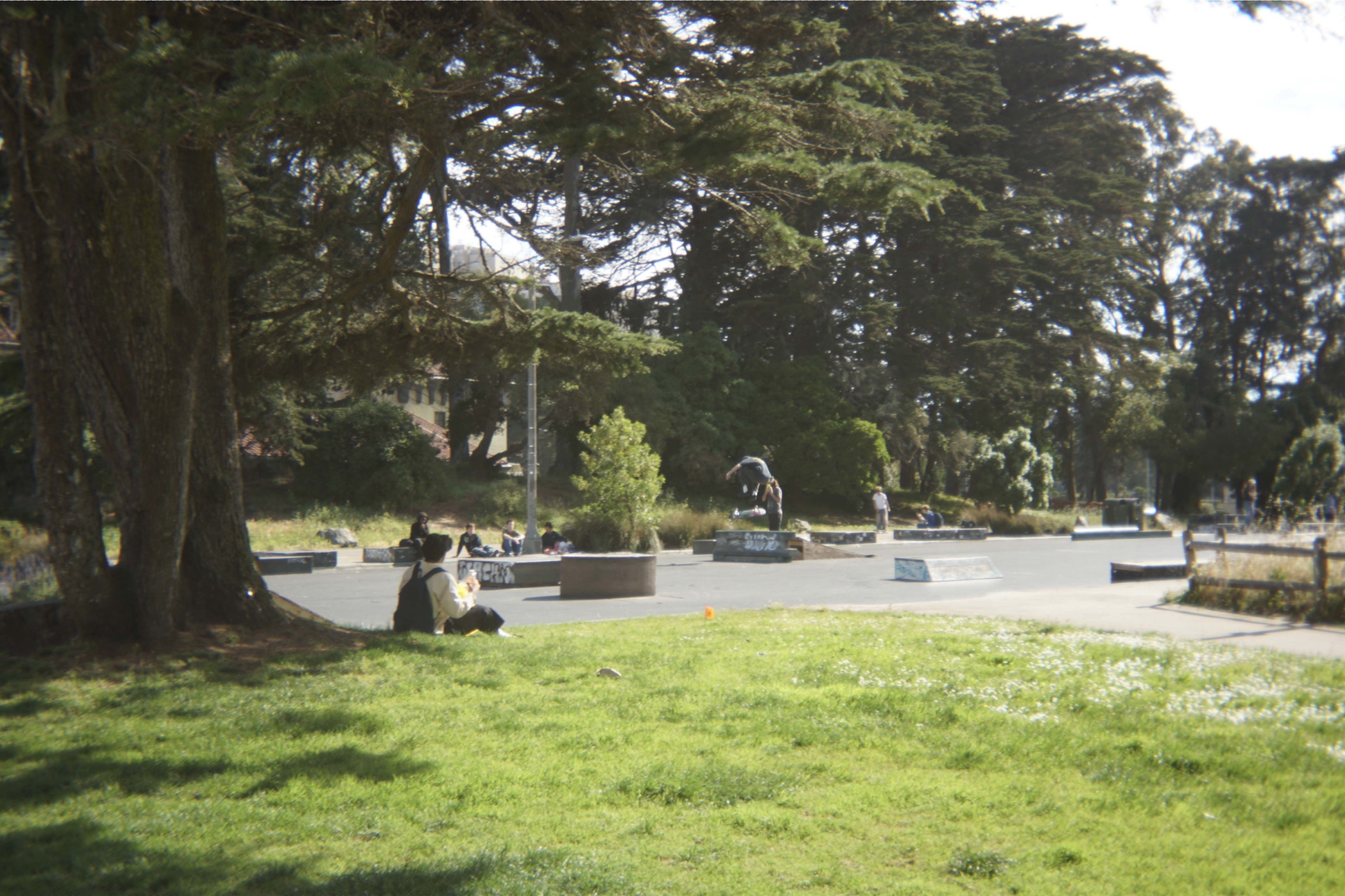
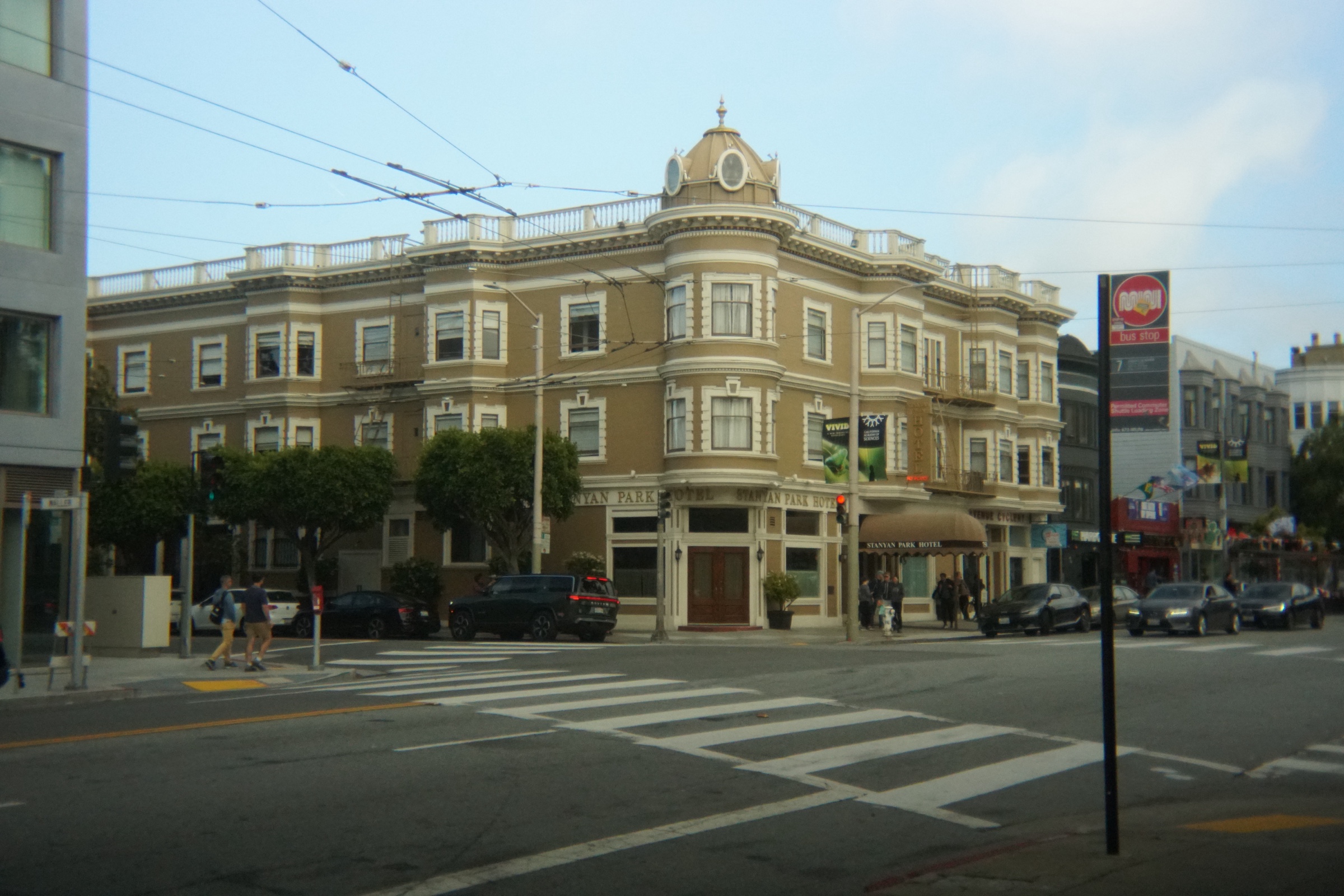
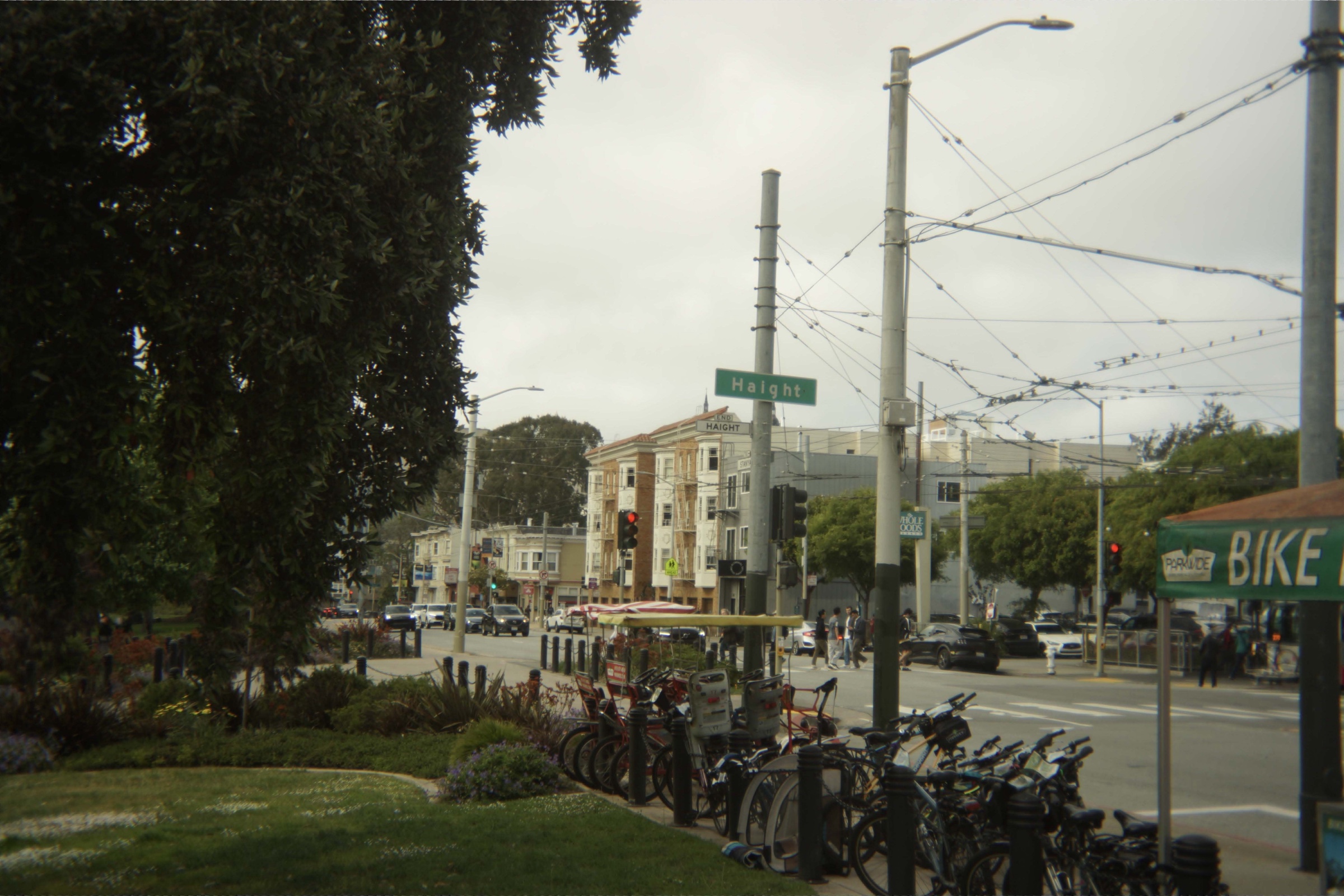
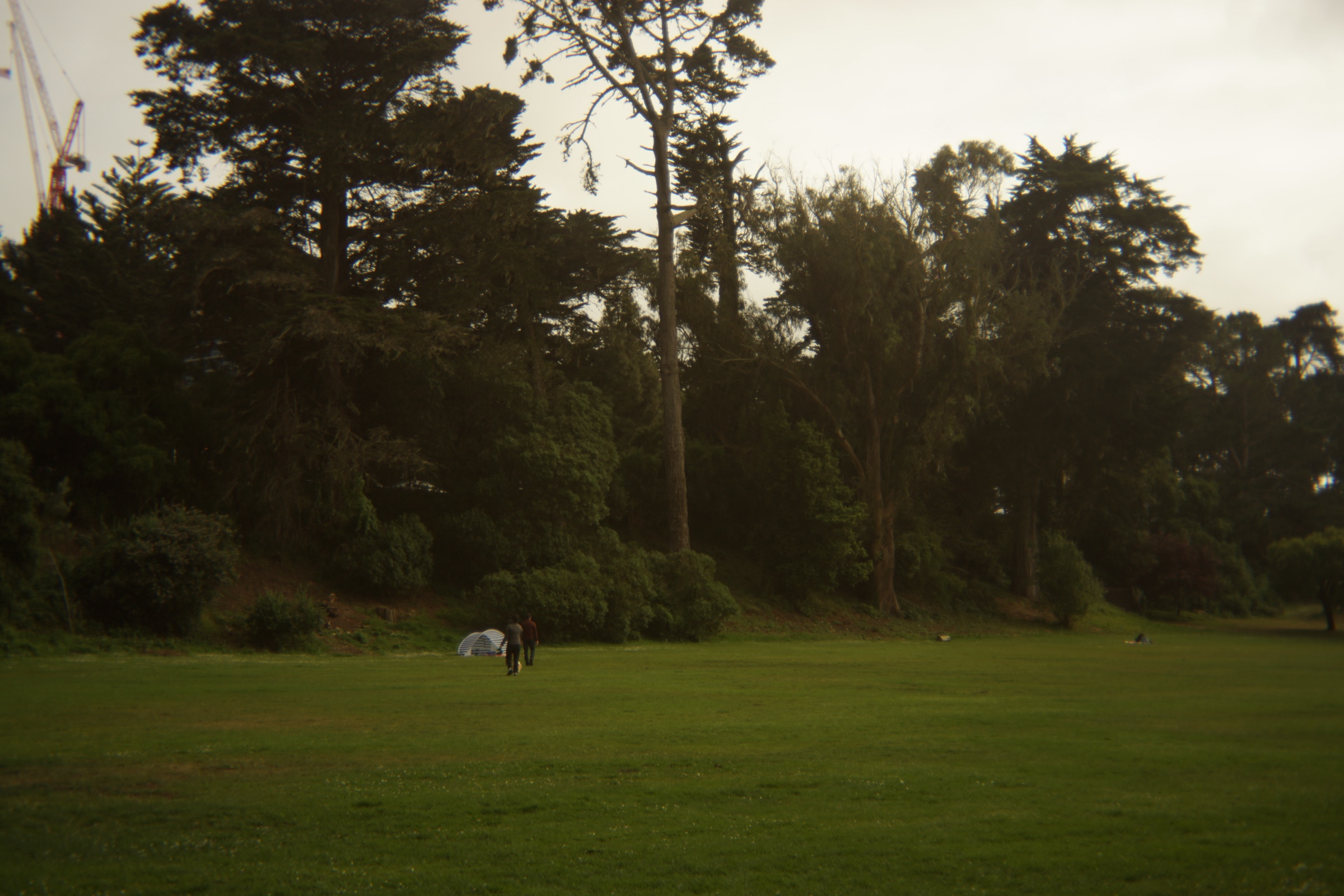
What is psychedelic San Francisco? Setting out on a cloudy summer day,
I hoped to answer this question through closely observing my favorite neighborhood in the city: Haight-Ashbury.
With two bags slung over my shoulder, one housing my laptop and journal and the other equipped with camera gear,
I wandered around the city's historic psychedelic hotspot both intentional and lost.
Hippie Hill
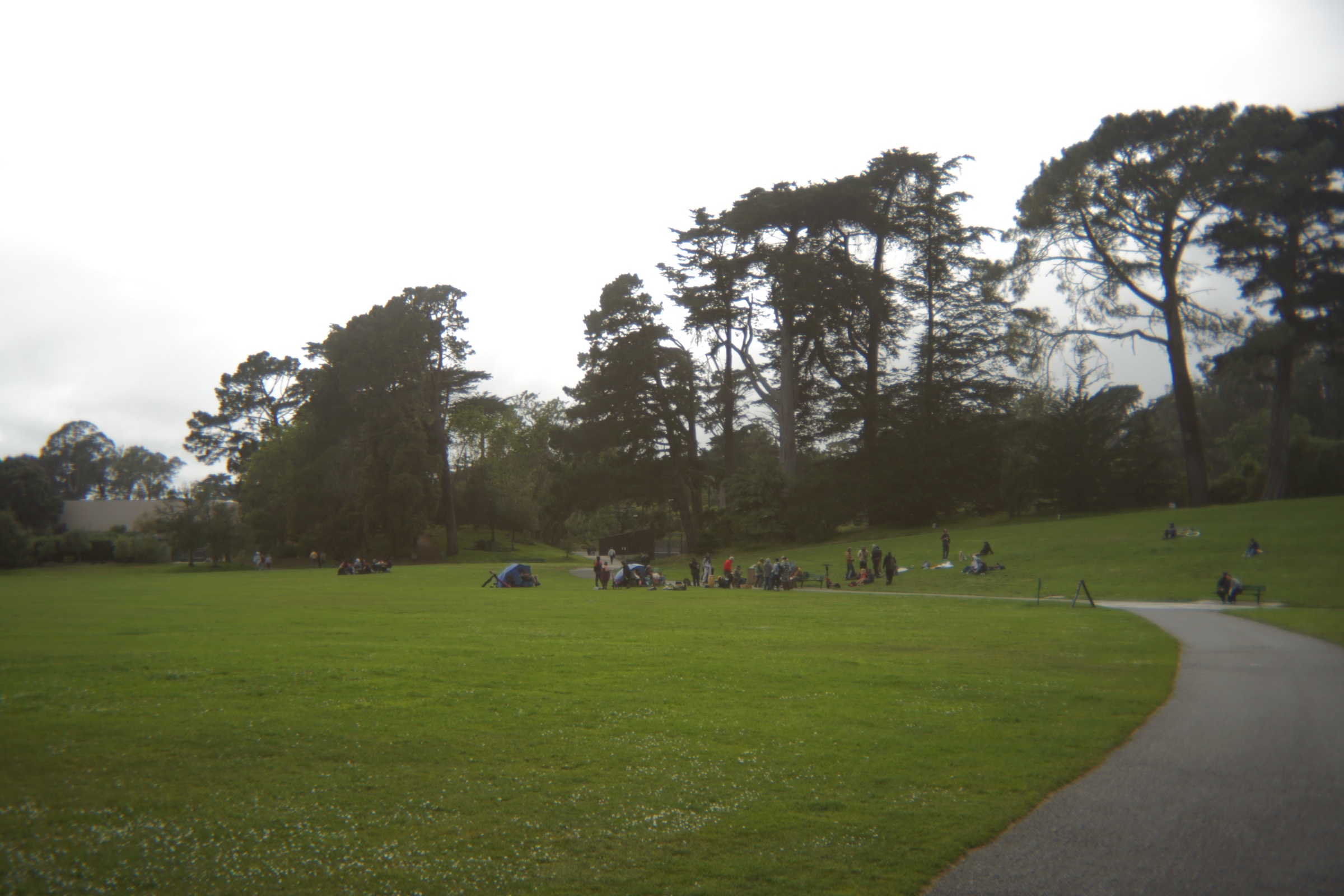
I first wandered over to Hippie Hill, a short walk from the west end of Haight St. I followed a concrete path that carved
through an urban yet forested meadow on the edge of Golden Gate Park.
The path opened up to a field where frisbees floated, groups gathered in small bunches,
dogs ran about and kites were flown in the summer breeze.
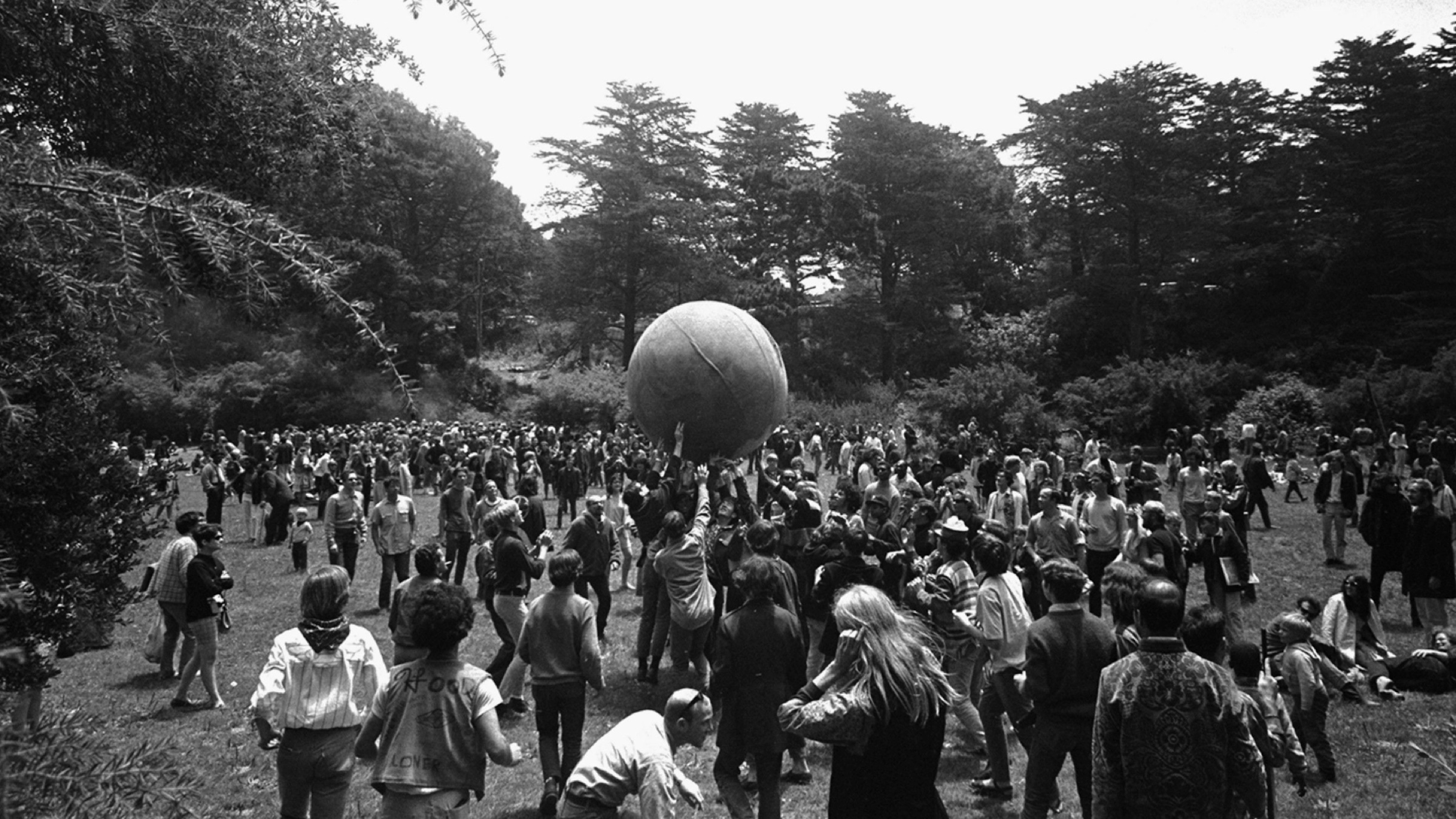
These same fields served as an incubator of hippie culture. Massive communities gathered and frolicked in the
cypress and eucalyptus meadows. Joints were passed around and music echoed, a practice that is not entirely lost today.
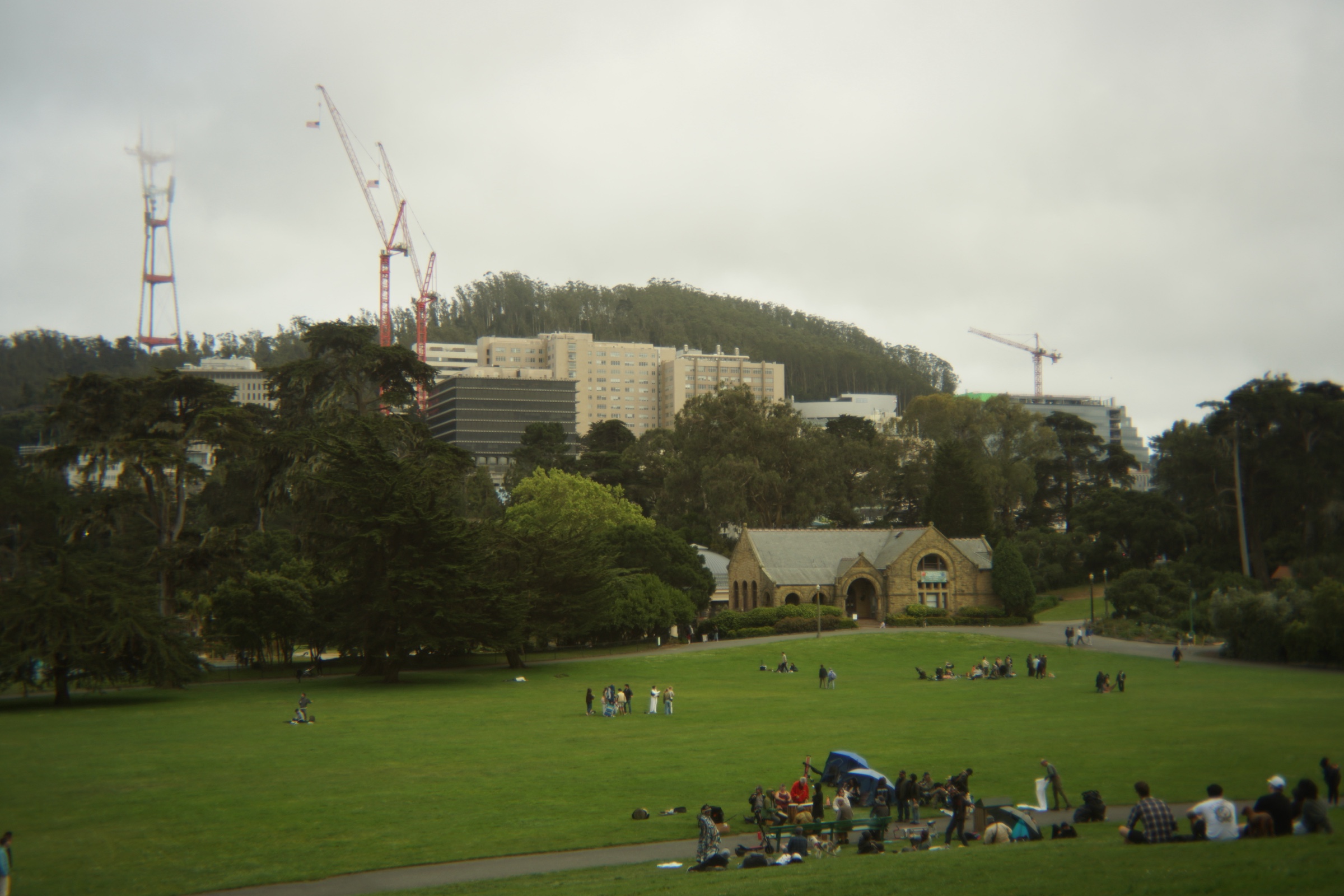
Construction cranes and Sutro Tower loom over scattered groups while a concert rumbles below
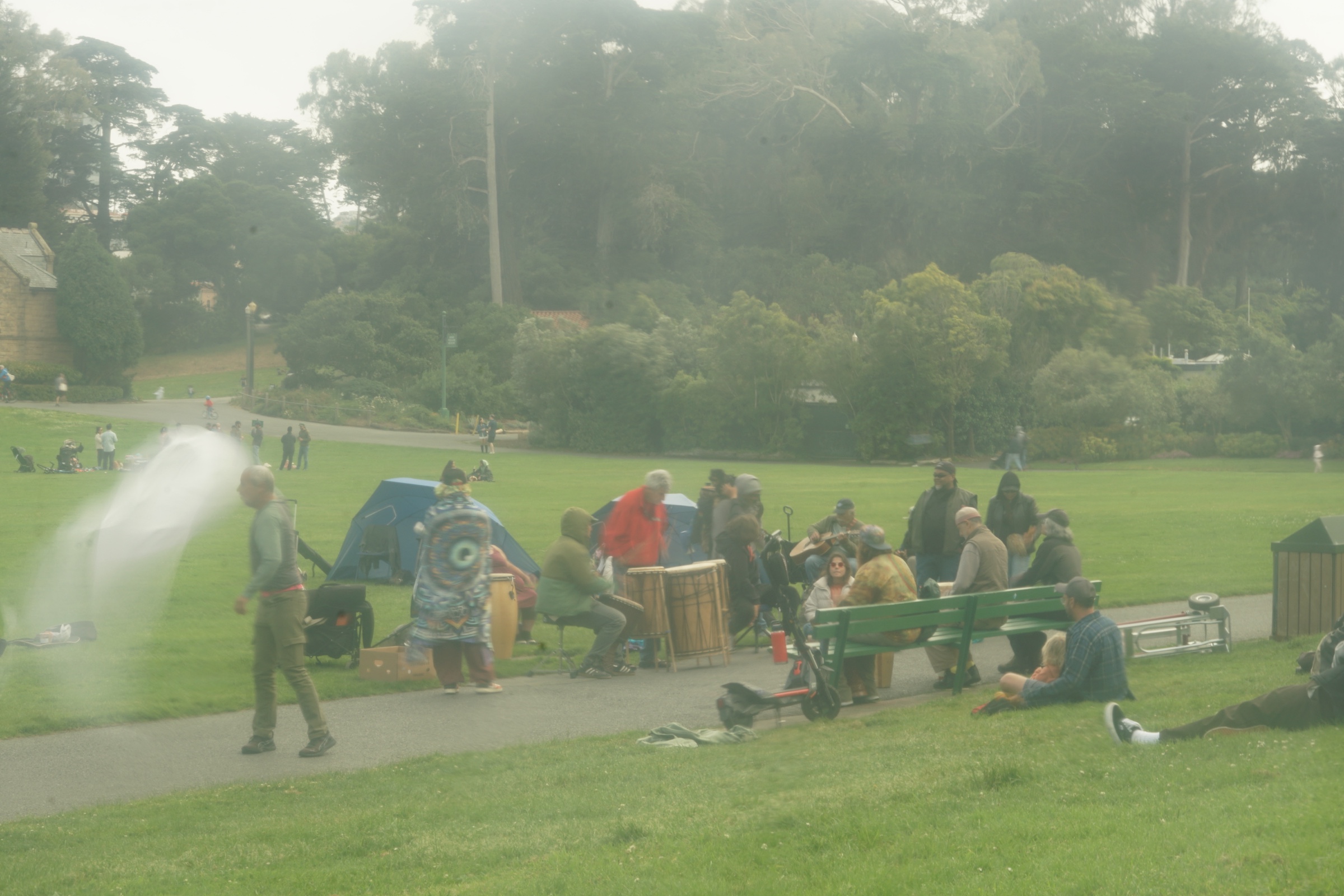
Dancing man with blanket one - shot through cellophaneDancing man with blanket two - shot through cellophane
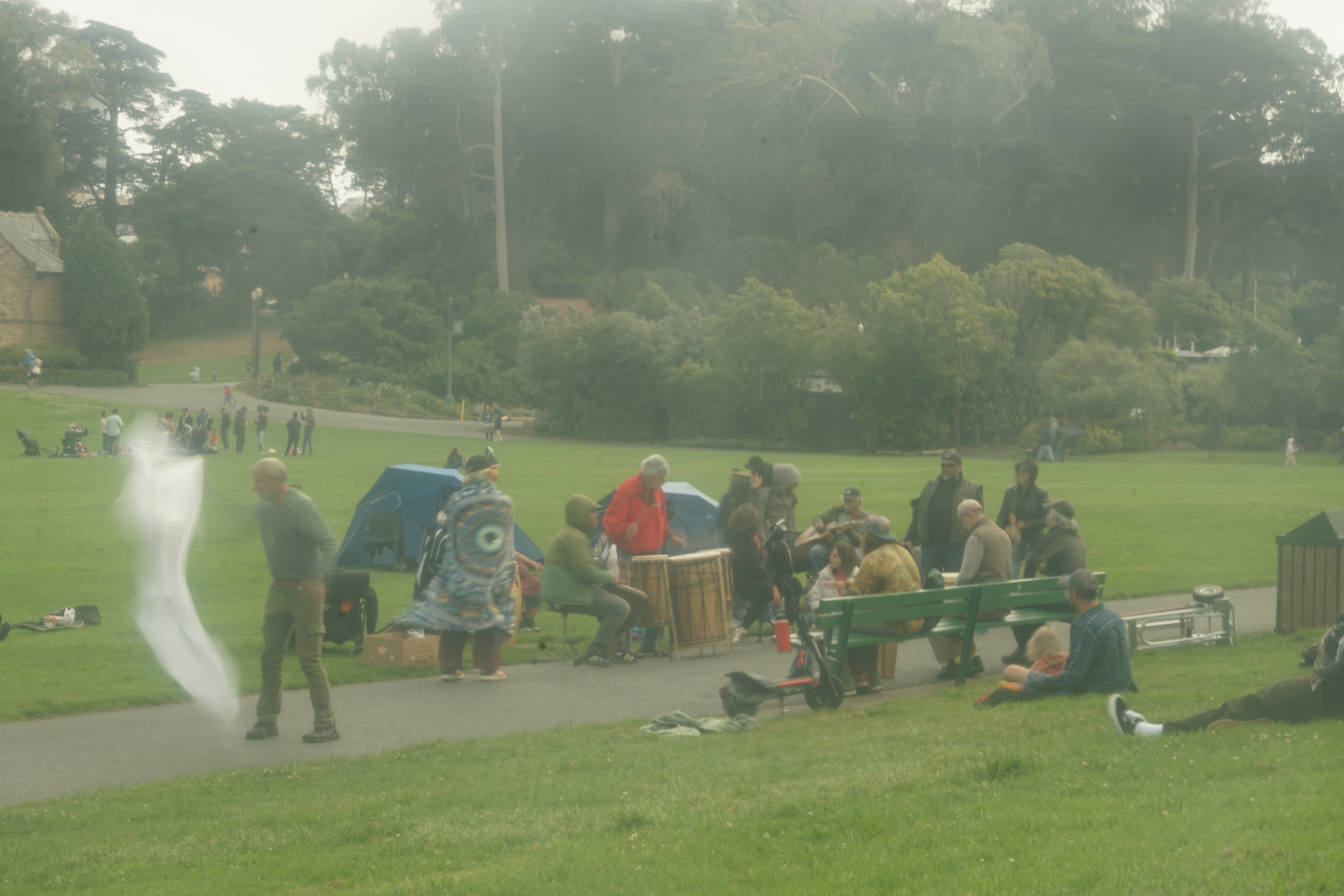
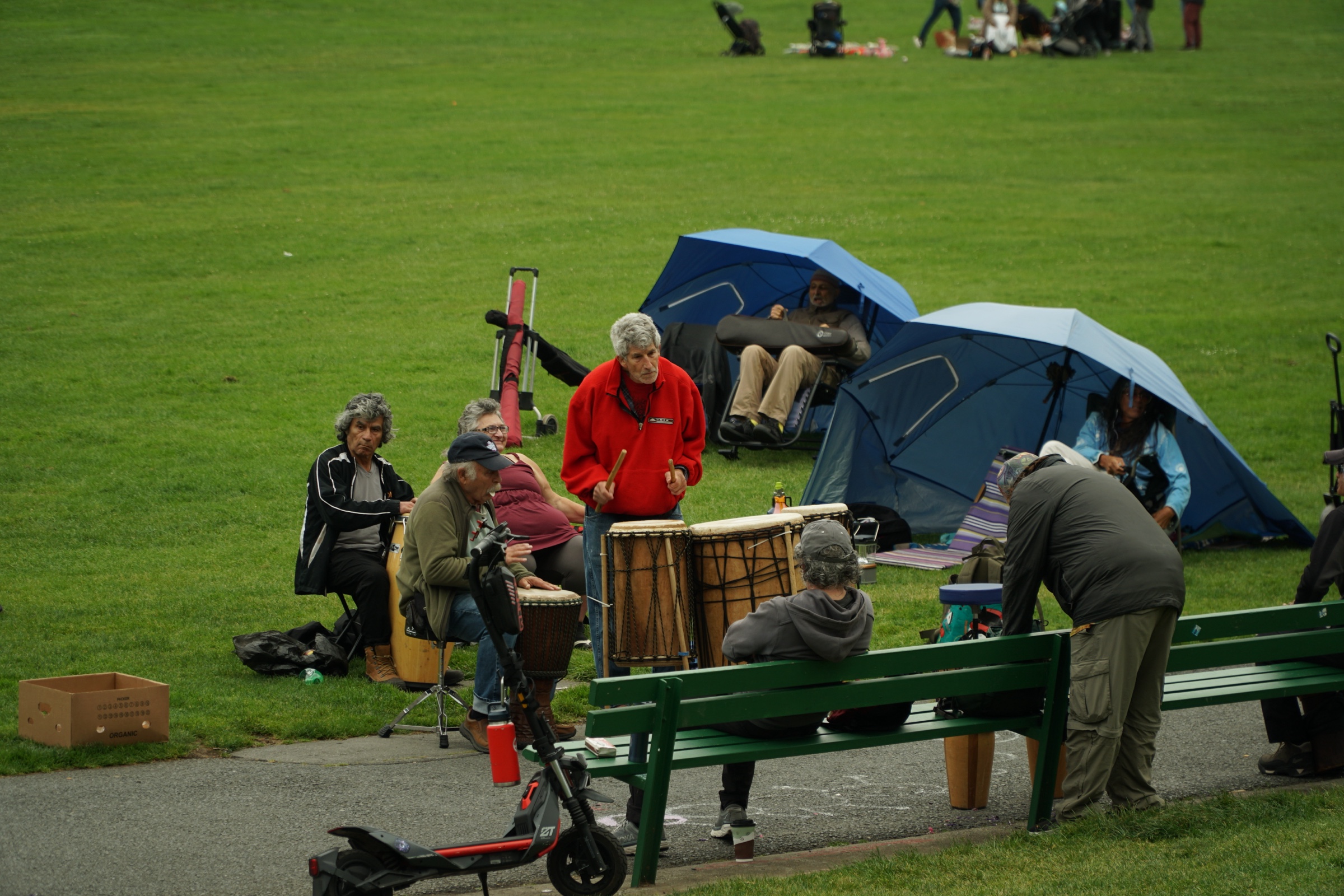
It was only fitting that as I started my day shooting psychedelic San Francisco, I would encounter an
impromptu performance. A steady percussion beat backed by tambourine echoed, while surrounding onlookers danced, swayed,
and bobbed their heads to the beat. Tie-dye attire and Grateful Dead merchandise was proudly worn as small puffs of smoke emerged from
the crowd. Walkers passing by would linger for a few seconds, dance or smile, then go on with their day.
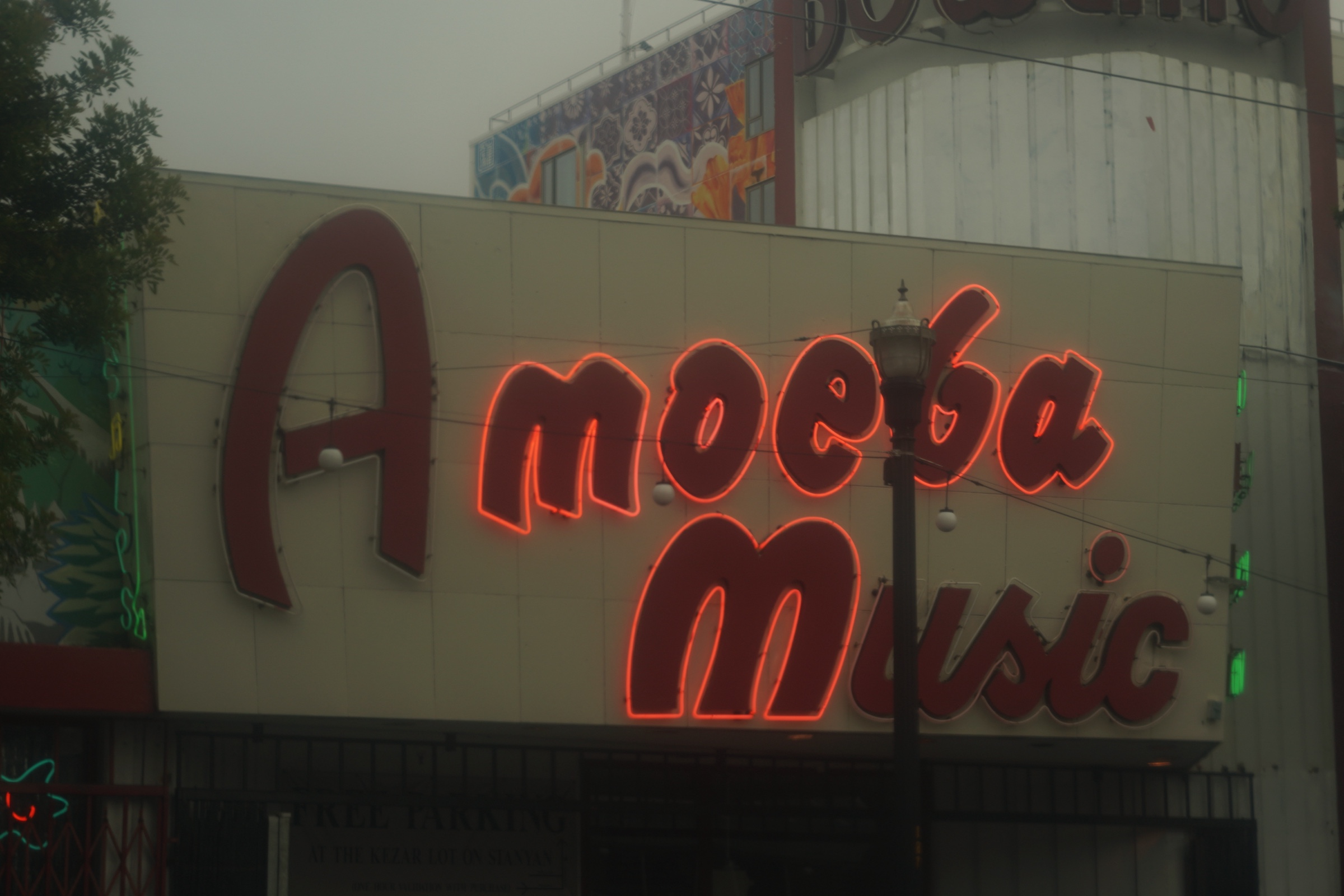
Amoeba Music
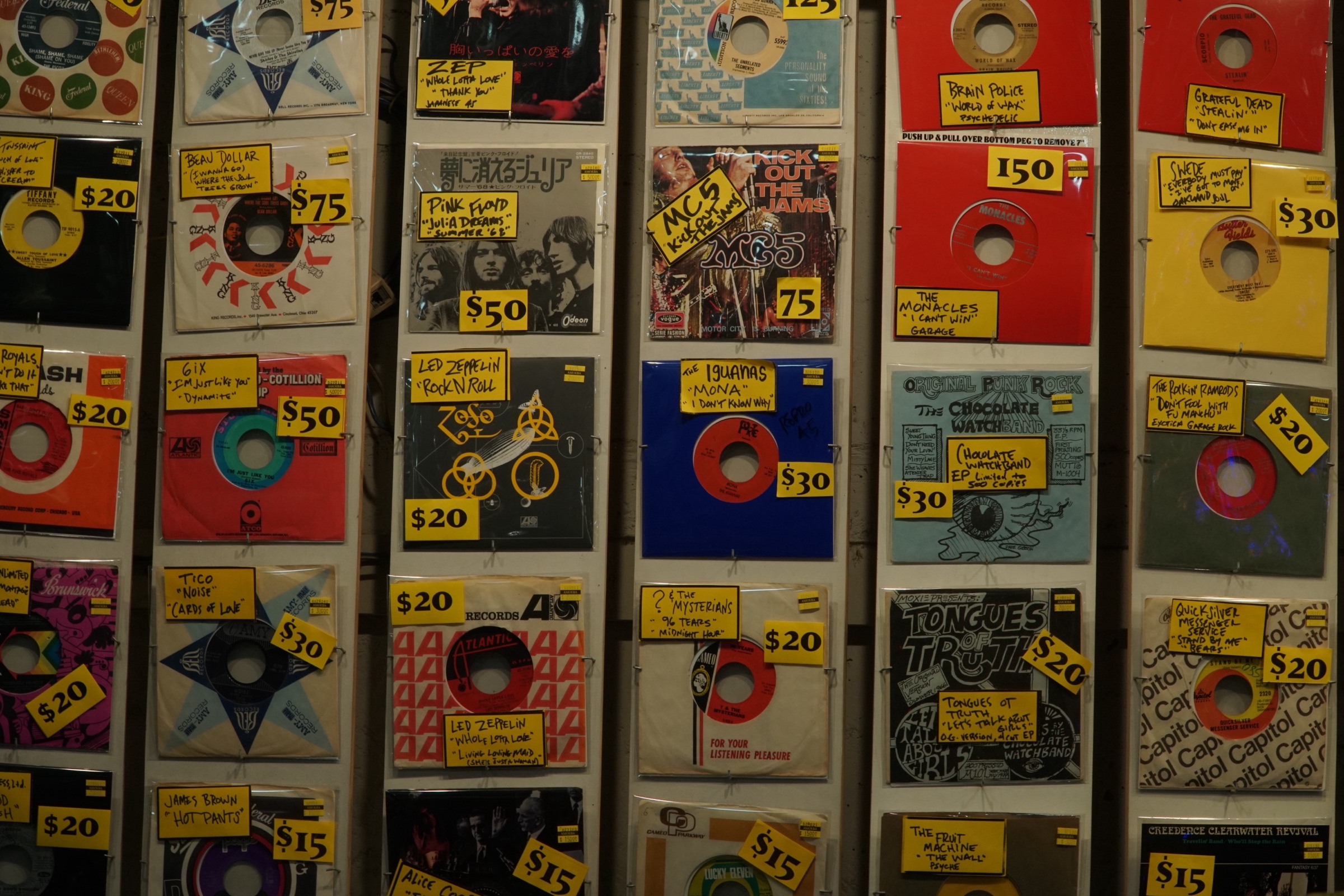
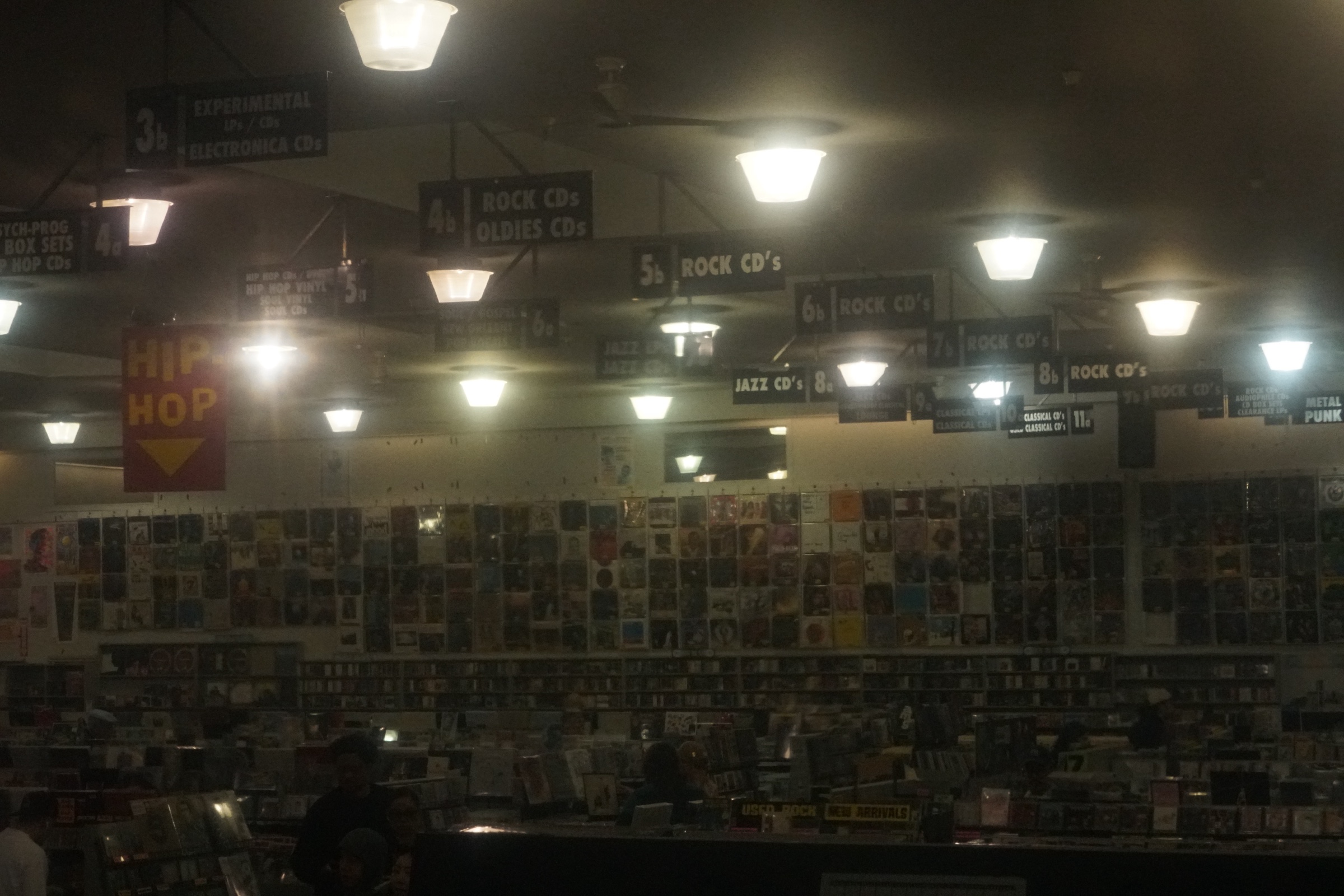
My next stop was the musical landmark Amoeba Music. Touted by SF Gate as having the city's most recognizable shopping bag,
the Haight Street staple is nearly impossible to miss.
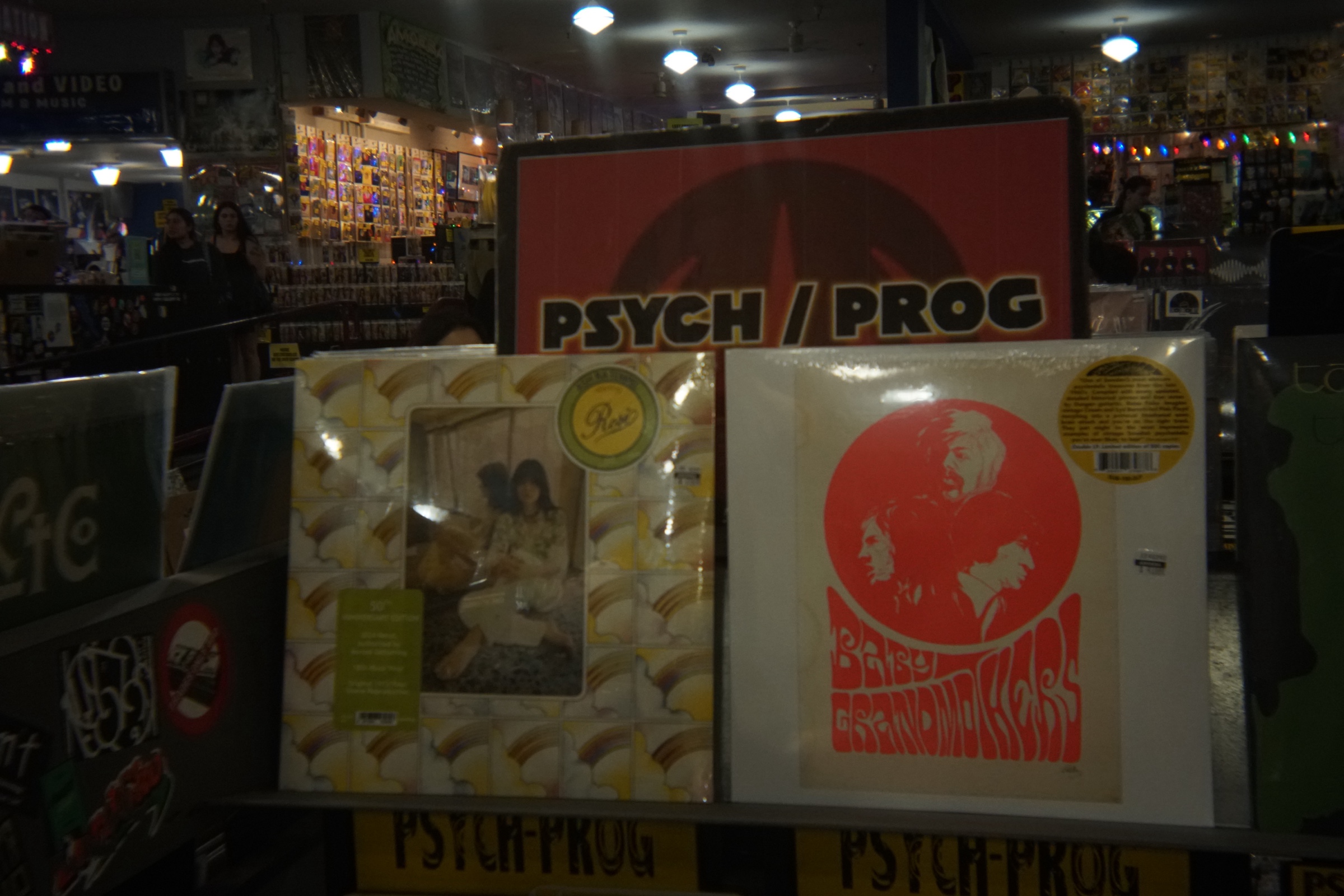
Although I have stepped into the cavernous interior many times, I had never left as a patron, purely by accident.
Amoeba is undeniably cool and a standout even on Haight Street. Meticulously organized and guarded by dedicated staff,
the outlet is lively. While smoking a joint, founders Dave Prinz and Marc Weinstein were tasked with coming up with a name
for their rocky, adaptive, and psychedelic concept shop. Dave uttered Amoeba Music and there was no looking back. While looking
for a logo they knew a local artist named Shepherd Hendrix (name sound familiar?), and for just $500, the duo purchased the logo they use
today.
Despite being so graciously helped by staff when I asked to be pointed towards anything psychedelic,
I obnoxiously took some photos with my cellophane-wrapped contraption and walked out without spending a dime.
Hendrix House
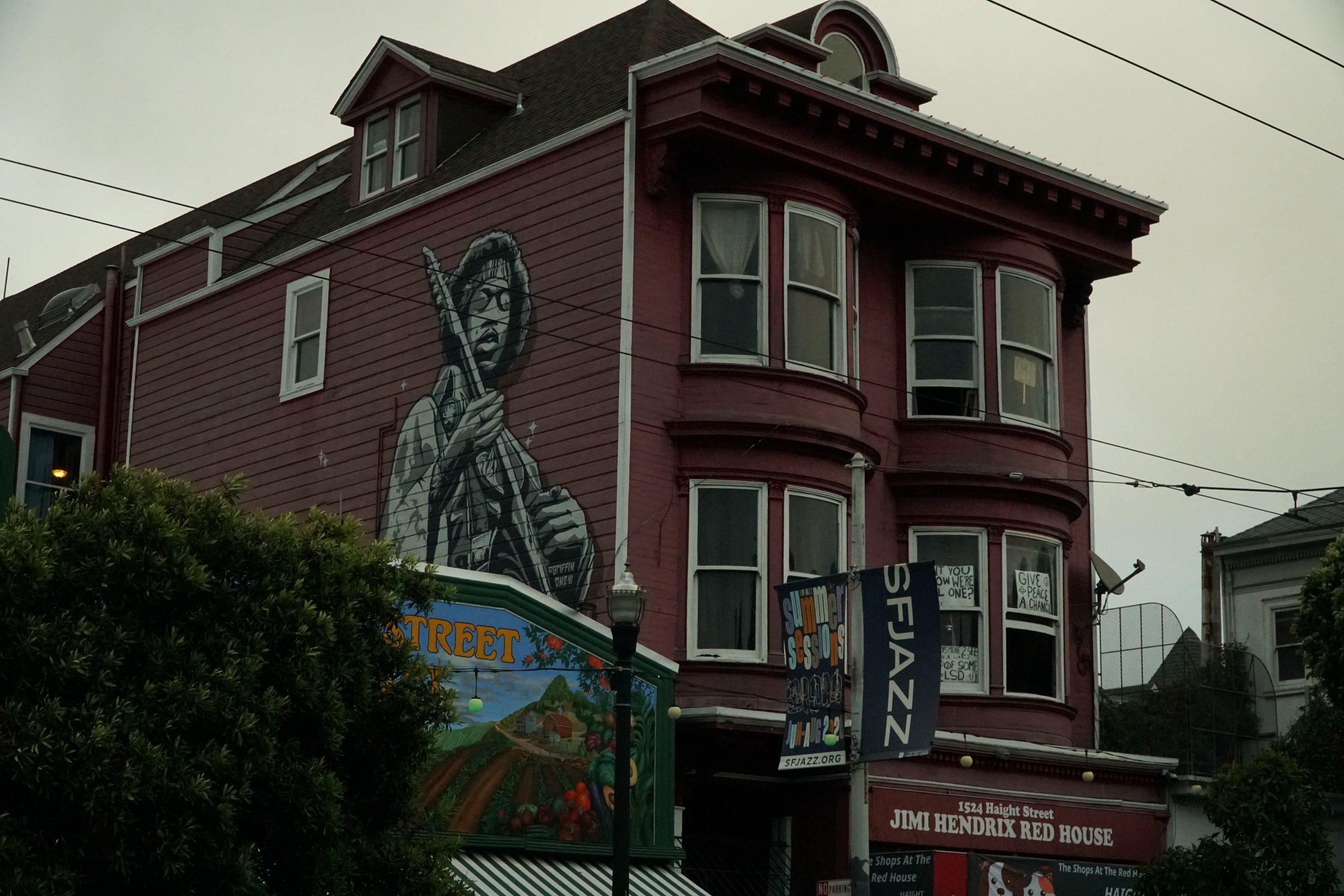
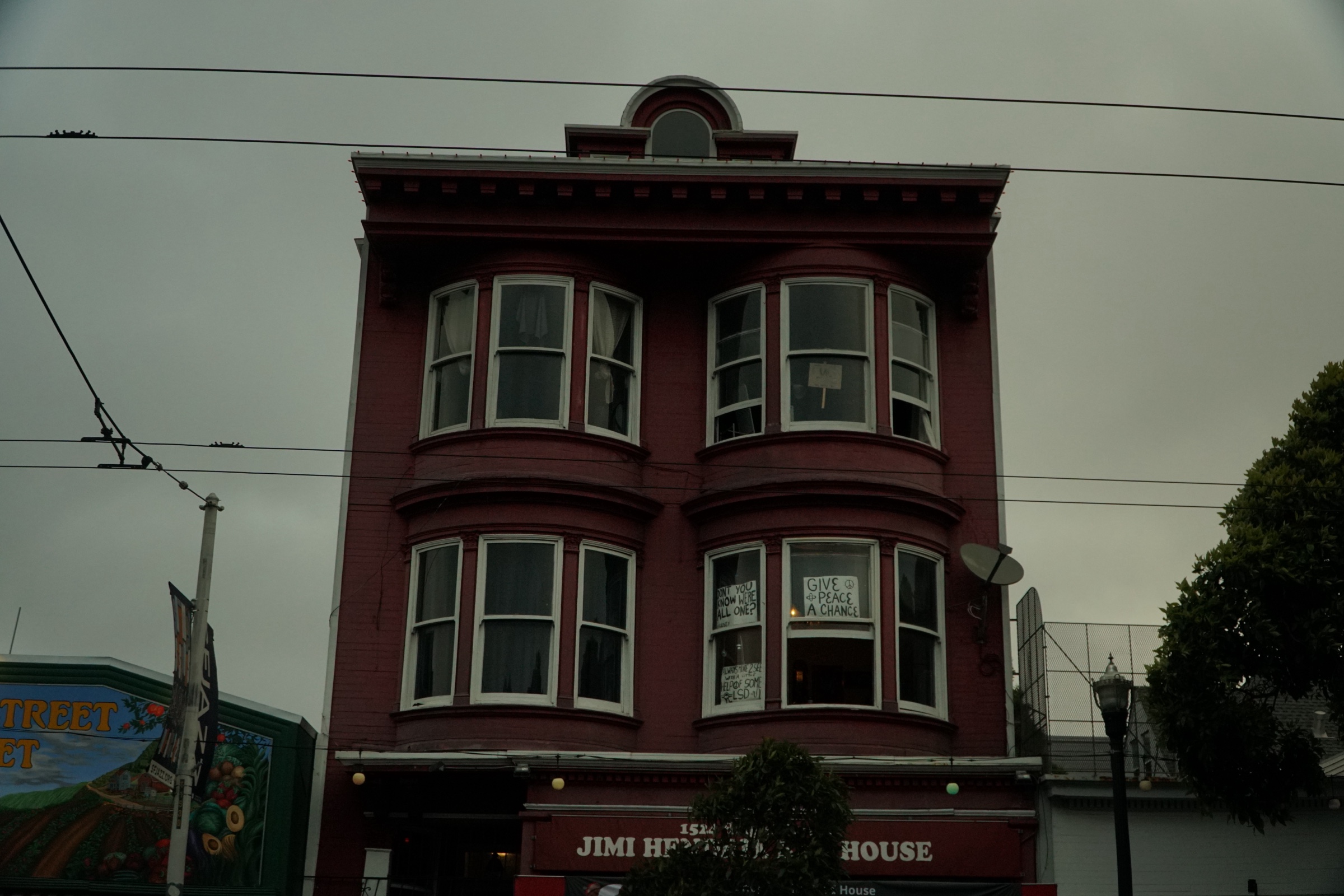
Next stop, Hendrix House.
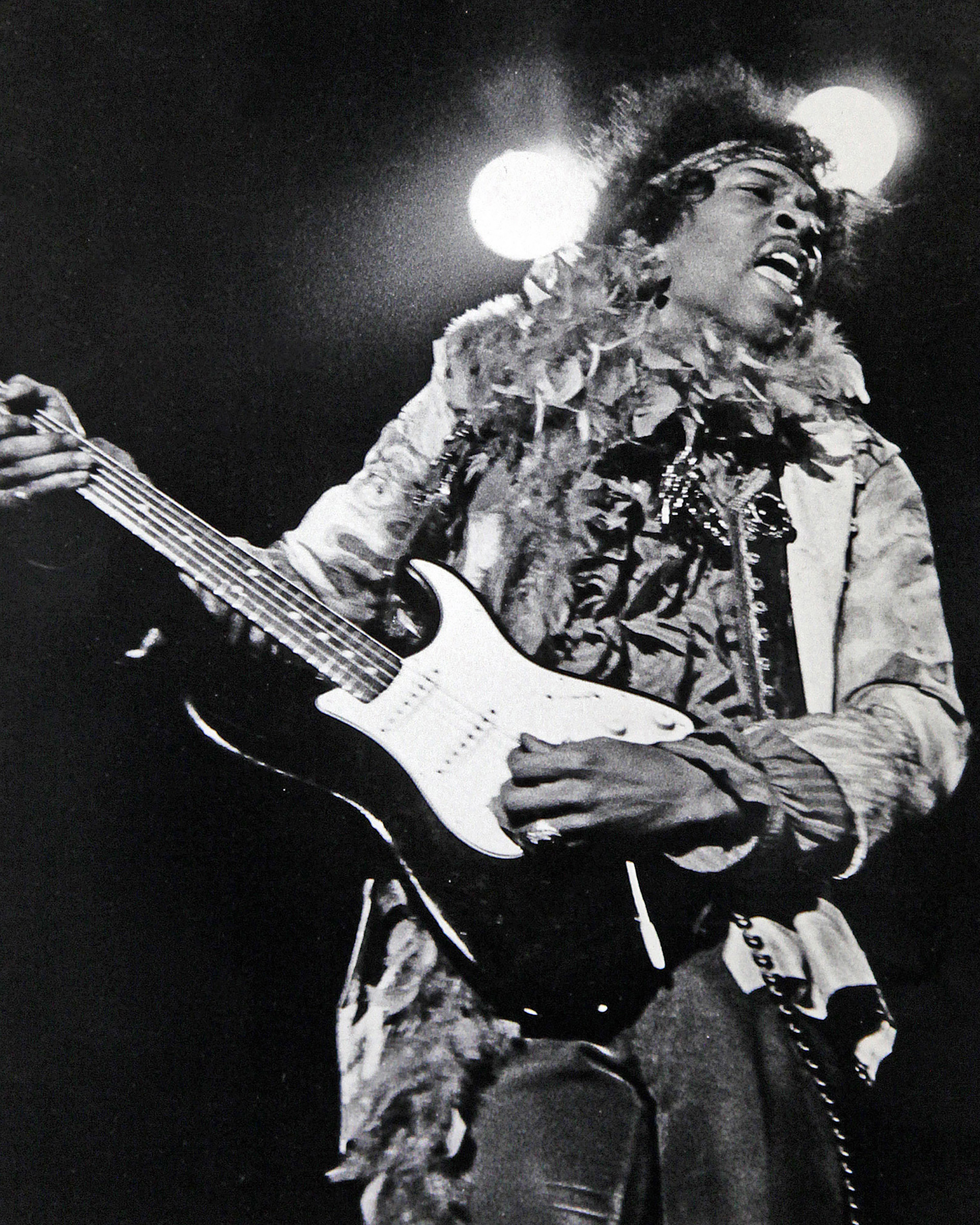
Jimi Hendrix playing in Monterey, California circa 1967 at the Monterey Pop Festival
Though rumored to be the former abode of rock star, Jimi Hendrix, many will be surprised to know, including myself at one point,
that Hendrix had never in fact lived in this residence. Despite its noteworthy location in the heart of the Haight-Ashbury
neighborhood, this red structure with his own face plastered on the side has no factual tie to Jimi Hendrix. Just thought you should know.
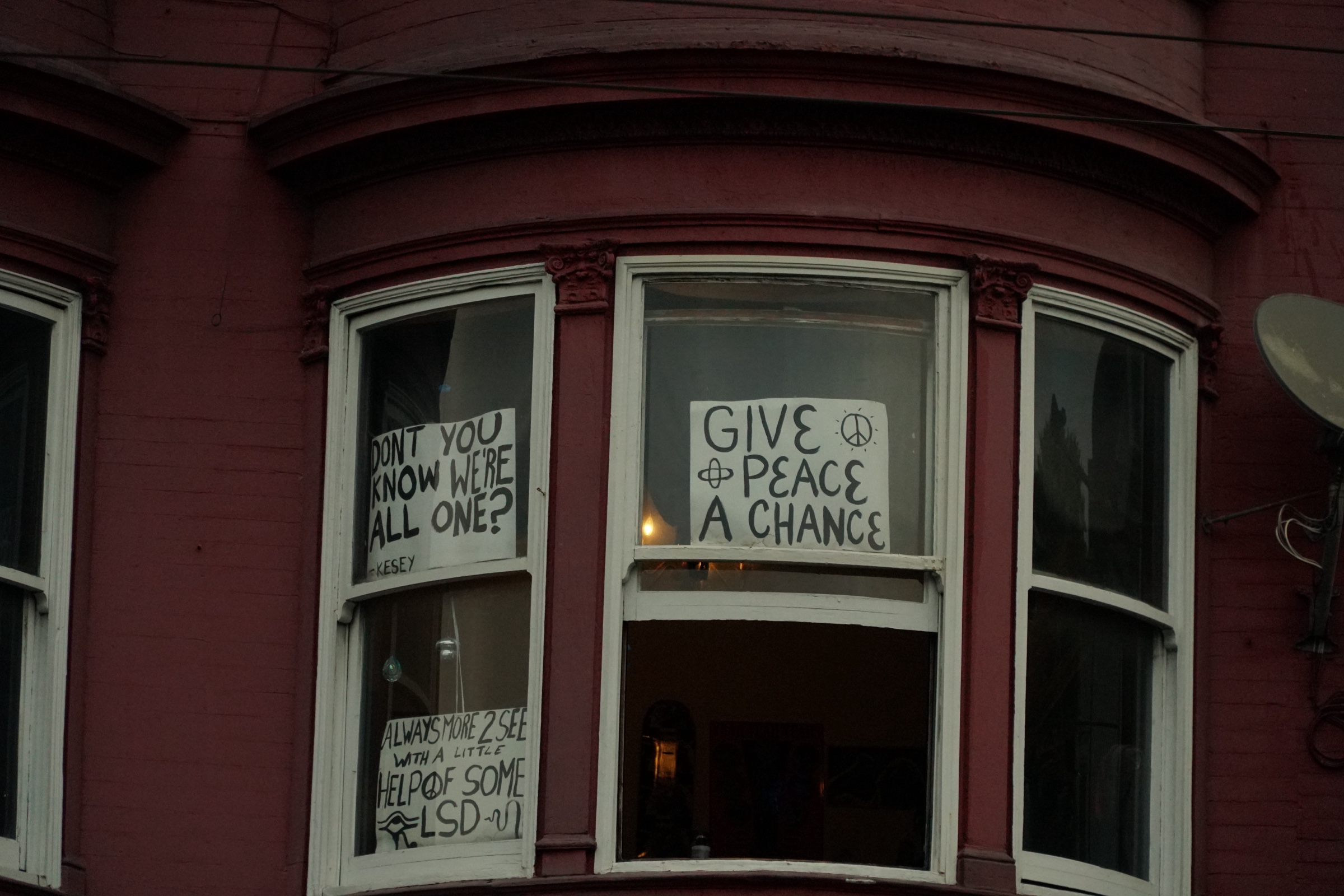
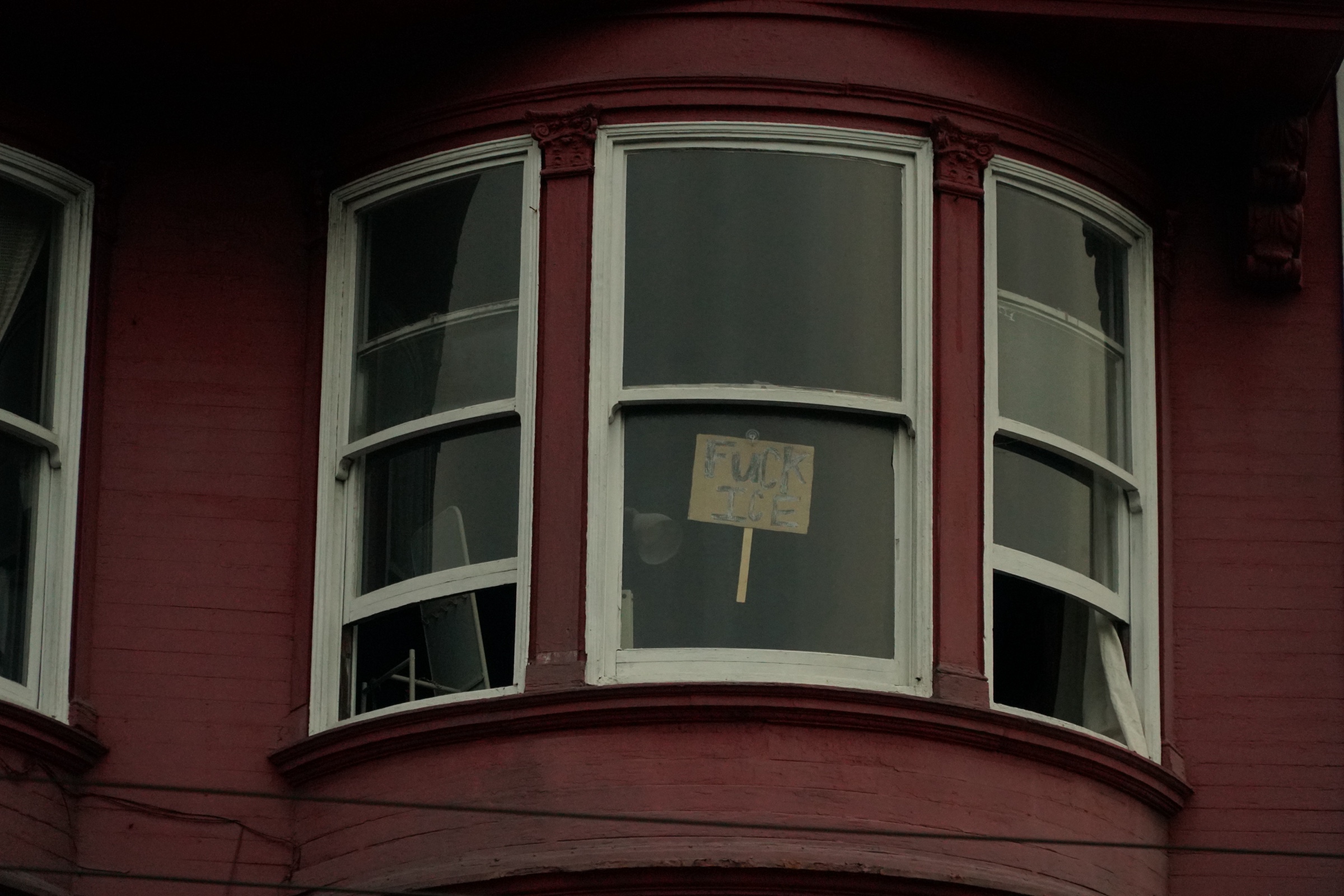
At least, the spirit of the neighborhood shines through in poster boards plastered to the windows facing Haight.
Messaging includes "Don't you know we're all one?" "Always more to see with a little help of some LSD," "Give Peace a Chance,"
and "Fuck Ice."
Haight-Ashbury
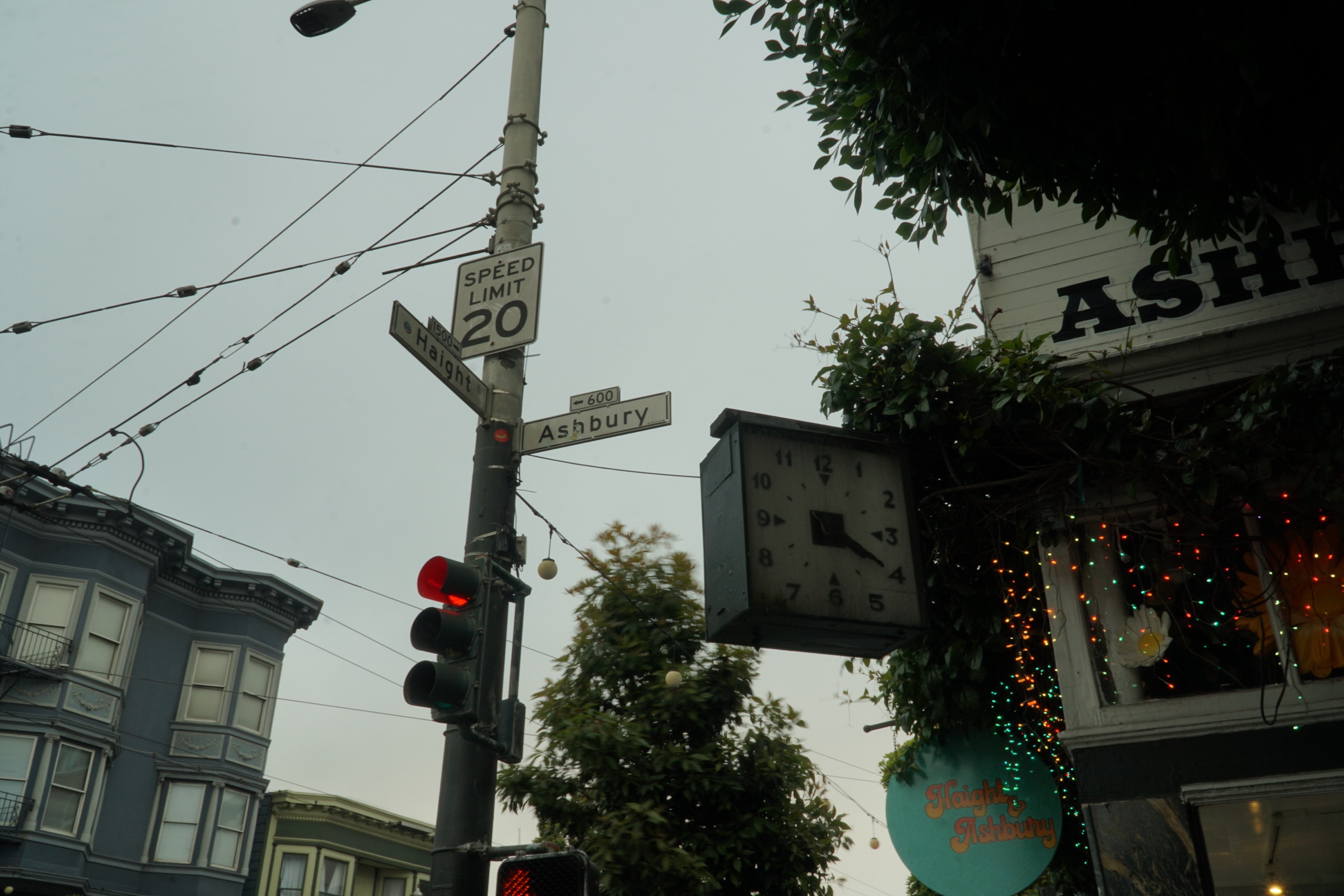
At the namesake intersection between Haight and Ashbury Street, you will frequently find a small crowd seated and chatting.
Just under the street signs, a double-sided clock permanently reads 4:20.
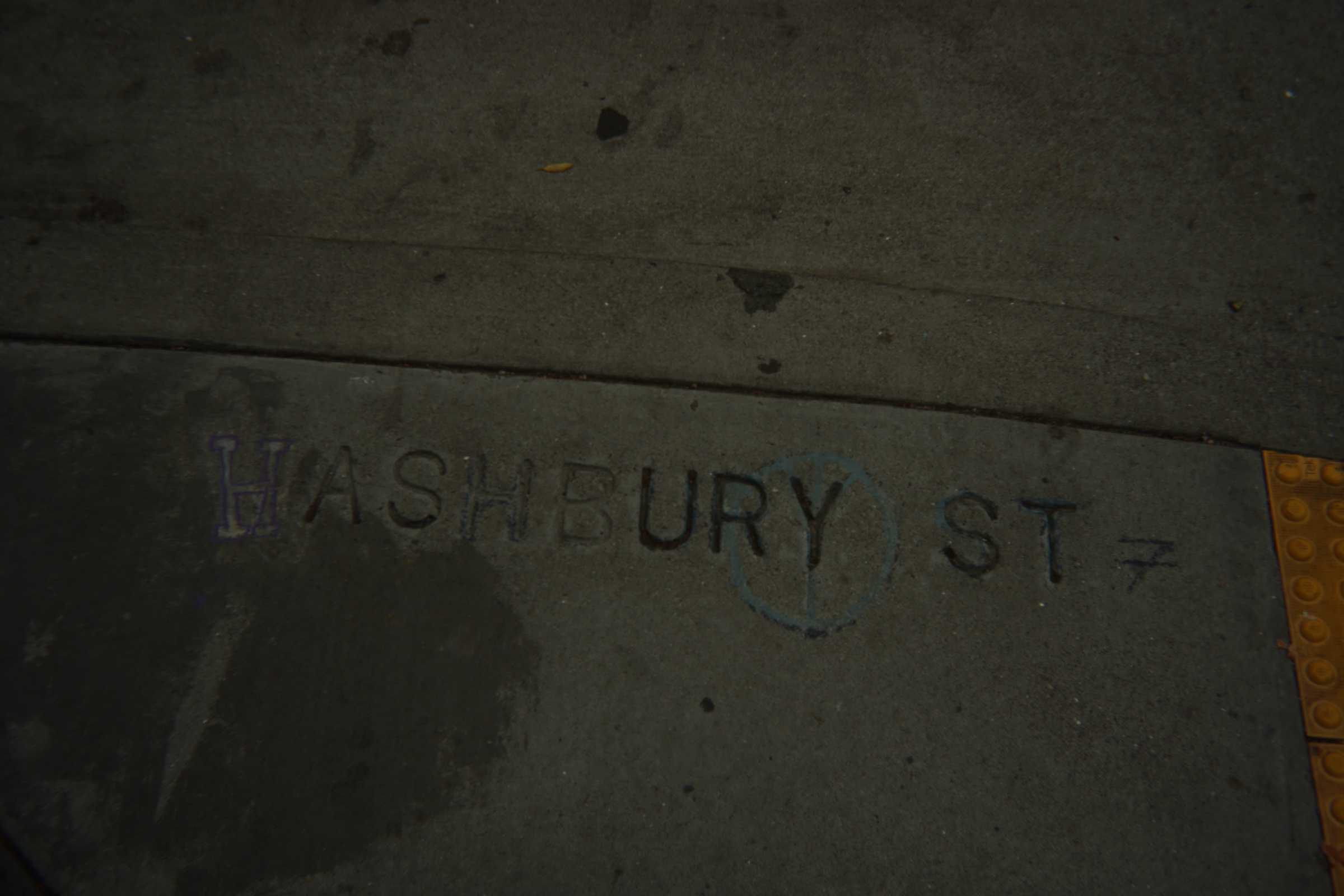
Storefront titled Haight & Ashbury on Haight-AshburyIntersection graffiti abbreviation "Hashbury"
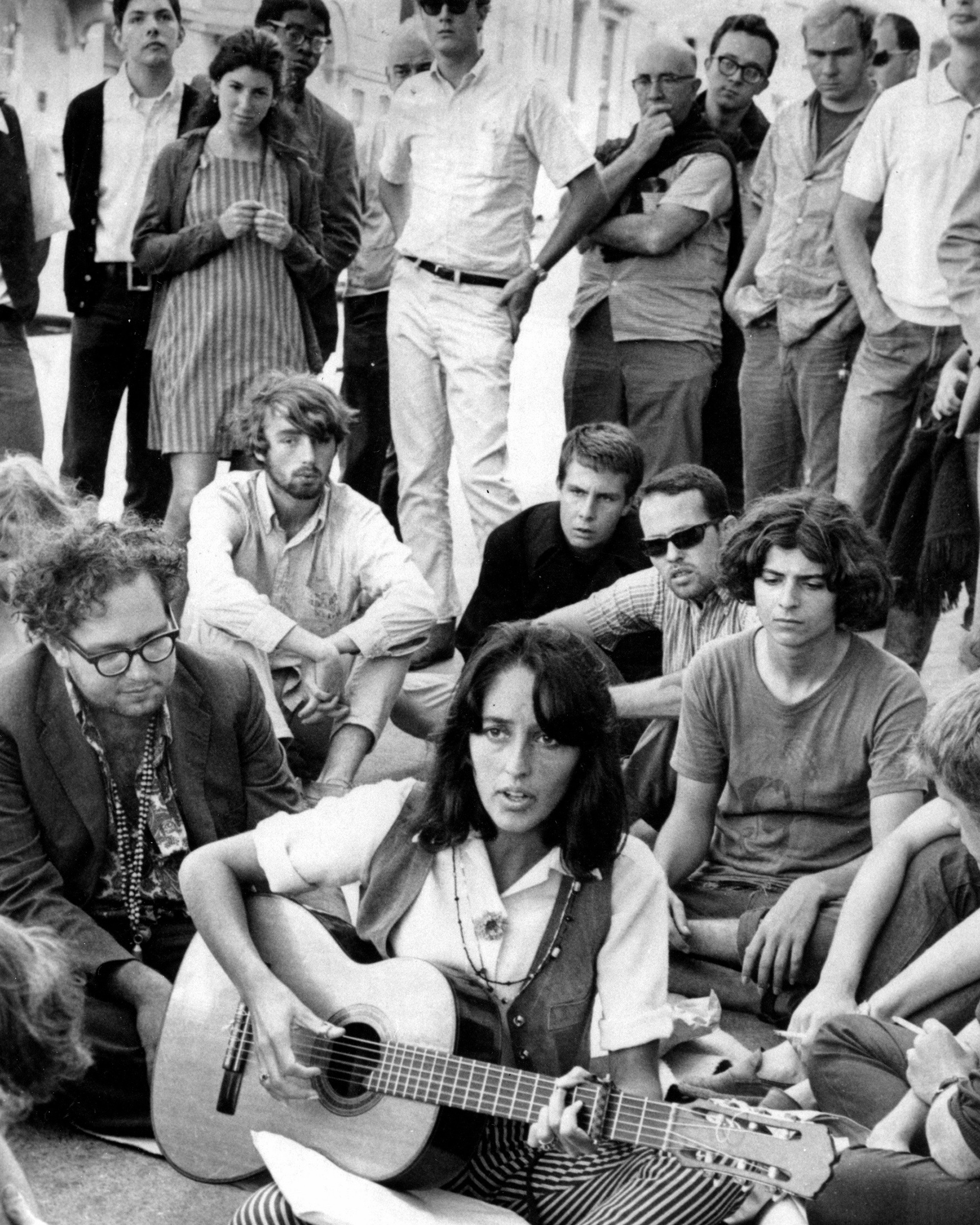
Joan Baez sat performing to small crowd at intersection of Haight and Ashbury Street
I lingered at this stoplight taking countless photos of the overlapping street signs, trying to achieve the
perfect balance of moody exposure and slow-blurred shutter speed while keeping some sort of emphasis on that double-sided clock.
The seated crowd beside me looked up puzzled as I tinkered with my camera, looking up at this sign that was so much more than the
name of a neighborhood. It was the namesake symbol of a psychedelic monument. One that outlived the Summer of Love, that keeps people coming back
to San Francisco hoping to find a piece of the open love and cultural exchange that was the heart of the hippie movement. It was, wait, nevermind,
I need to change my camera battery out.
Love on Haight
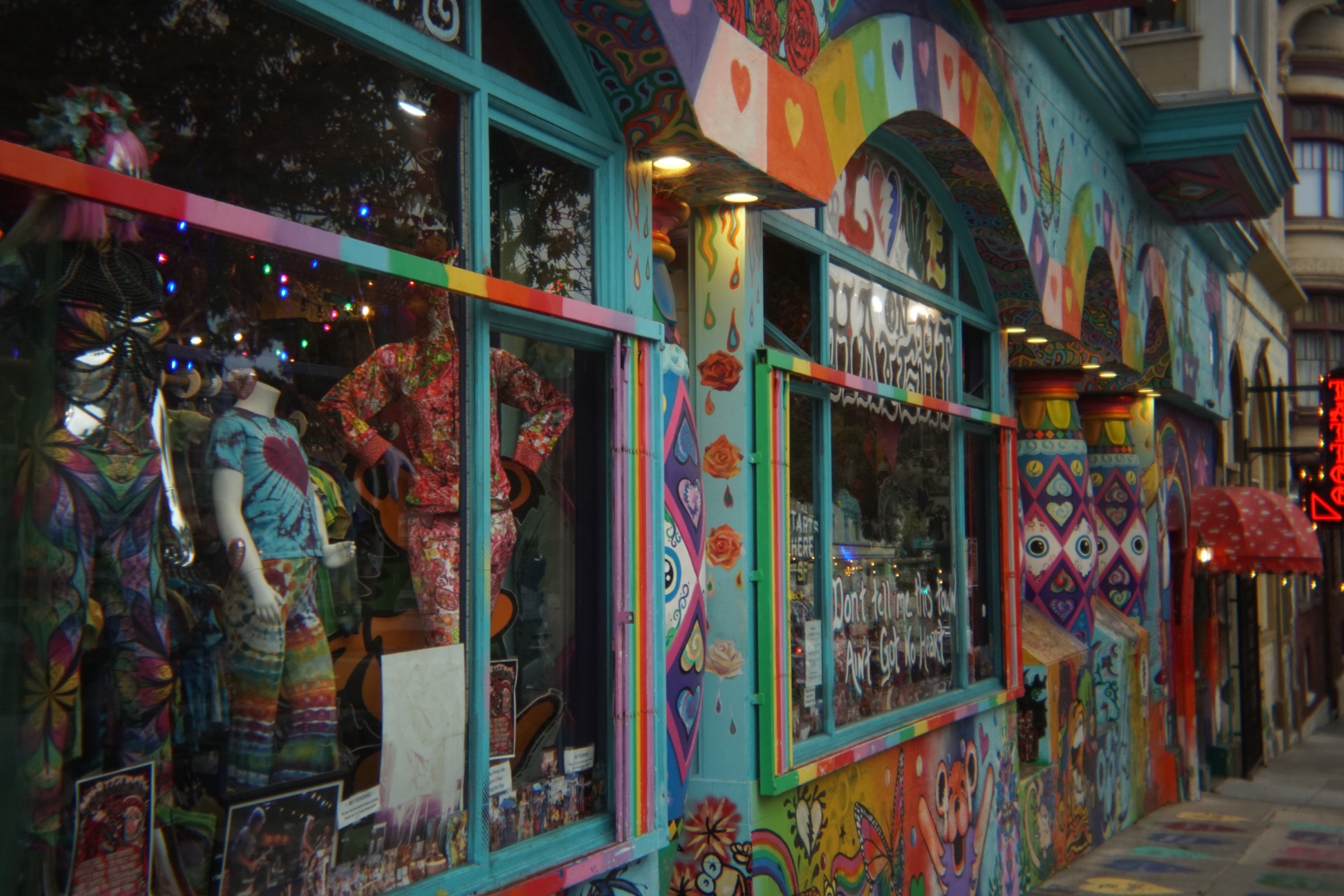
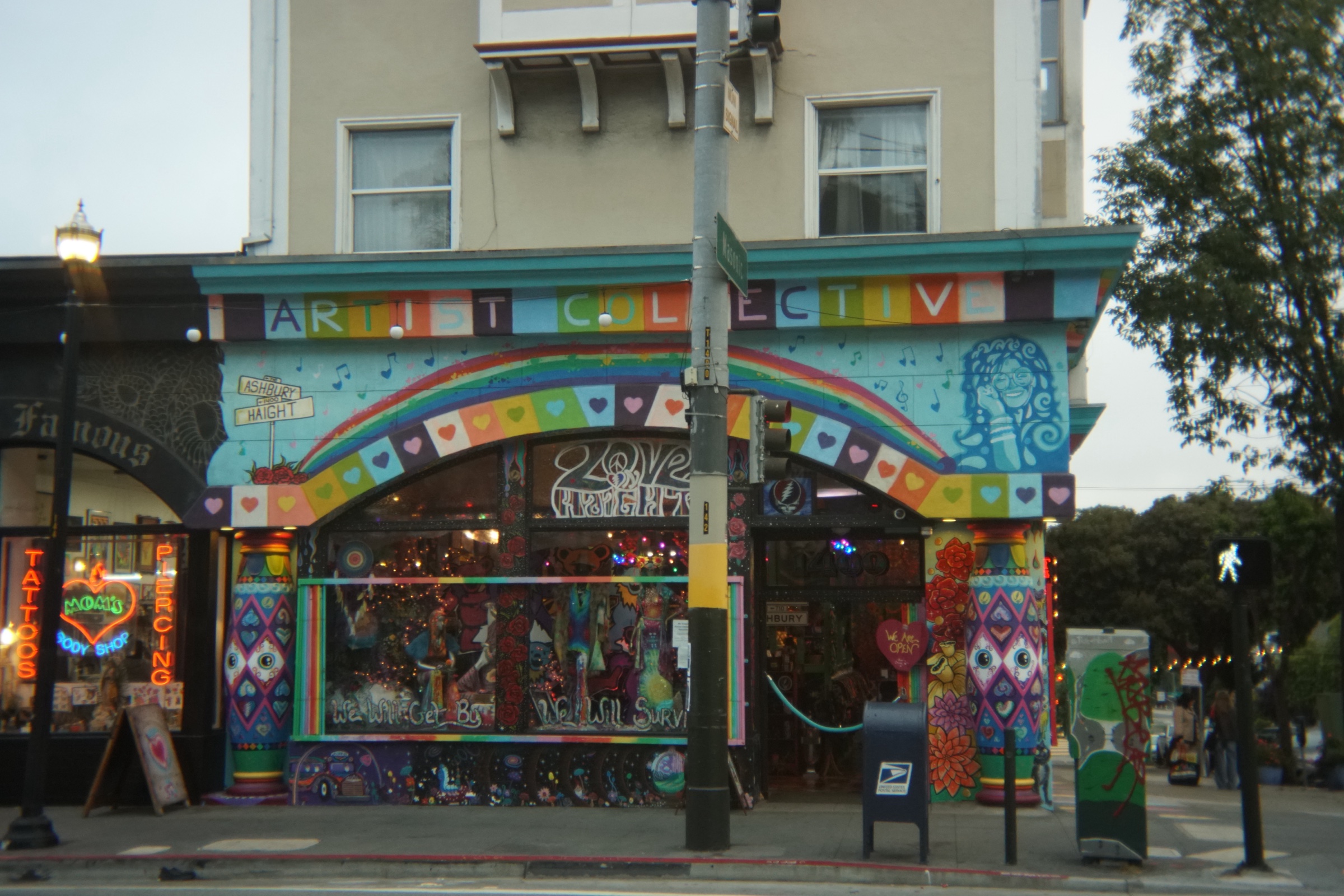
It is odd that on a street called Haight, pronounced 'hate,' a shop called Love (Love on Haight) stands out. Entrance signs
to the shop are twofold: "Largest Tie-Dye Collection in the World" and "The need for mystery is greater than the need for
an answer." Maybe if there were more rainbow swirls and a bit more of a flower motif I would think this stop to be psychedelic
while walking by.
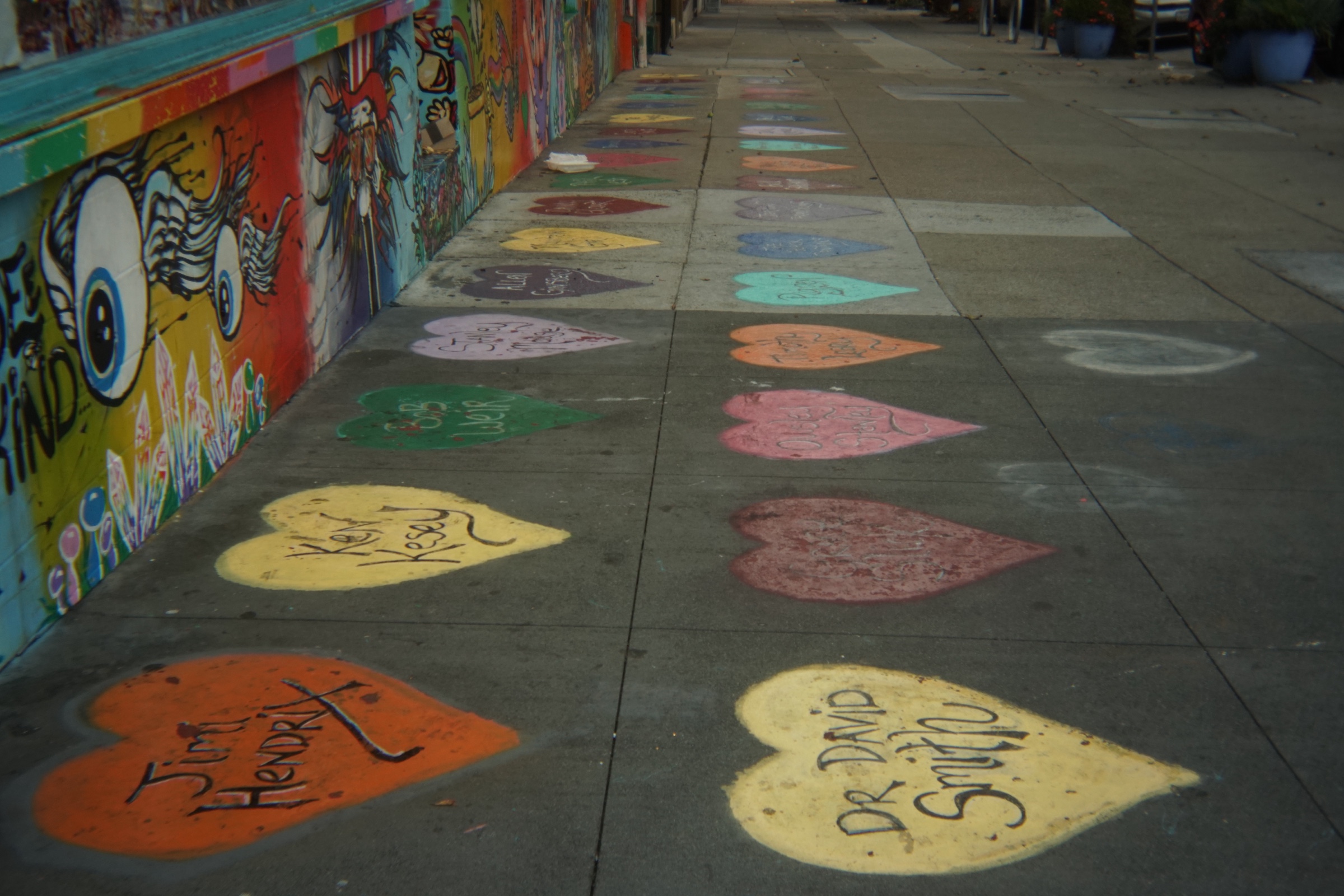
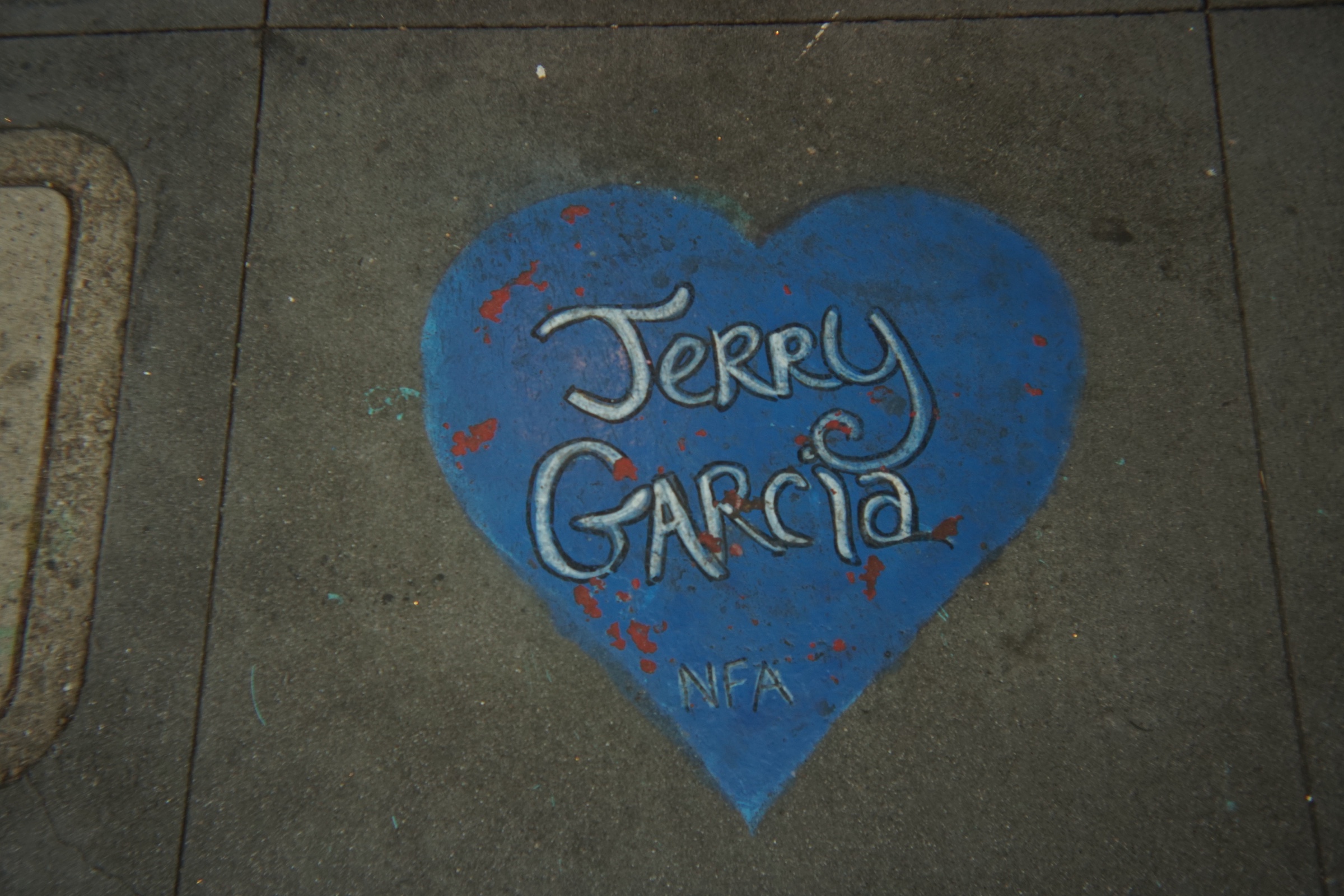
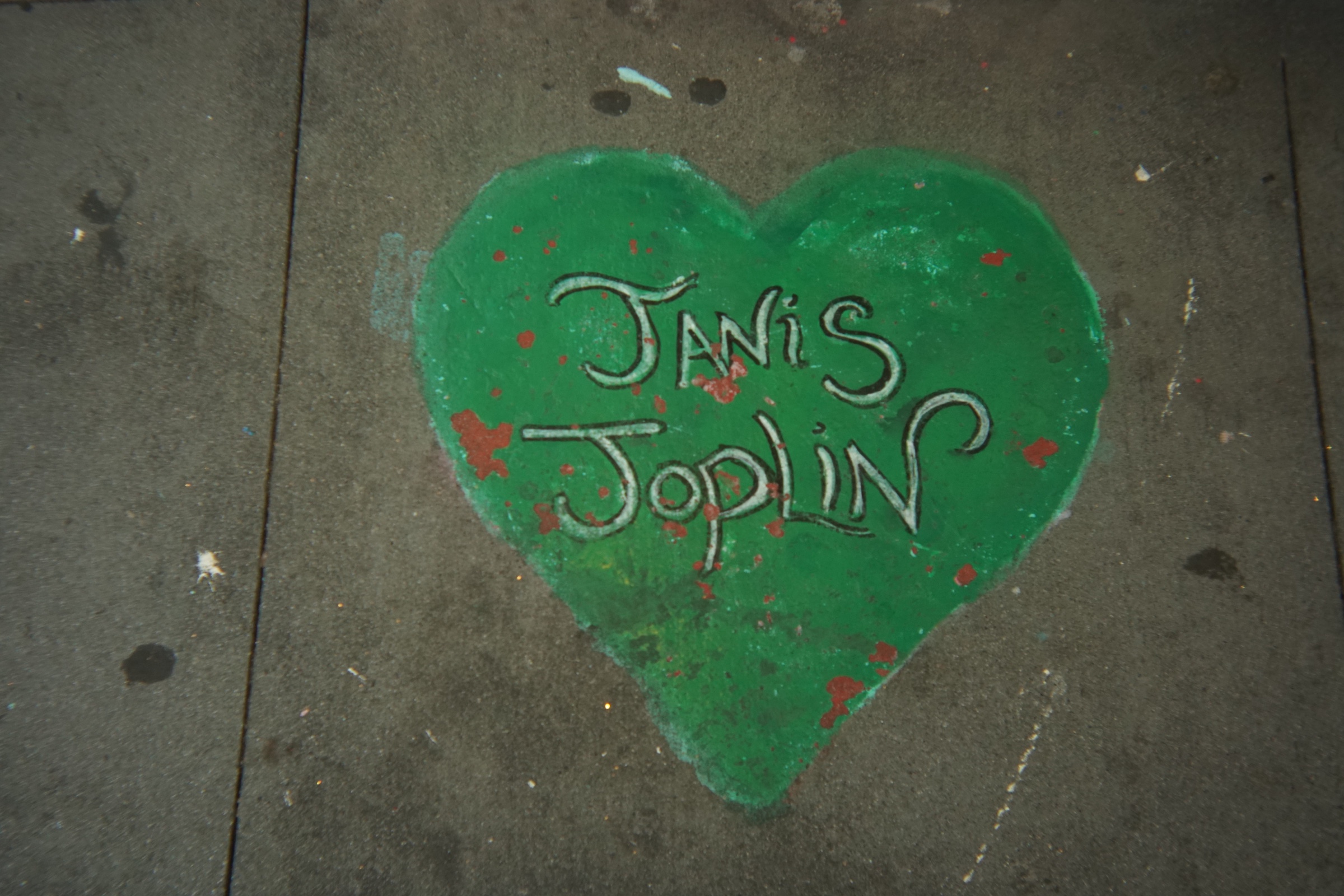
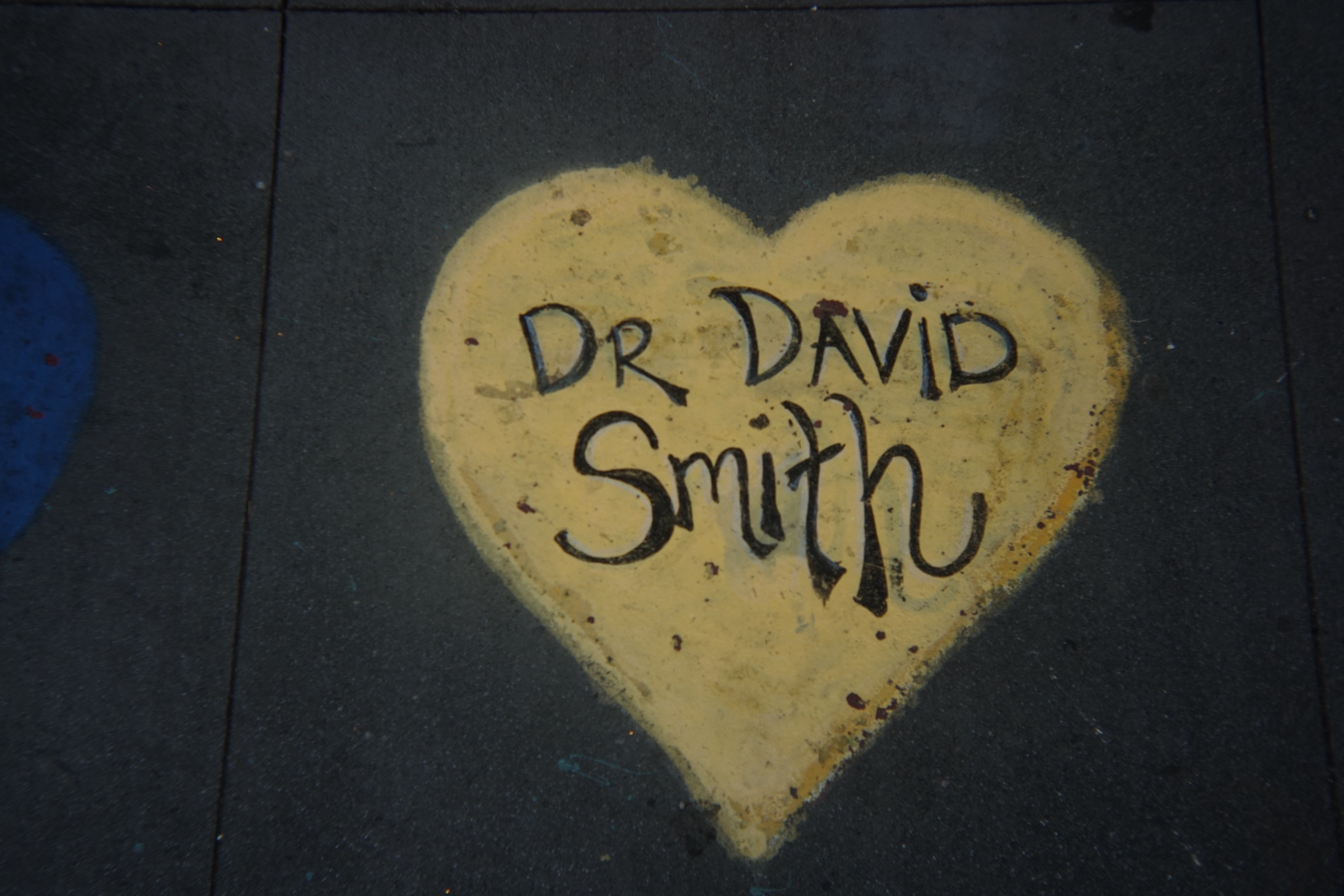
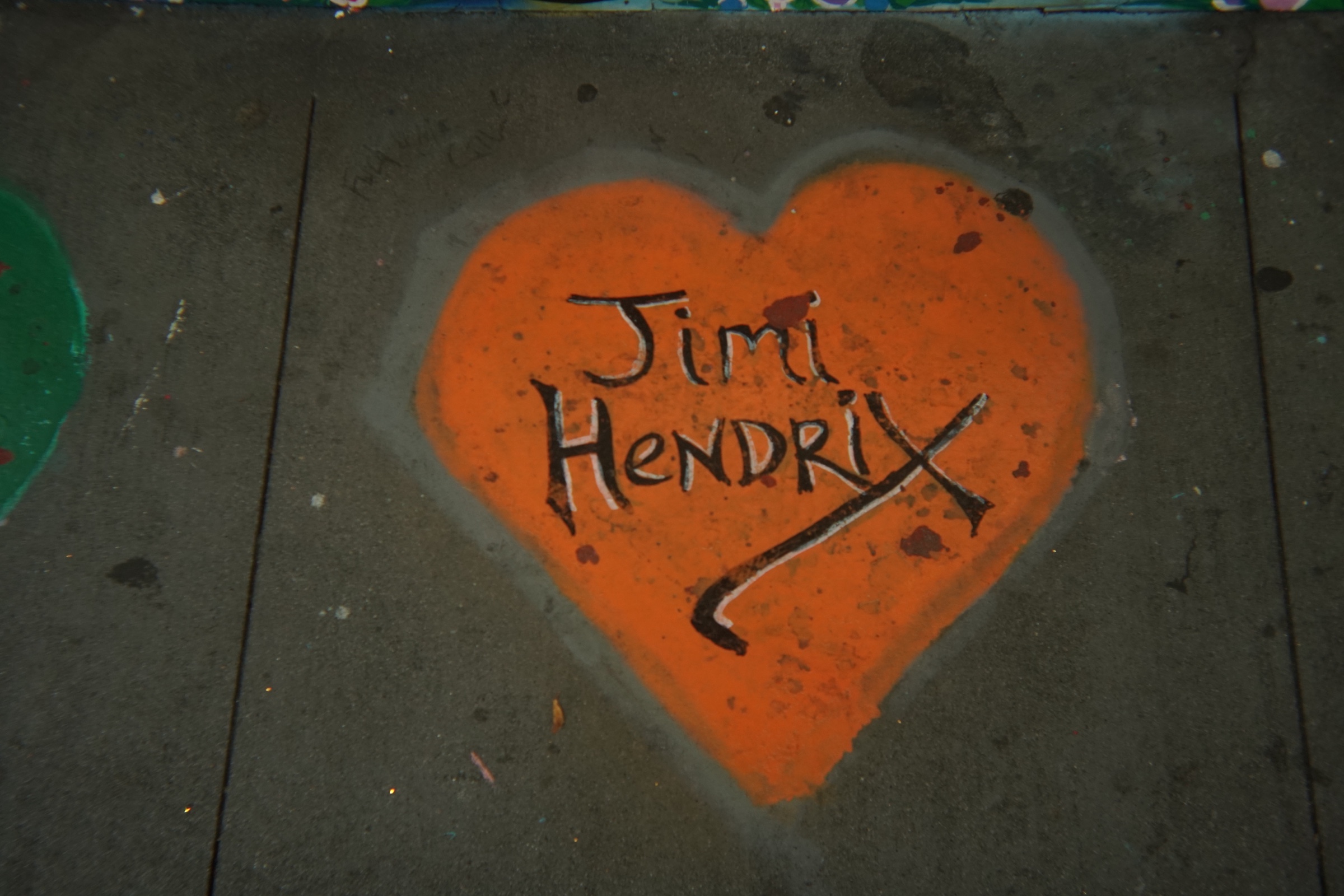
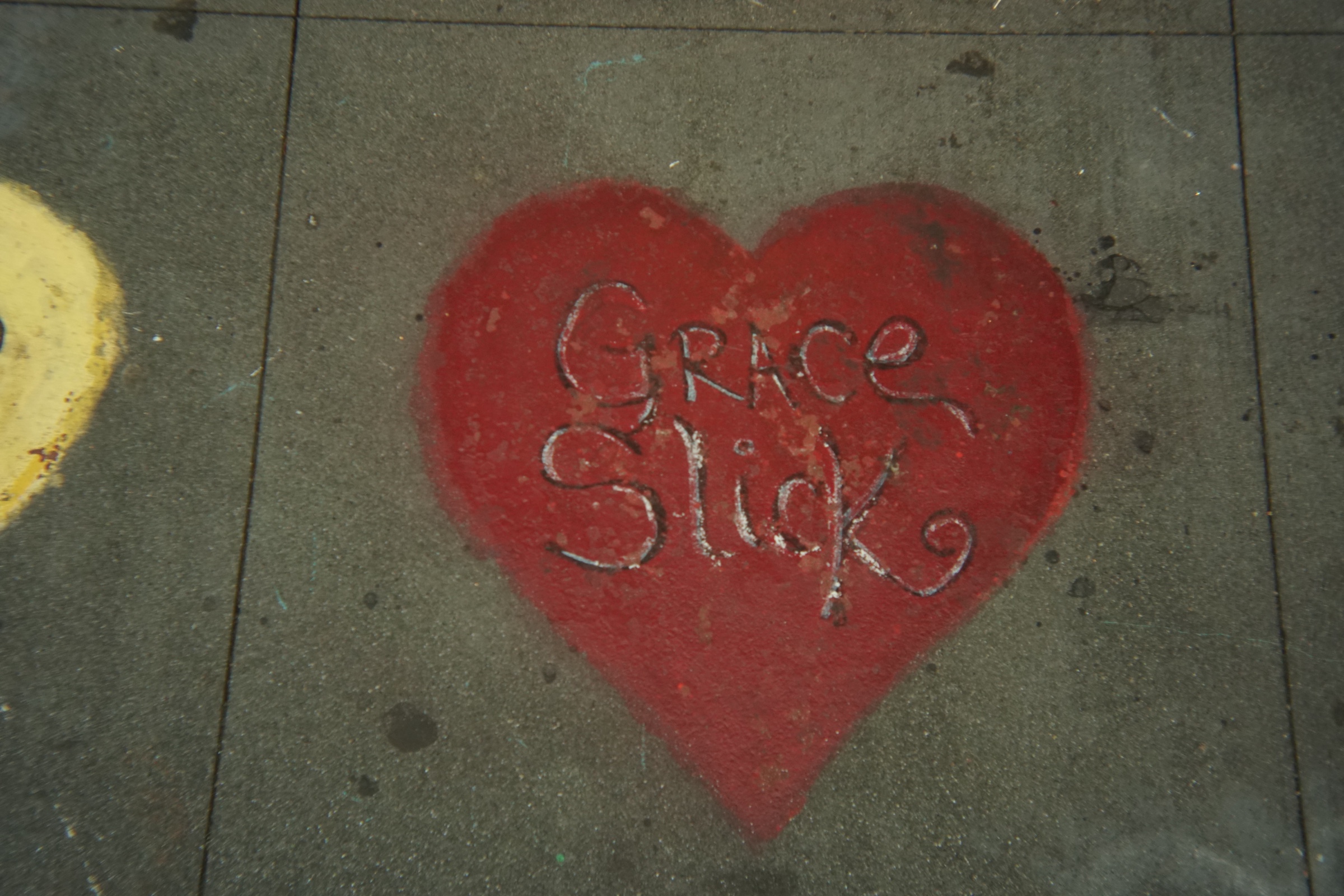
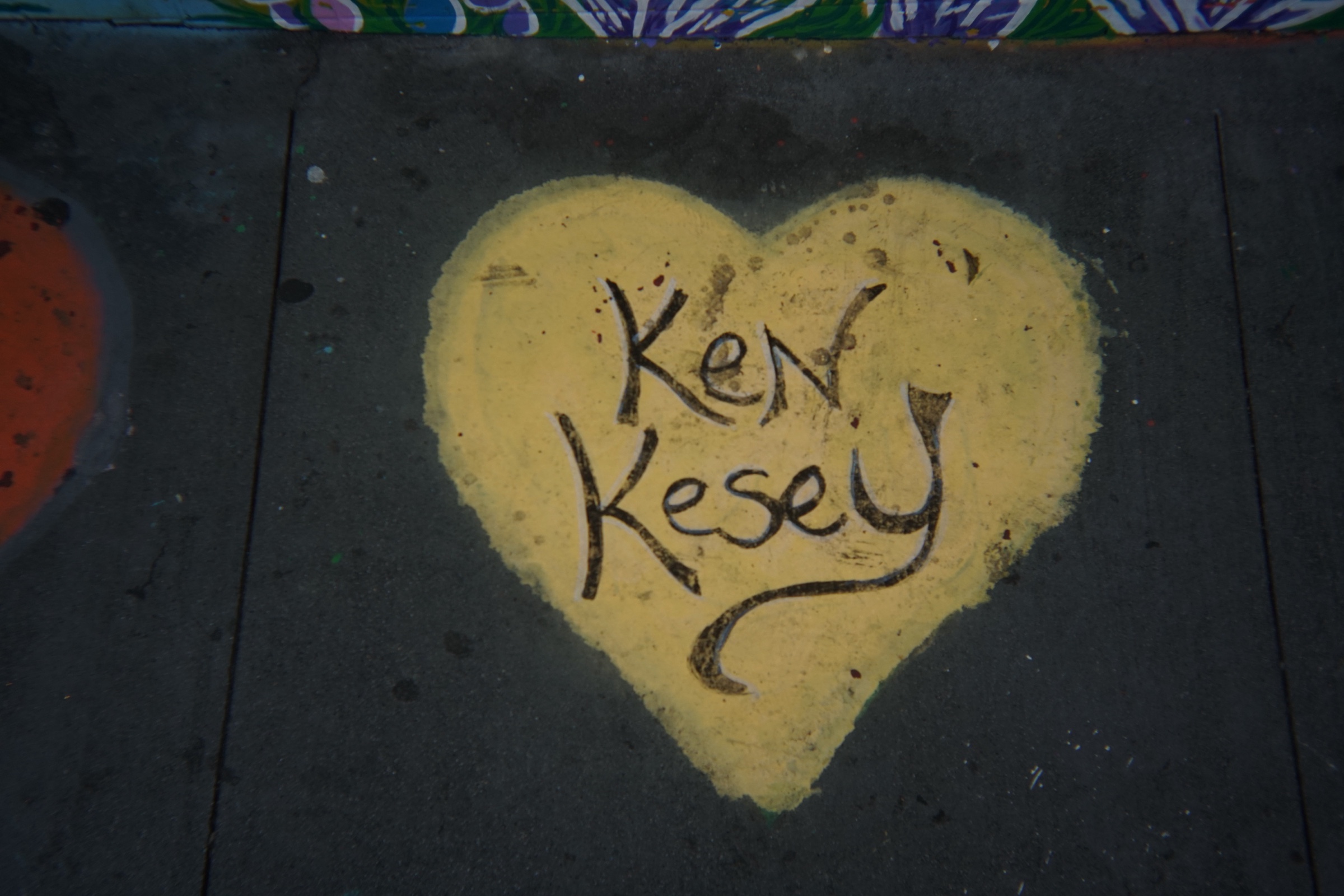
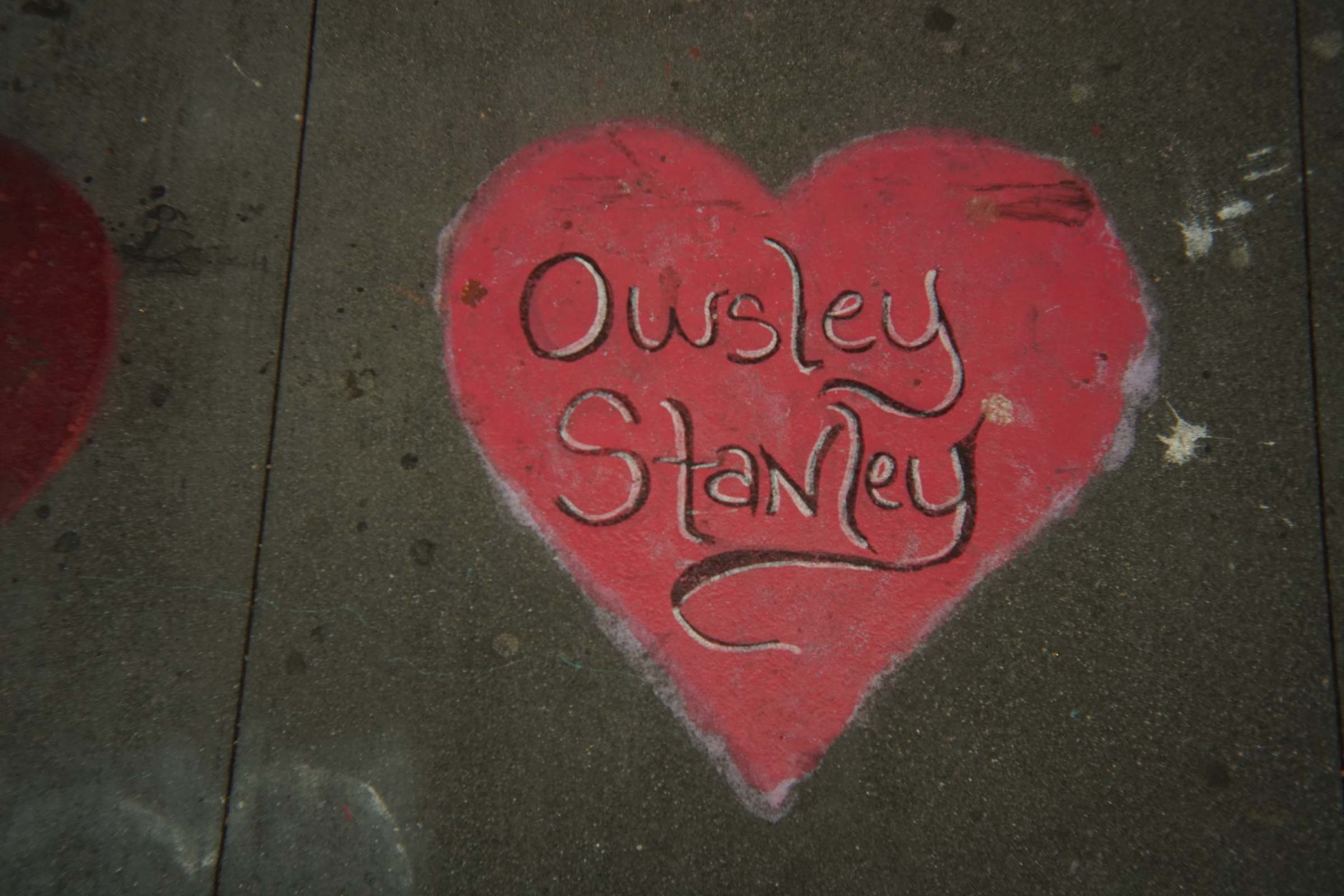
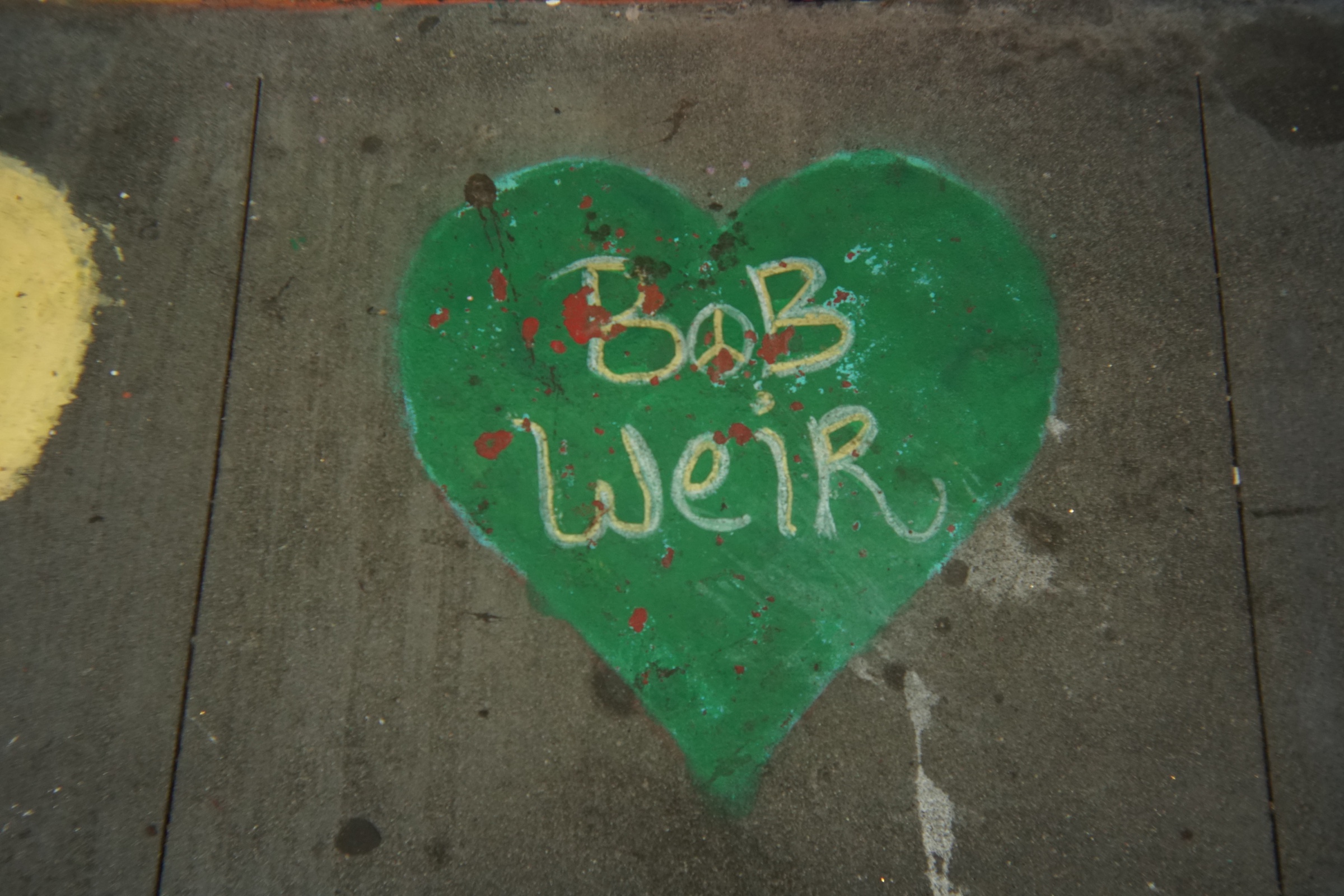
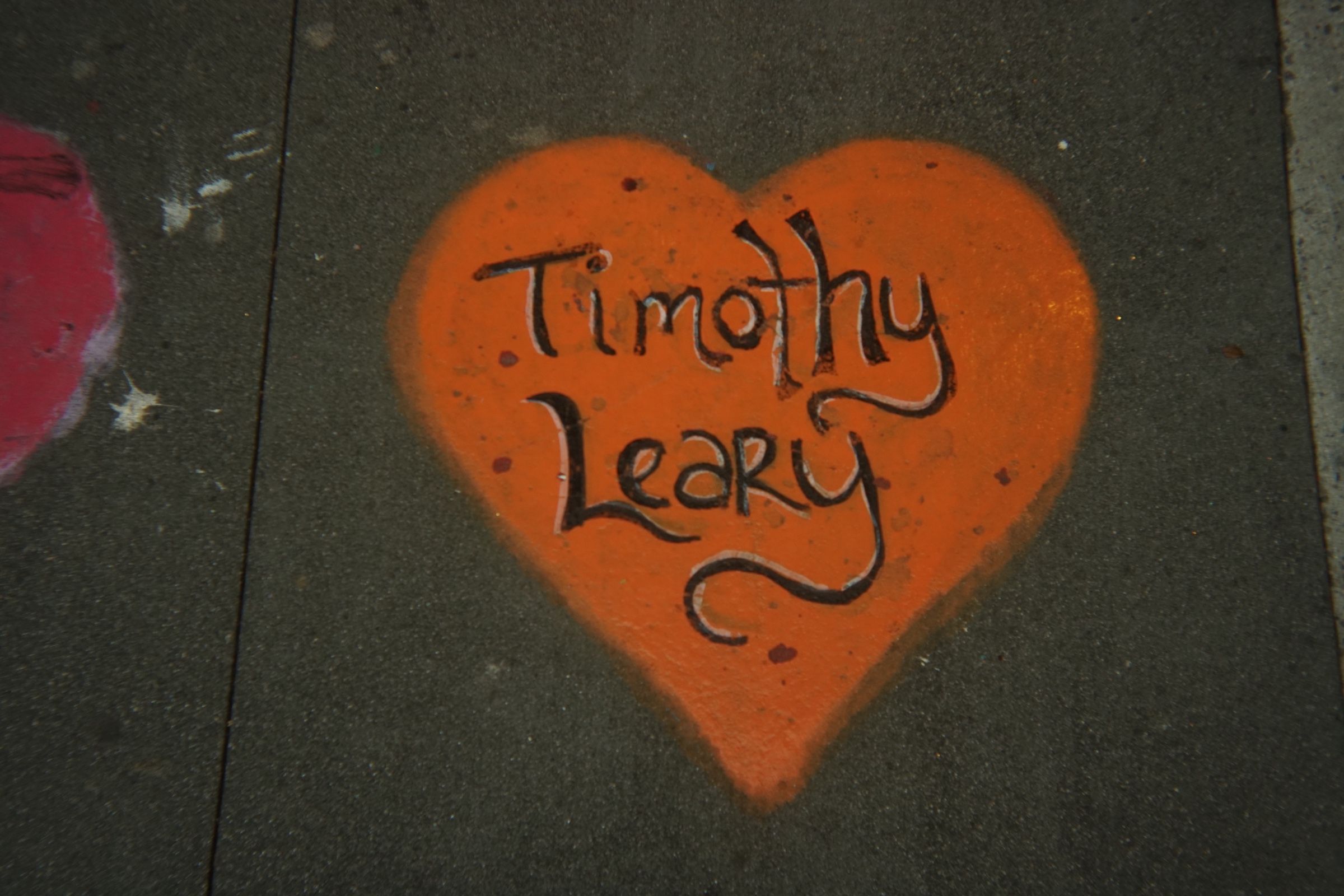
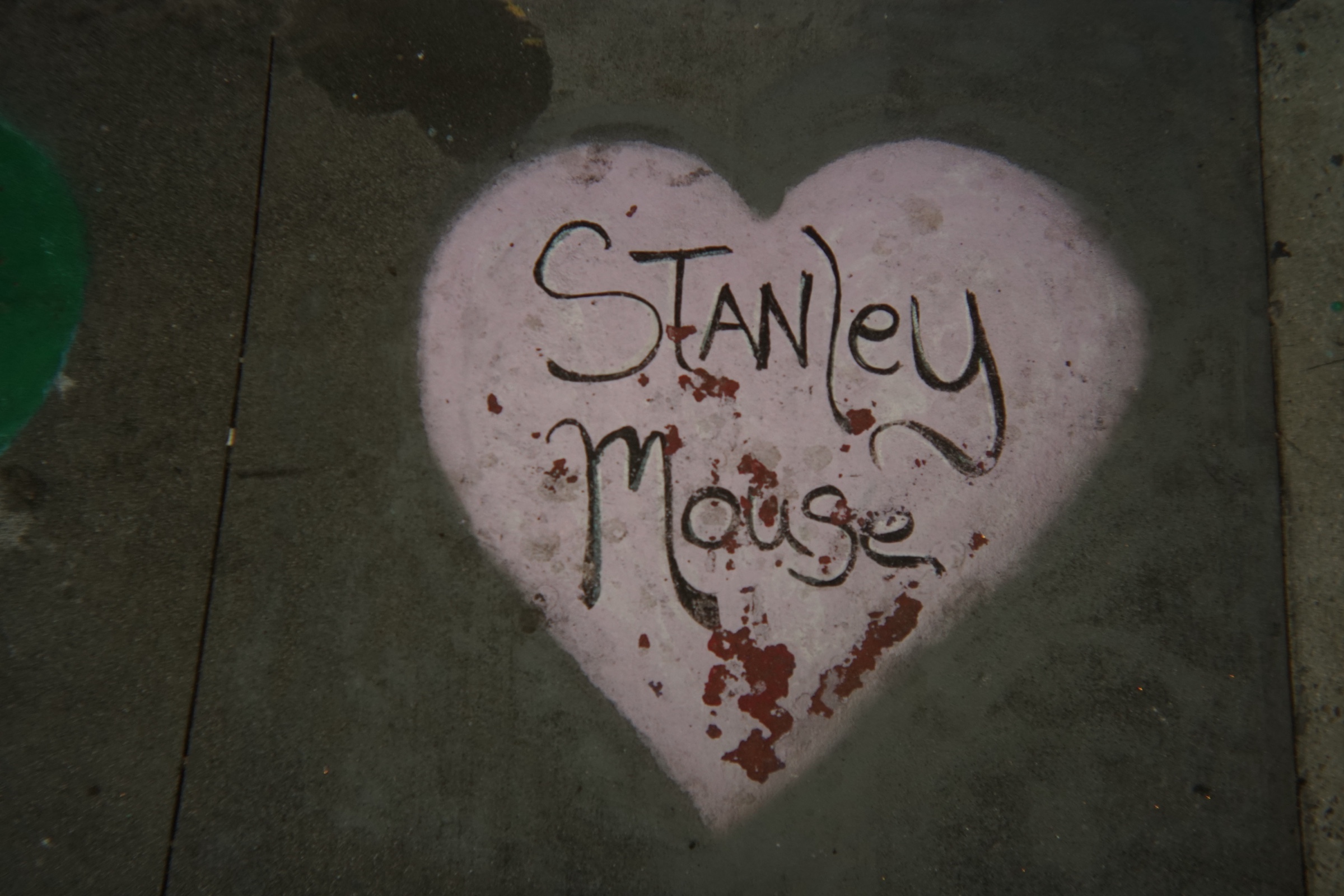
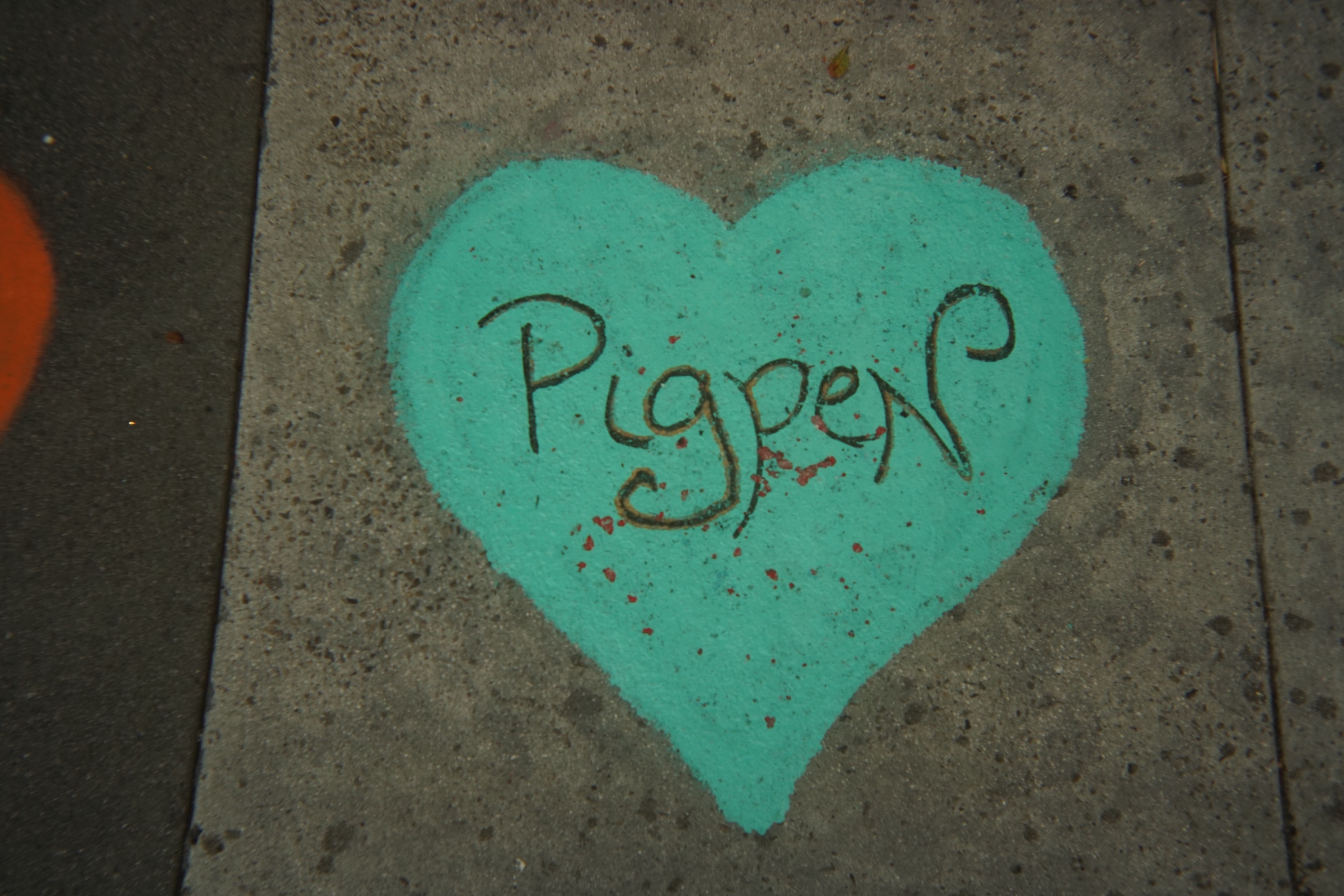
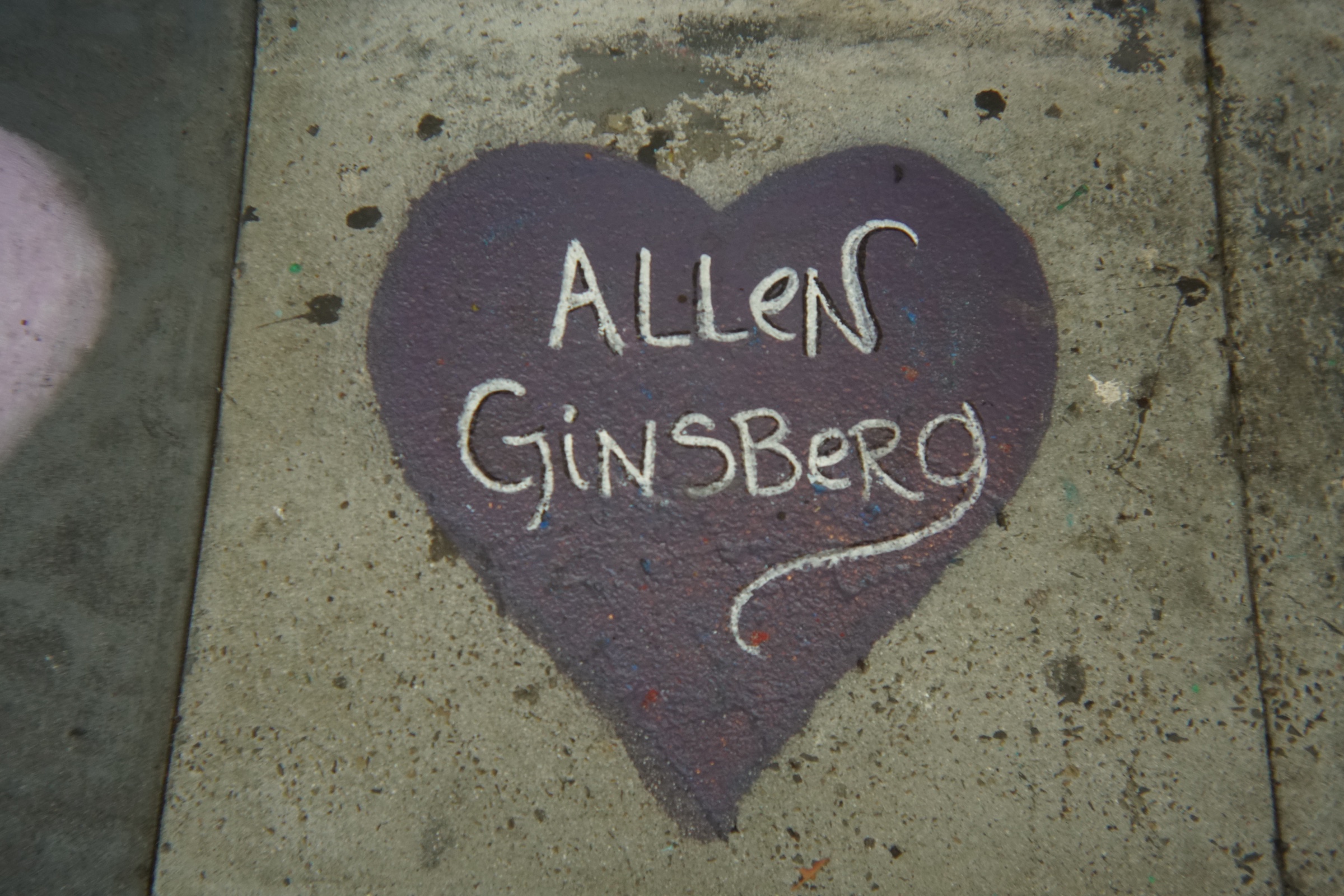
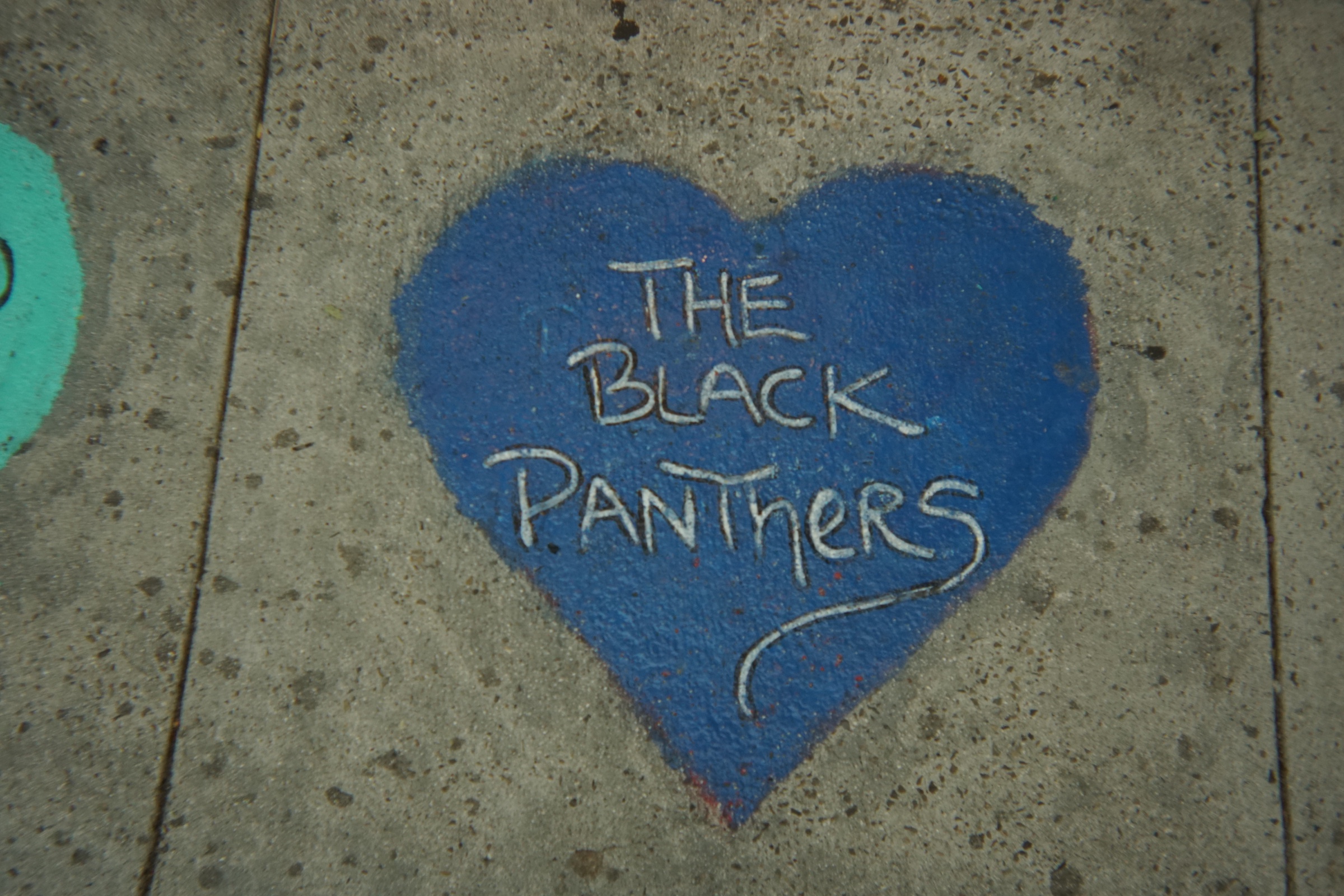
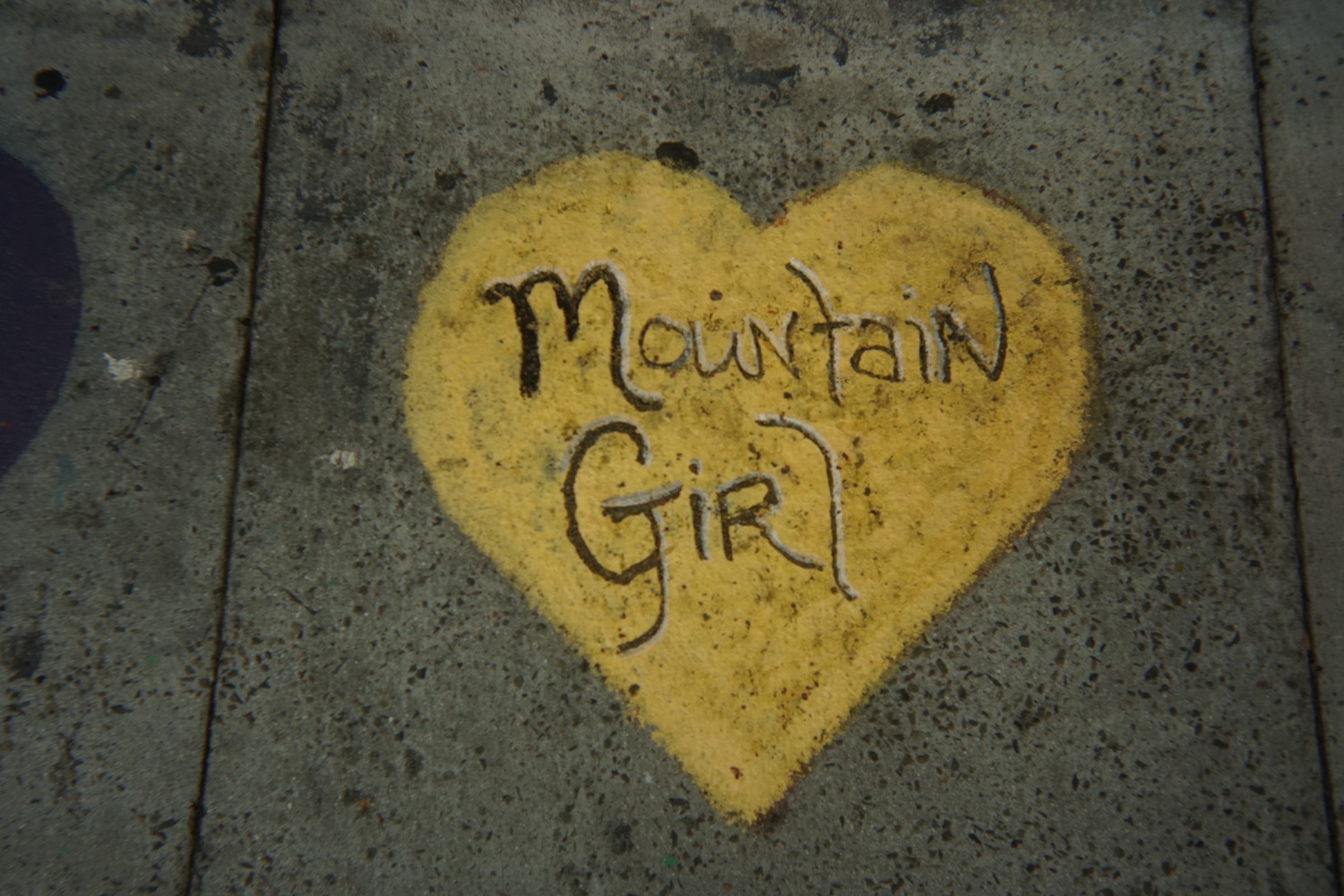
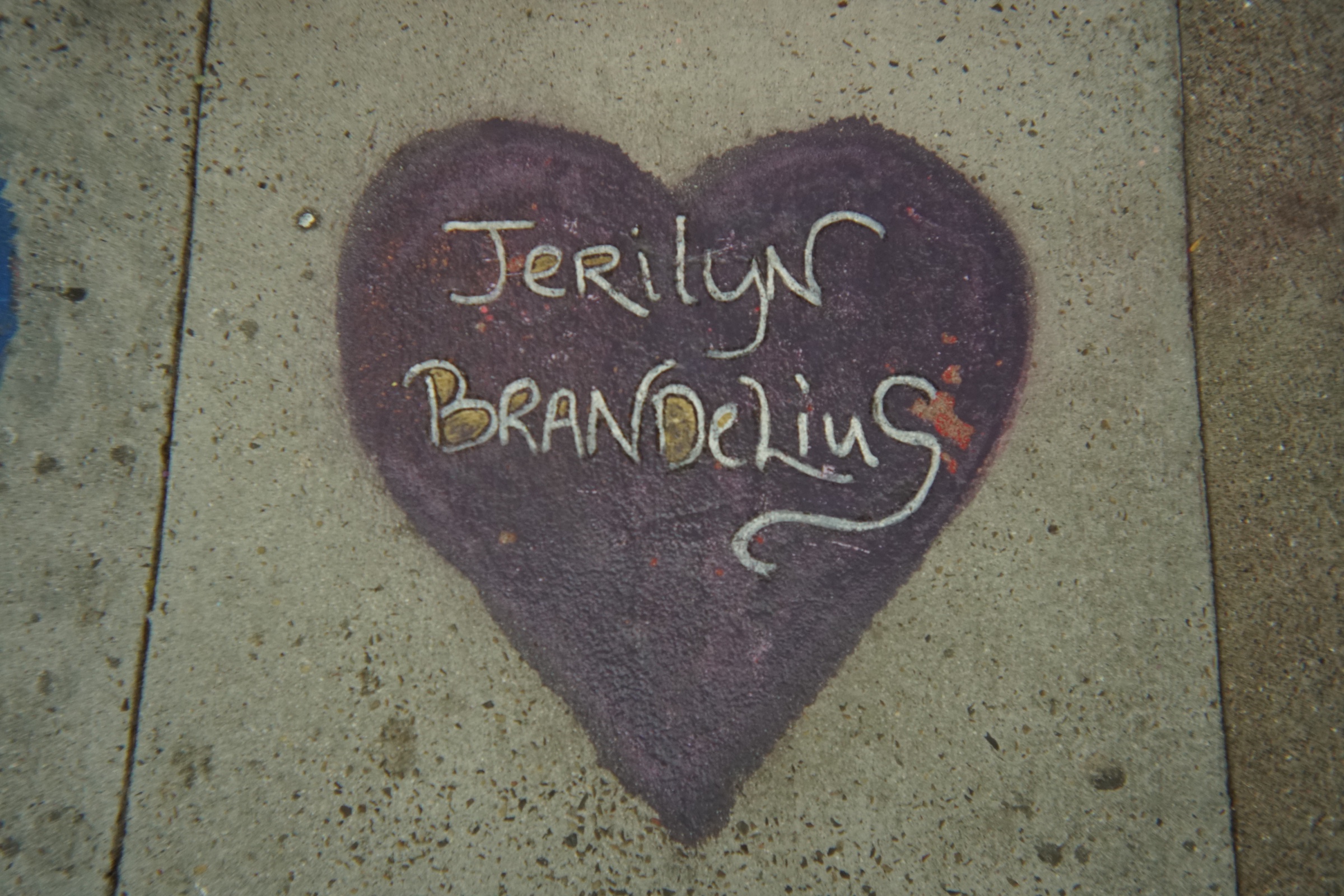
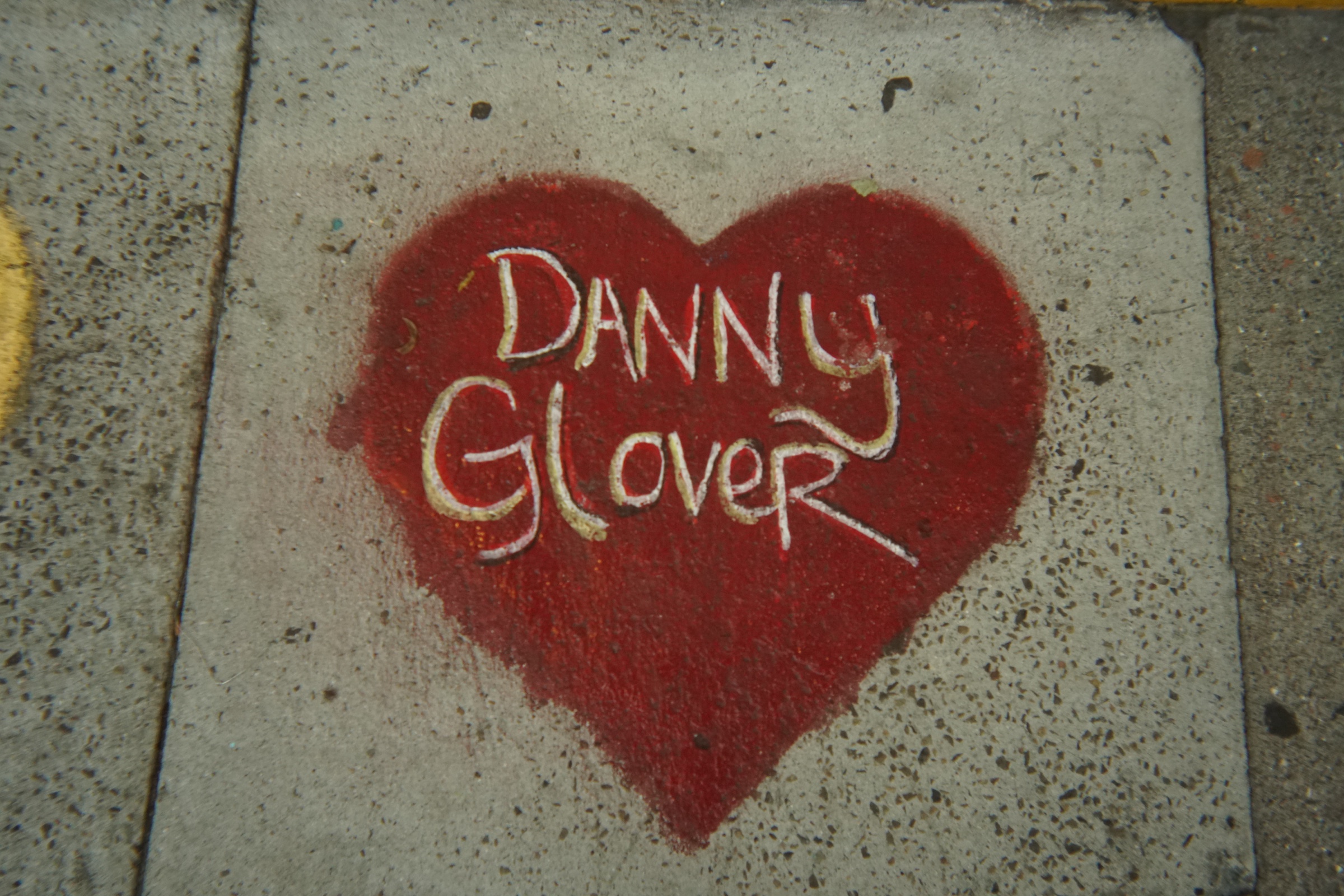
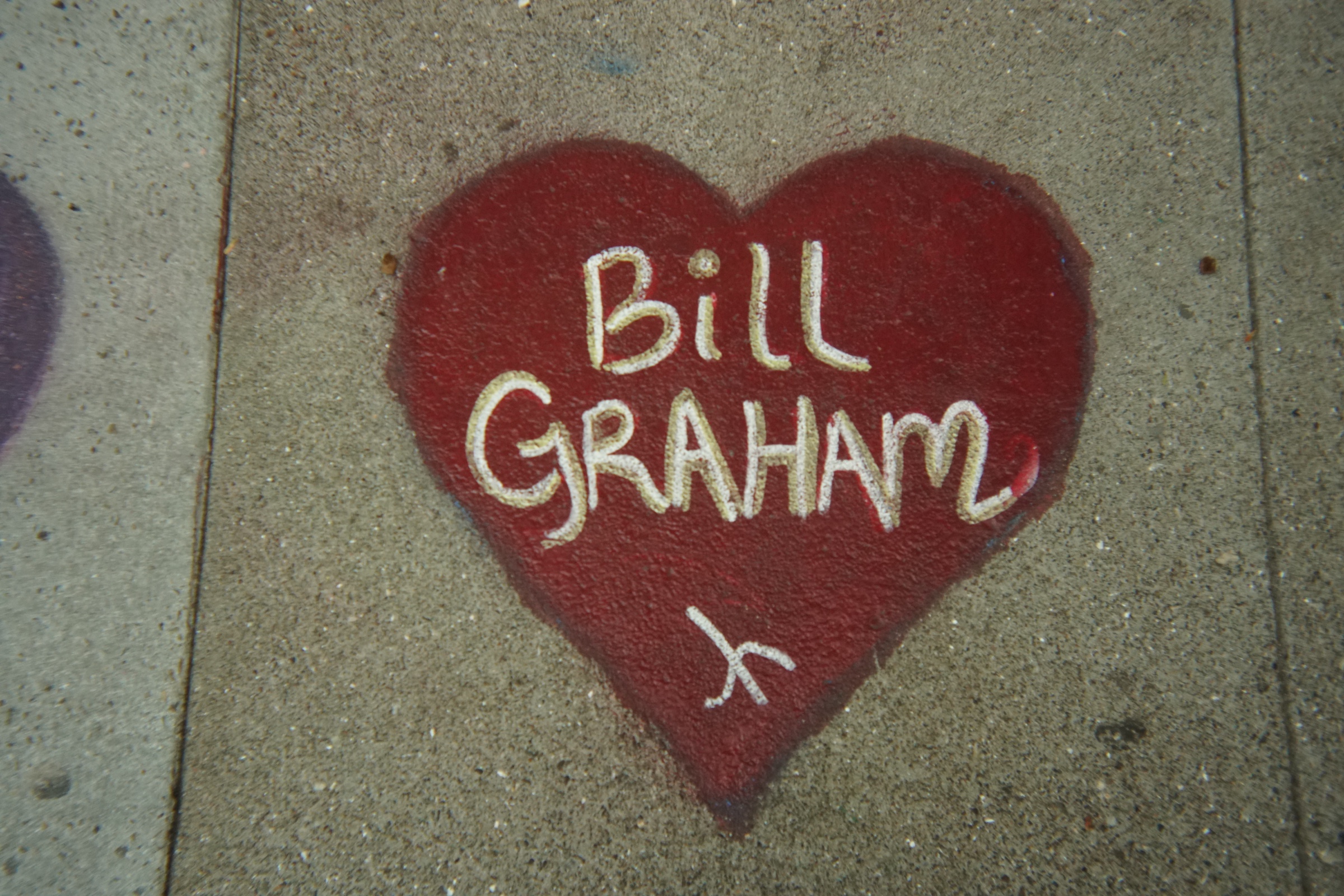
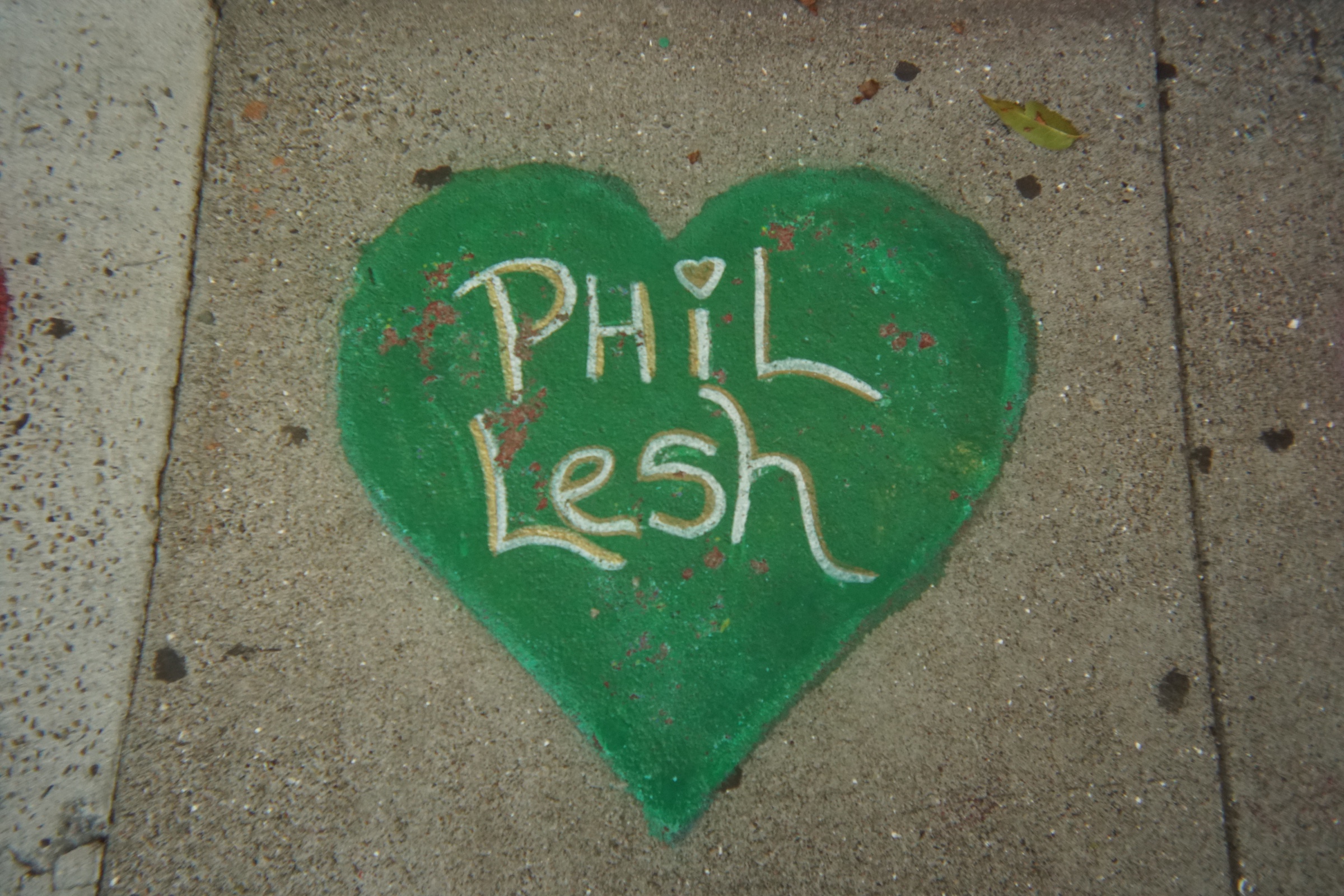
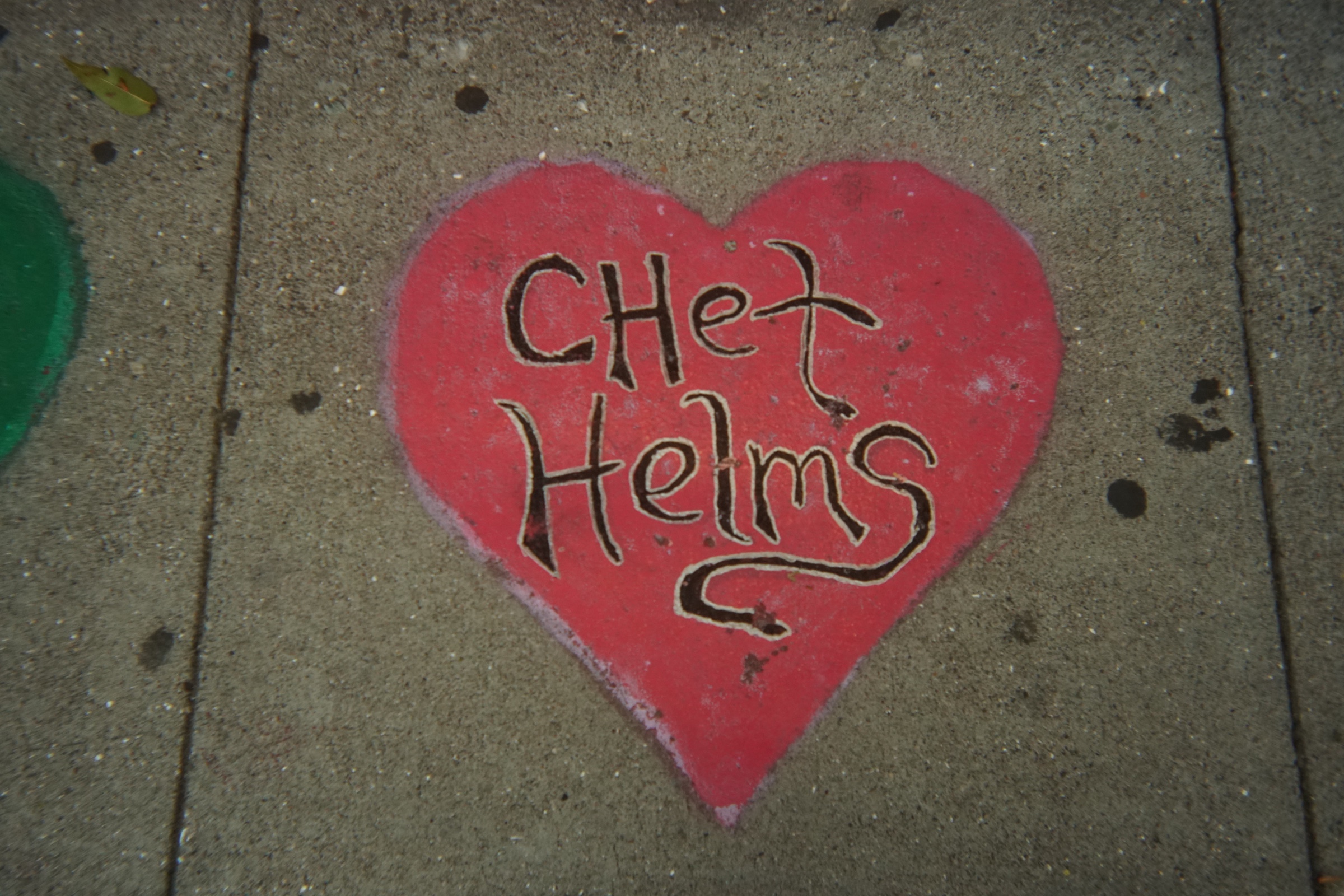
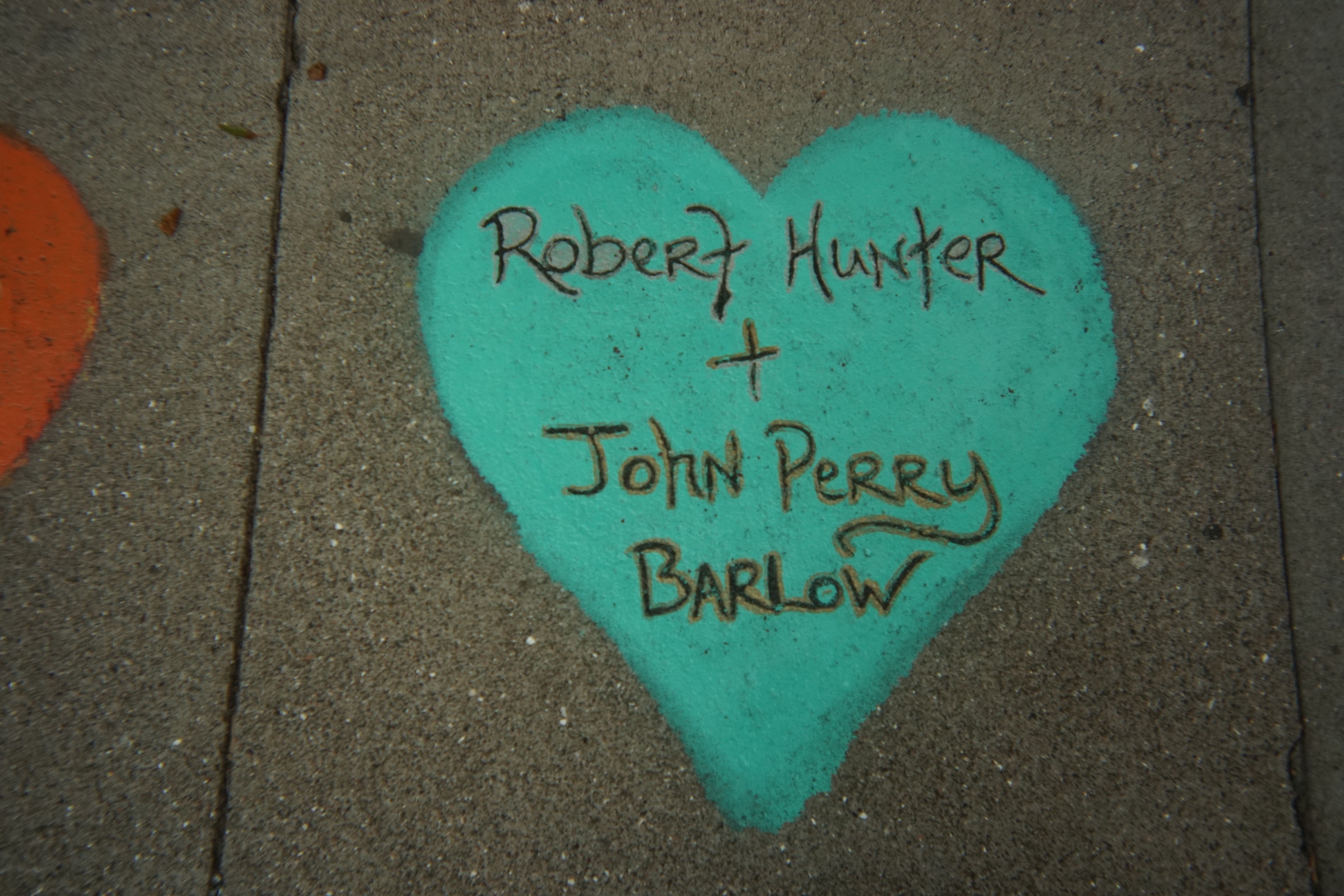
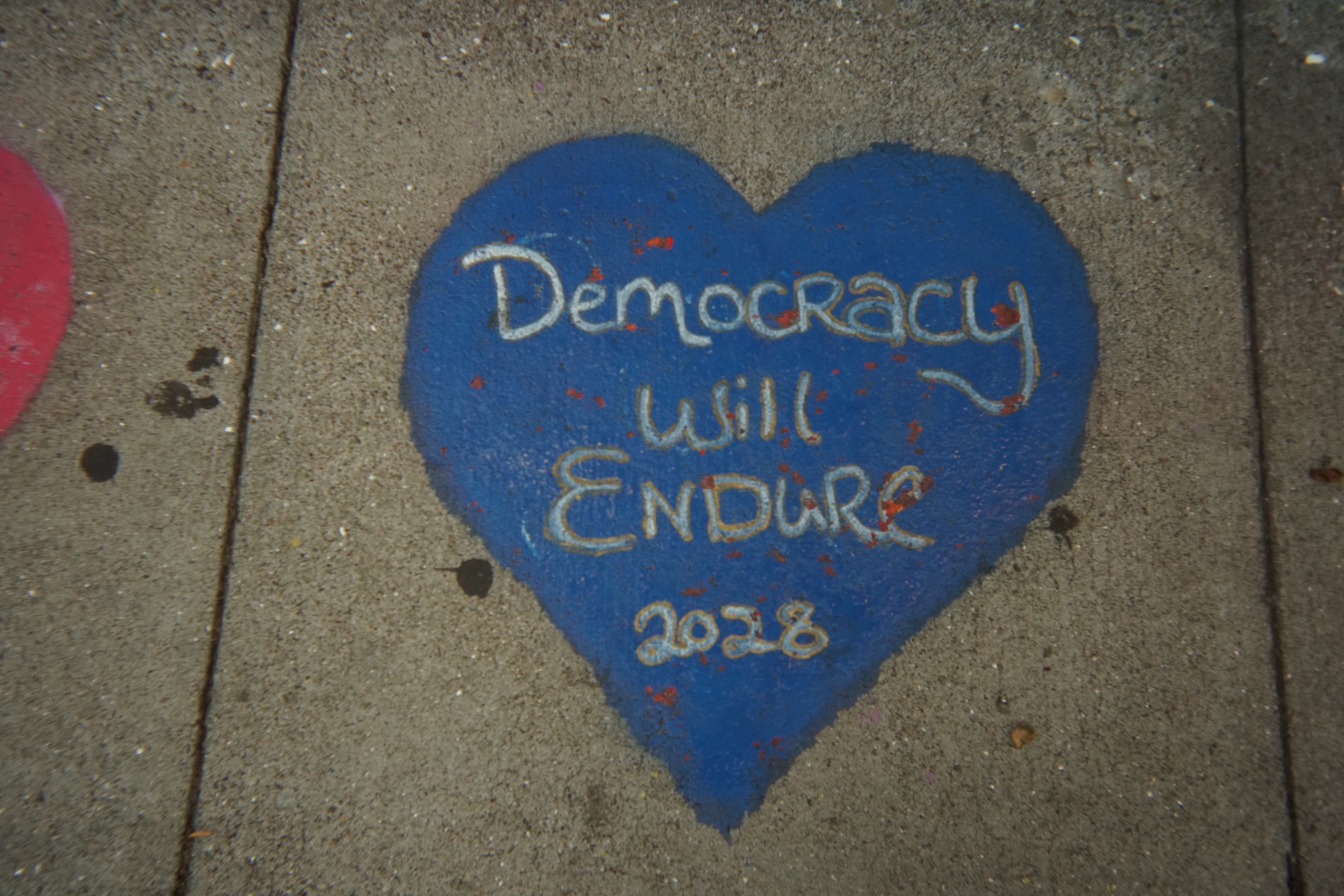
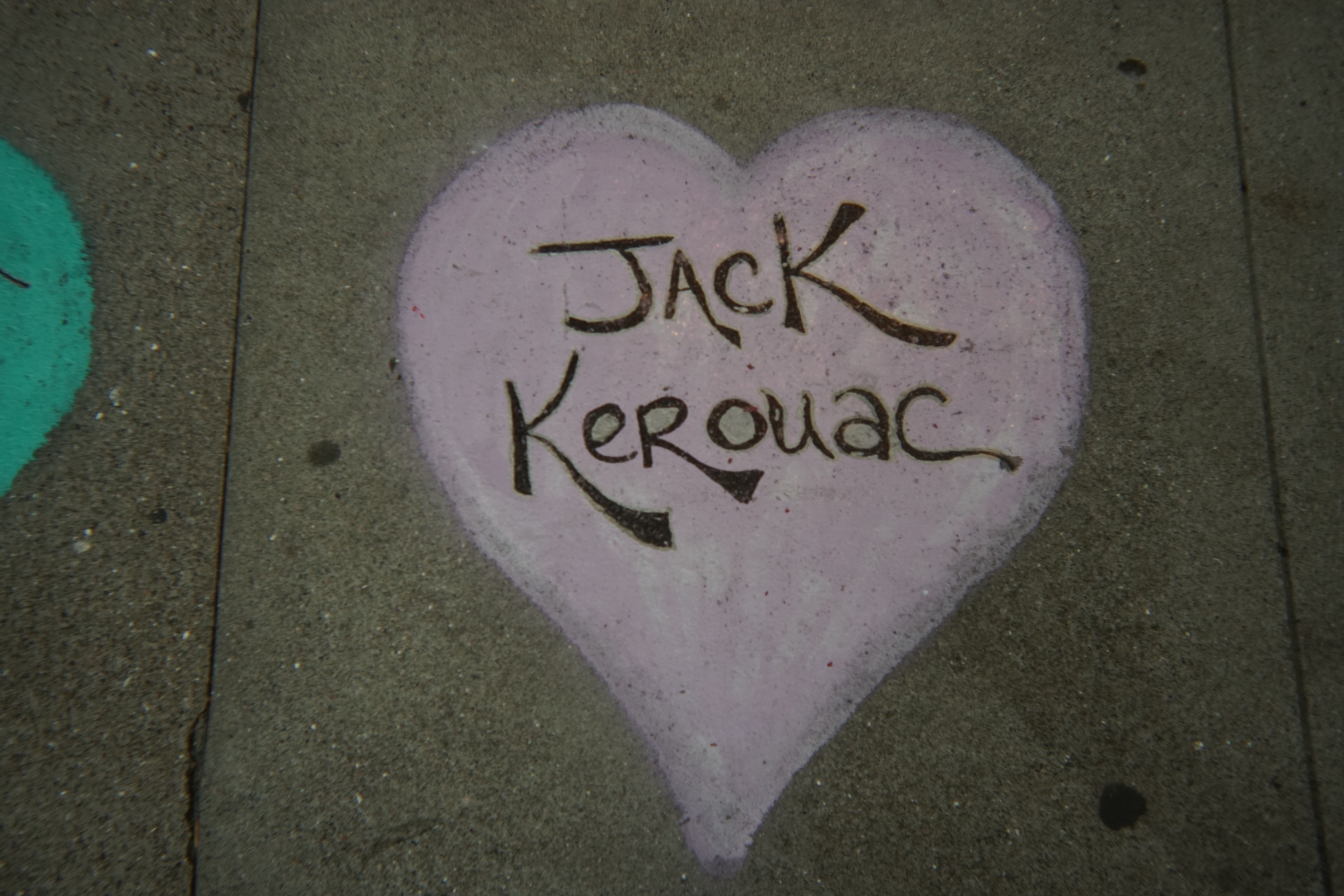
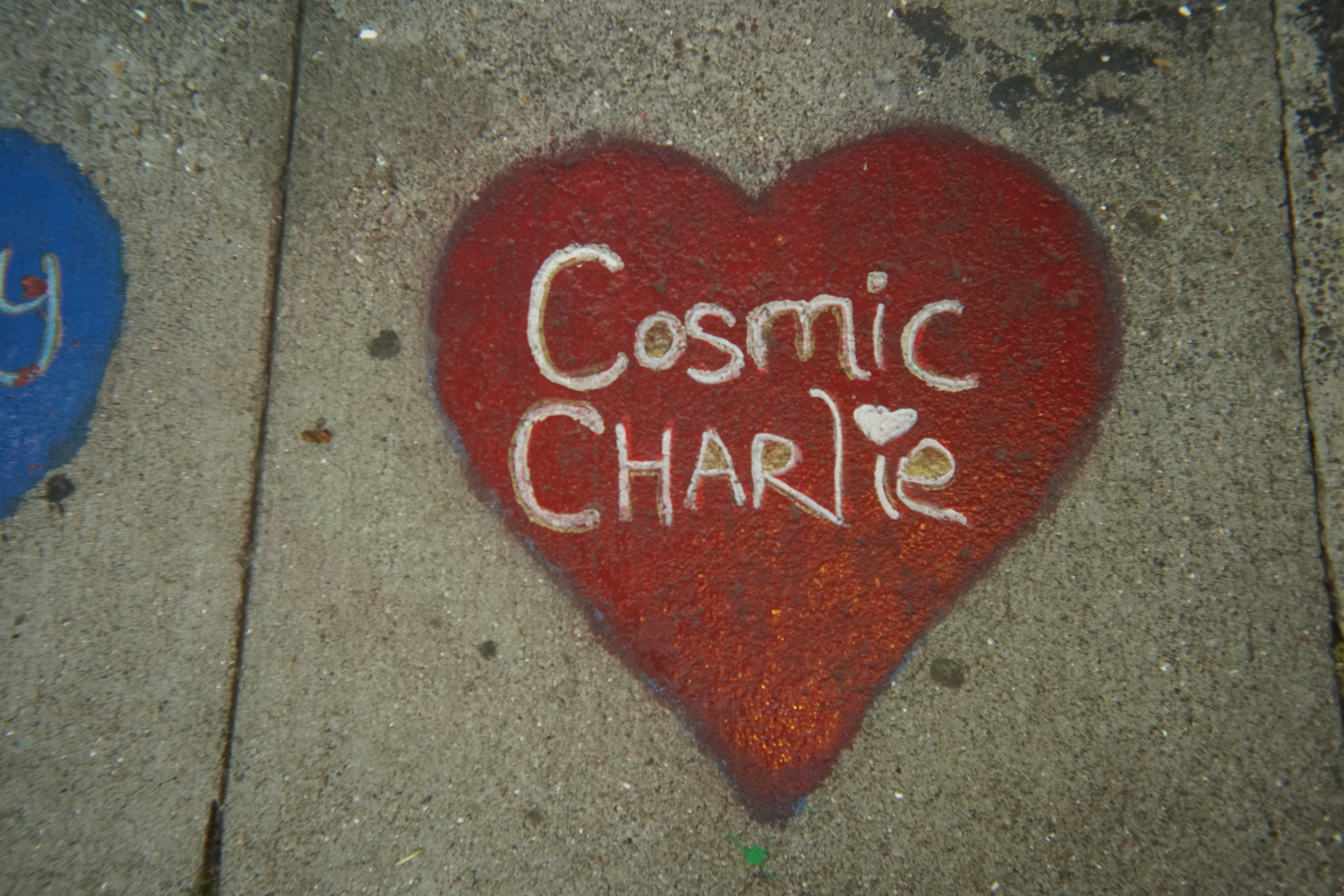
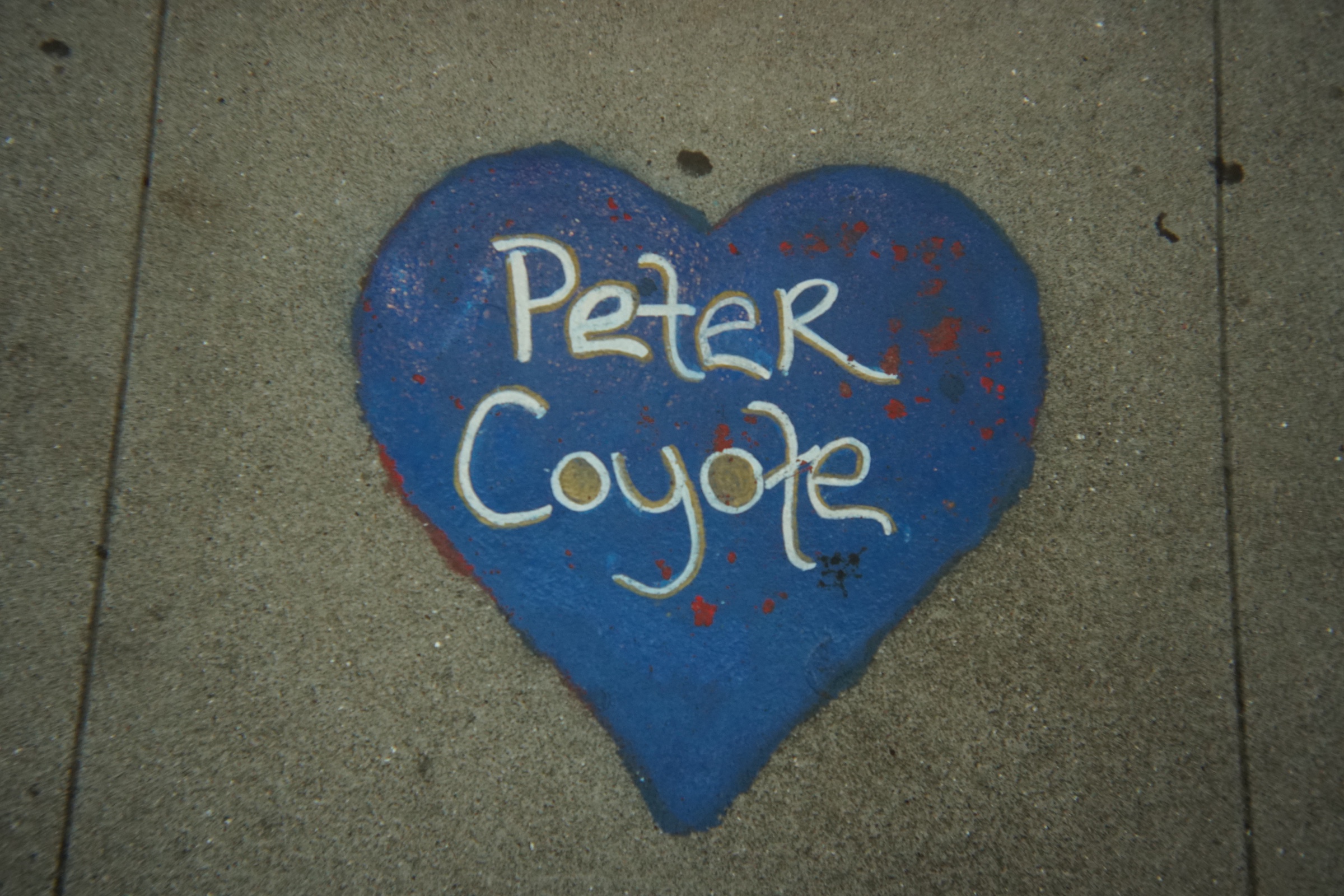
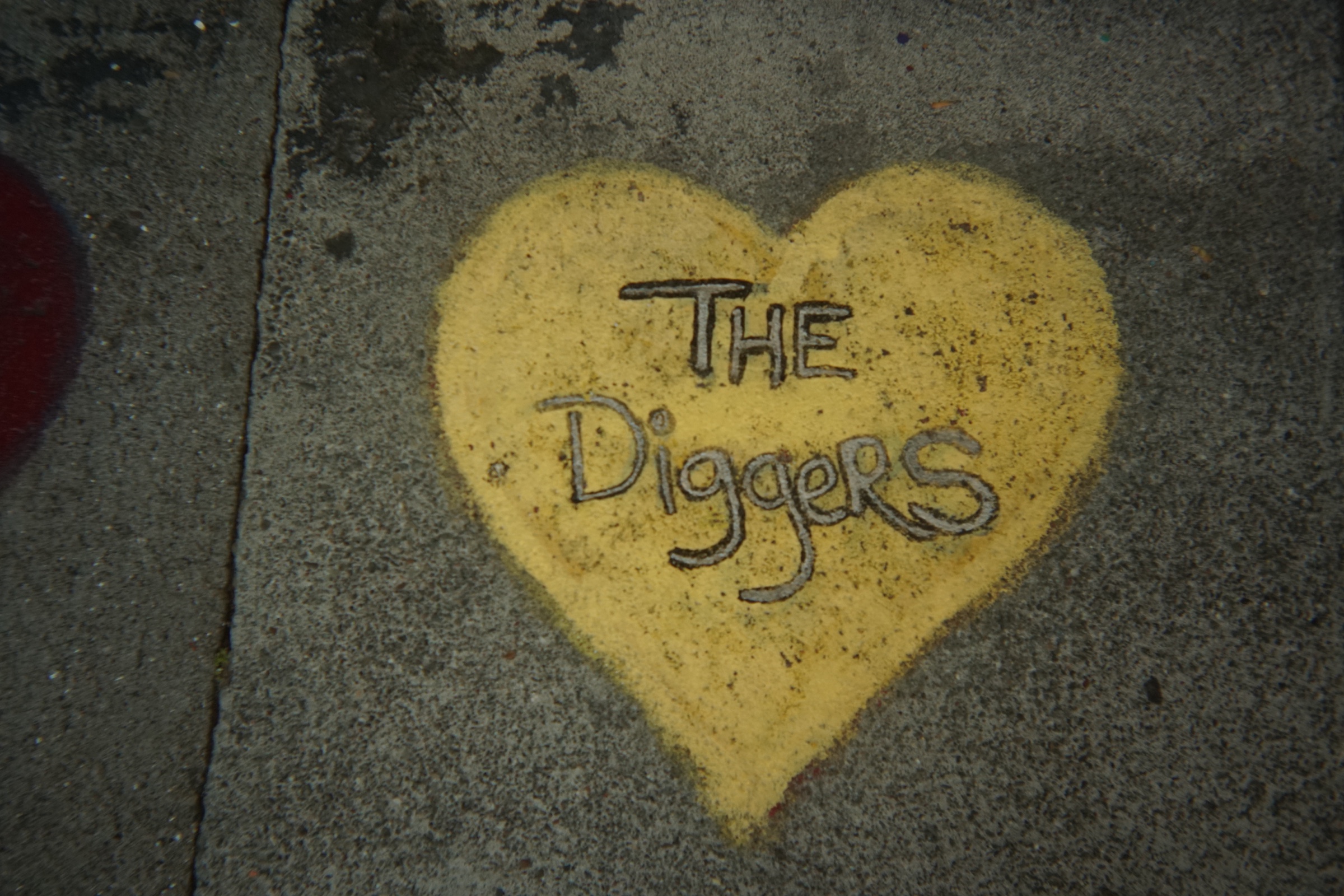
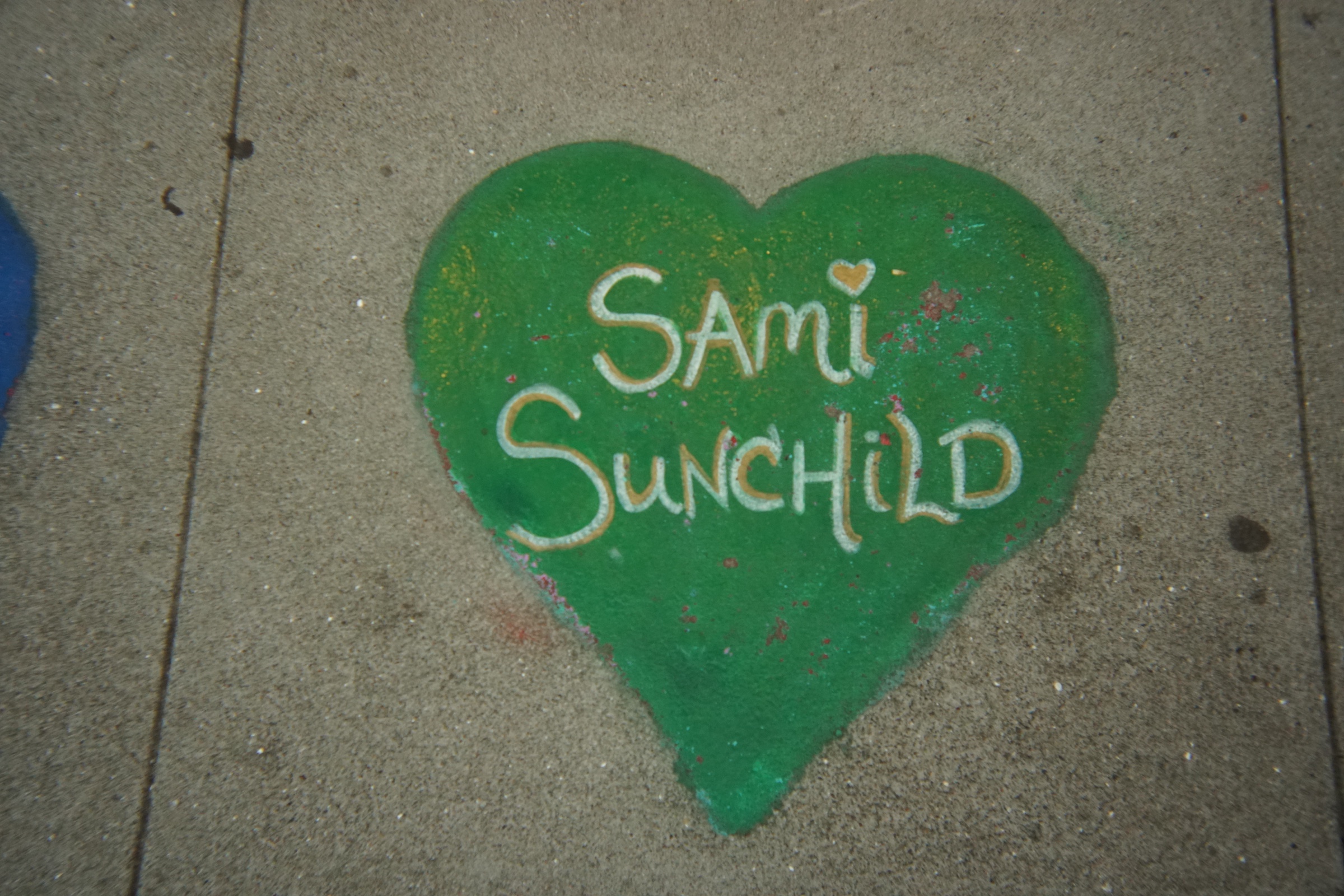
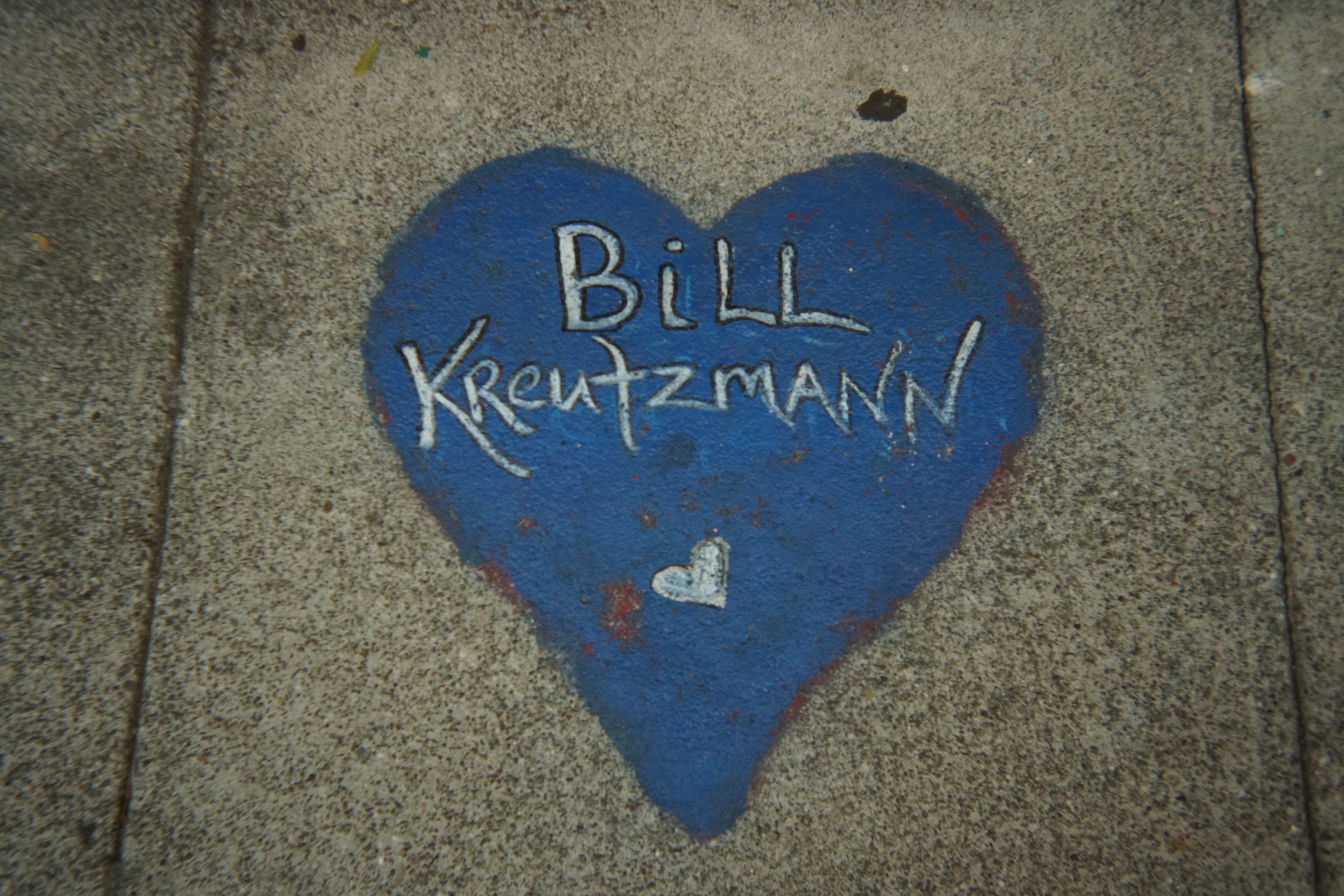
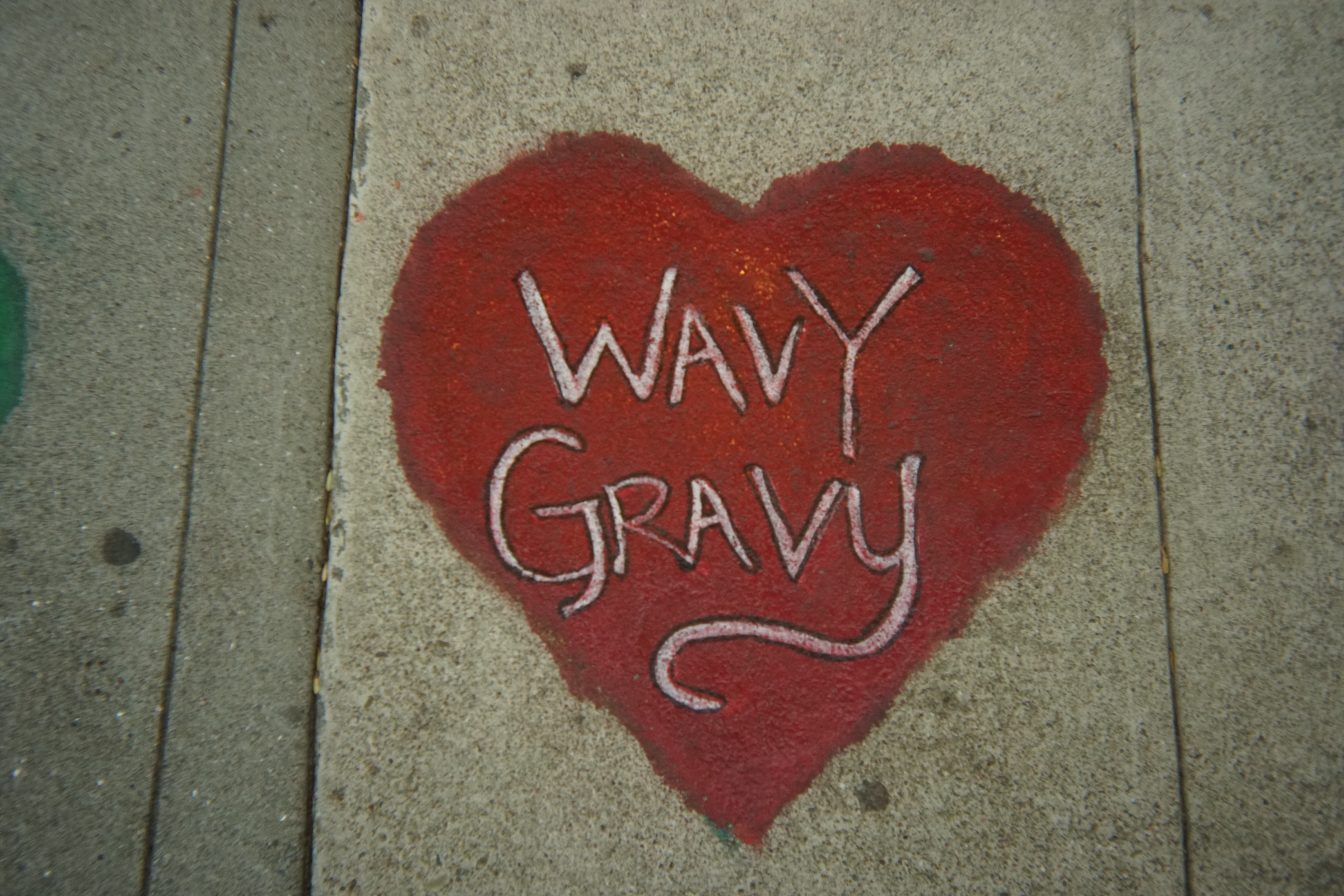
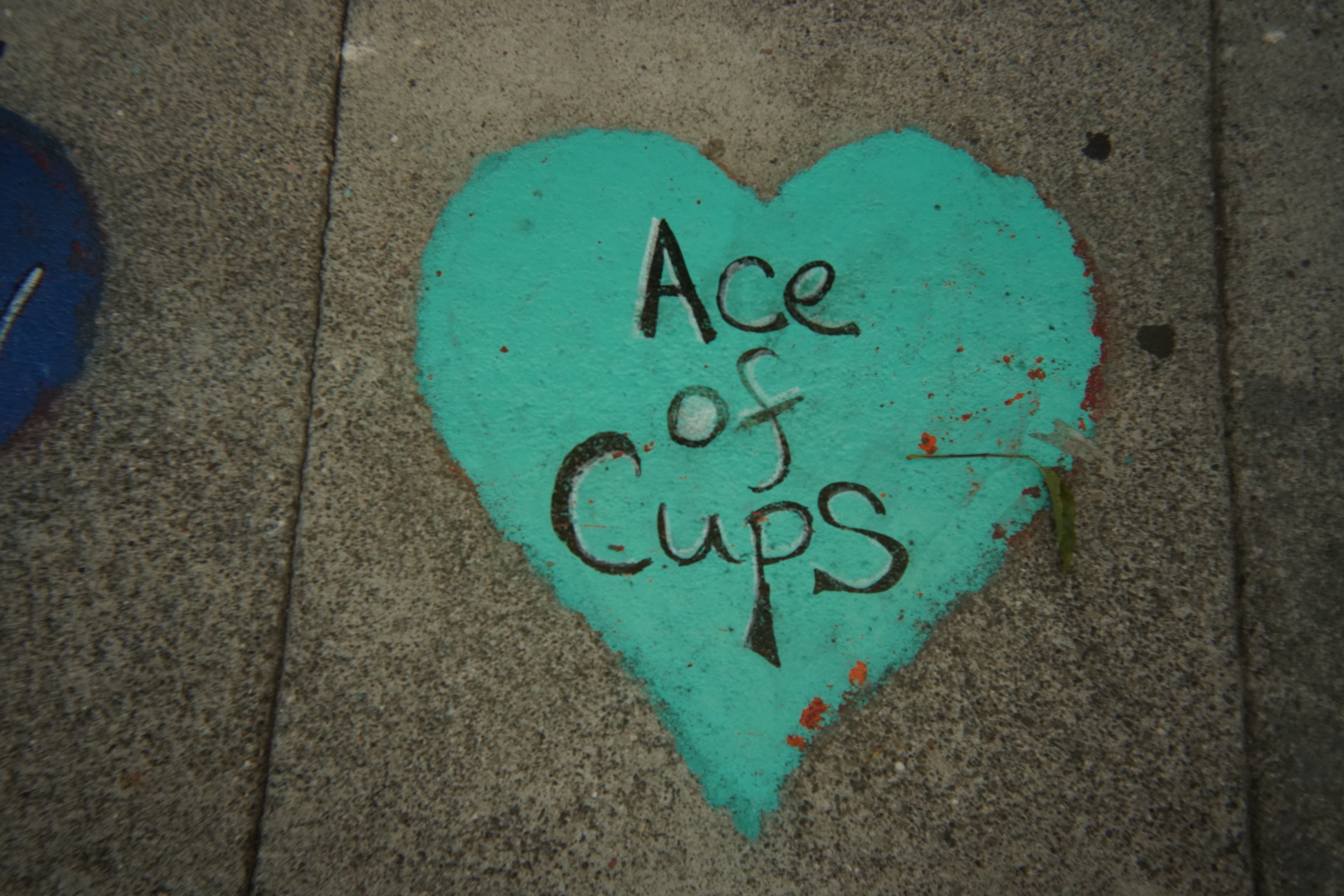
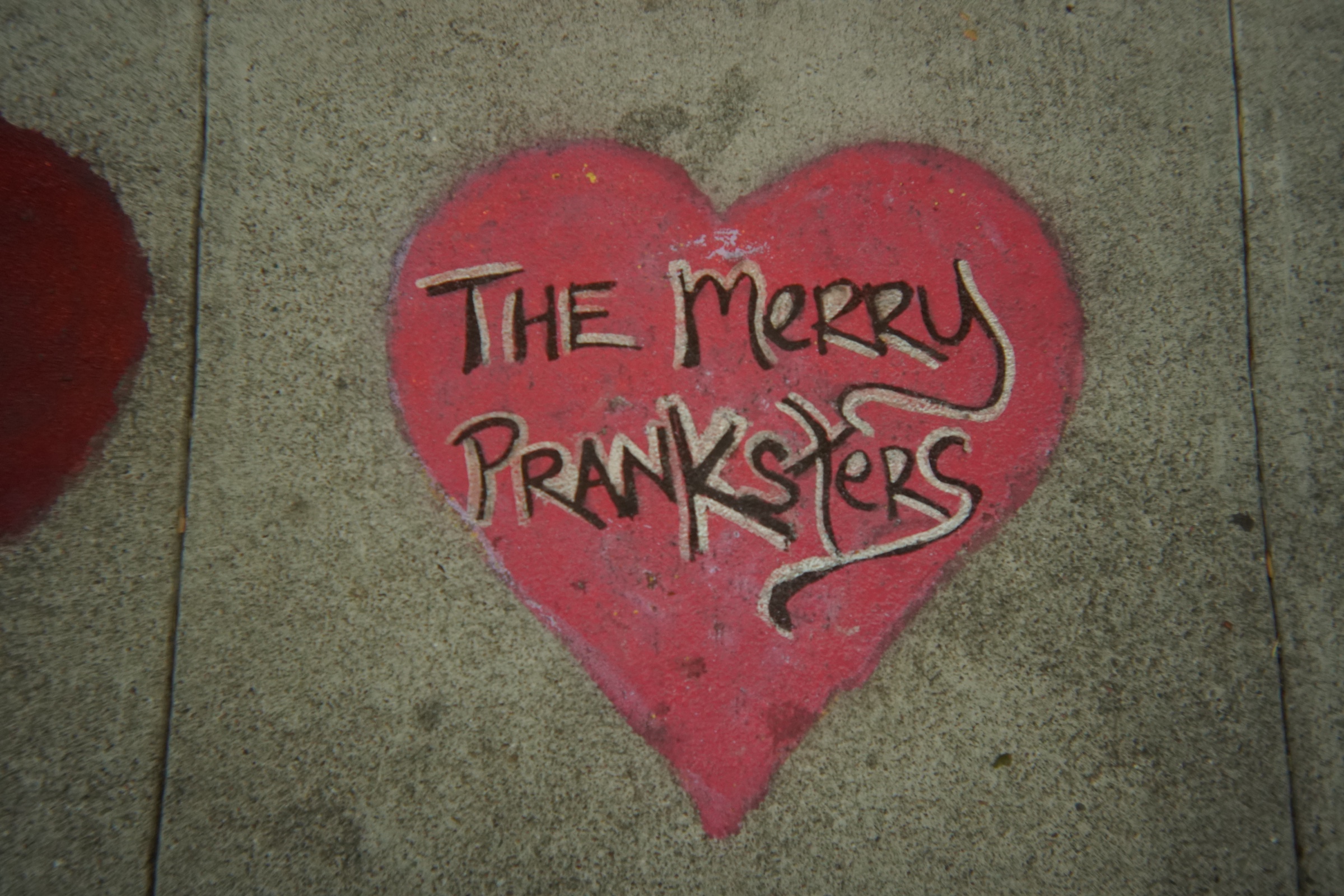
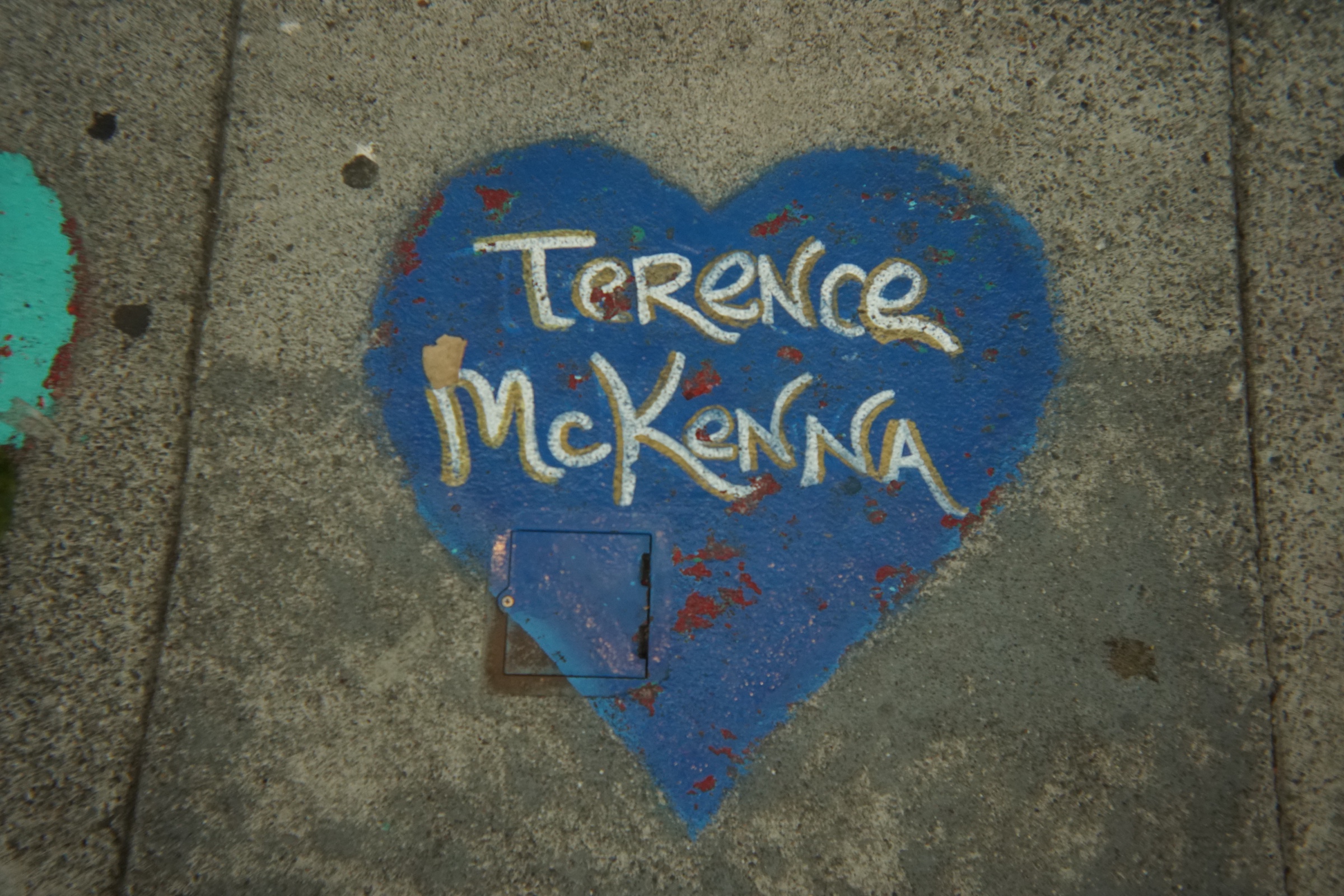
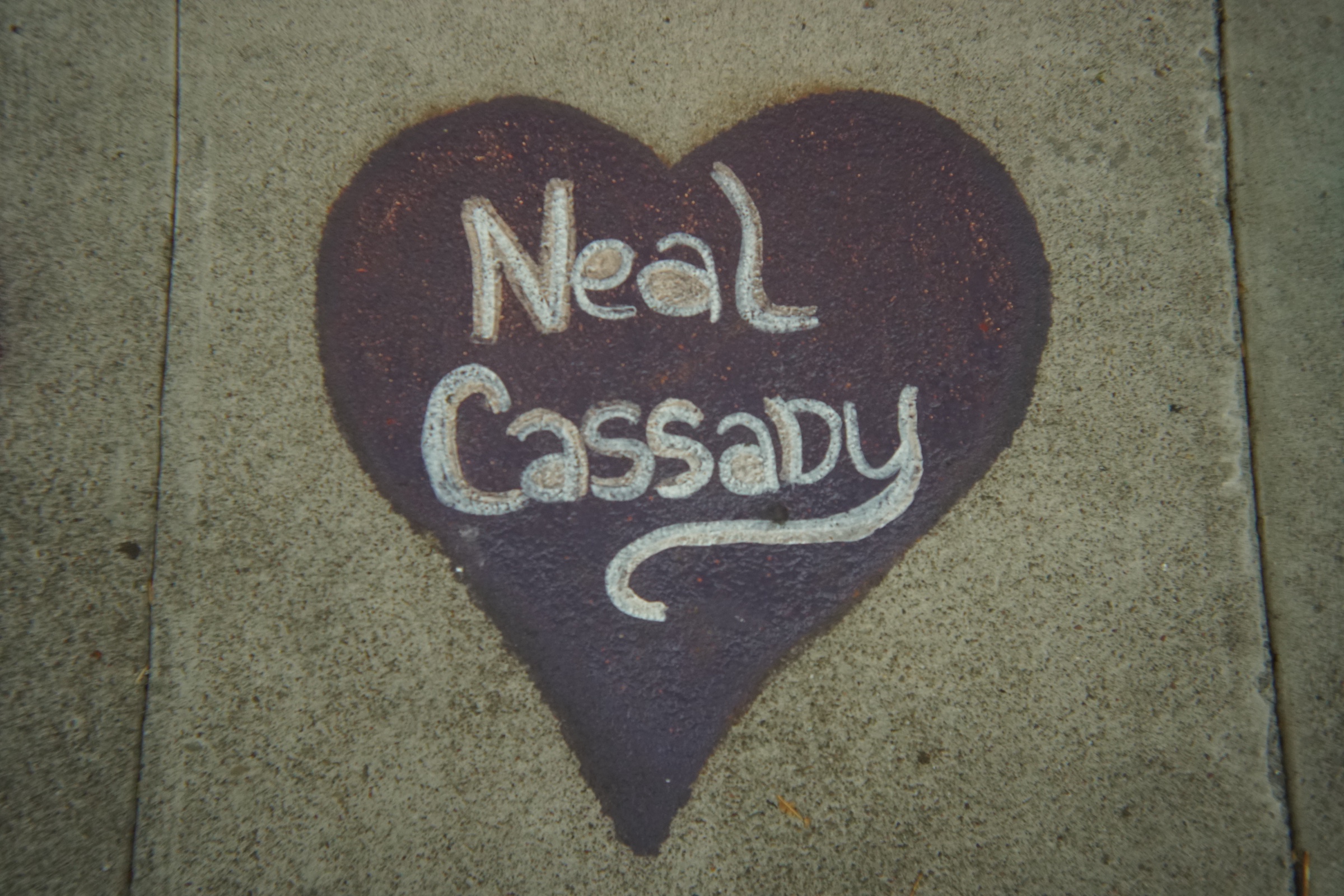
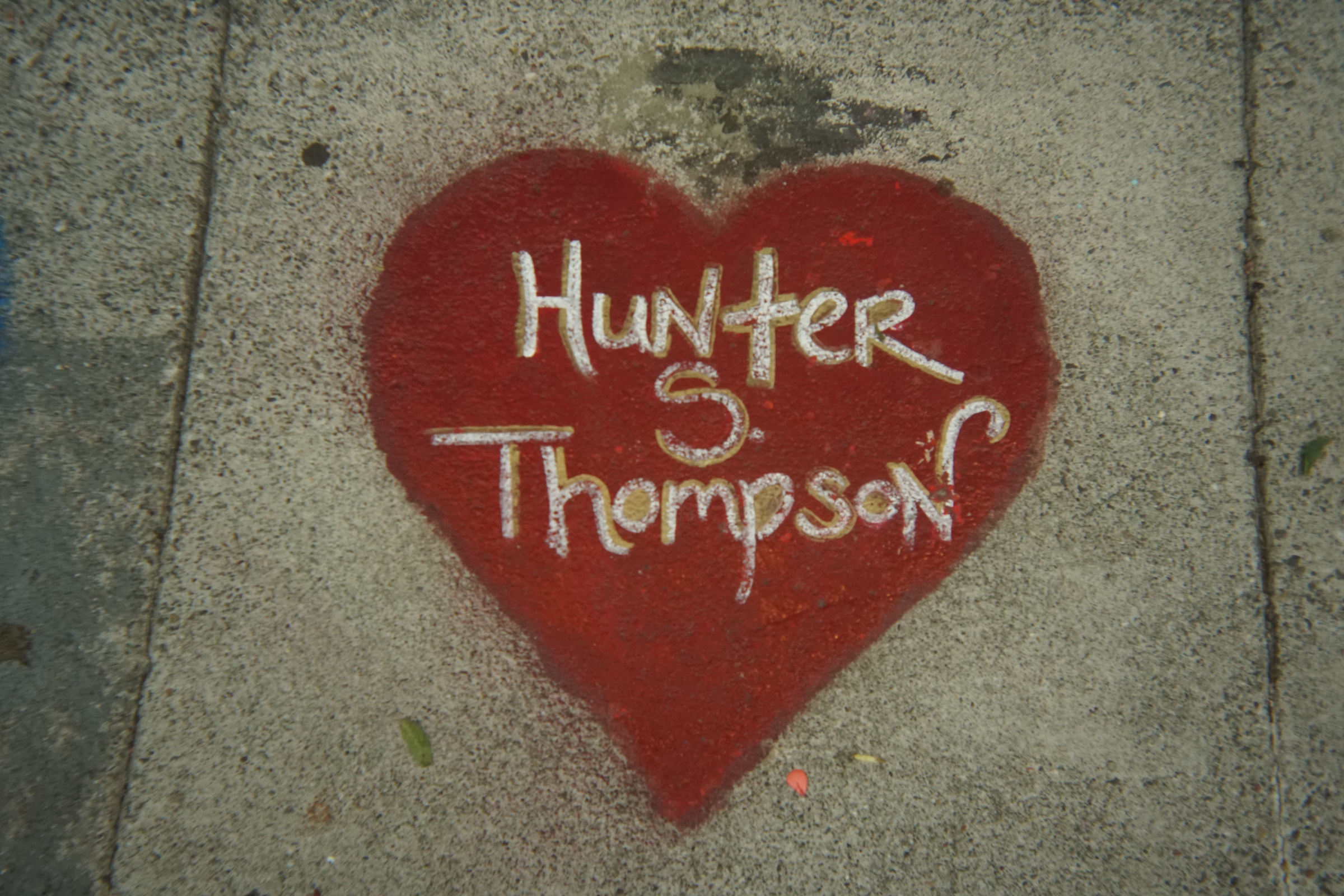
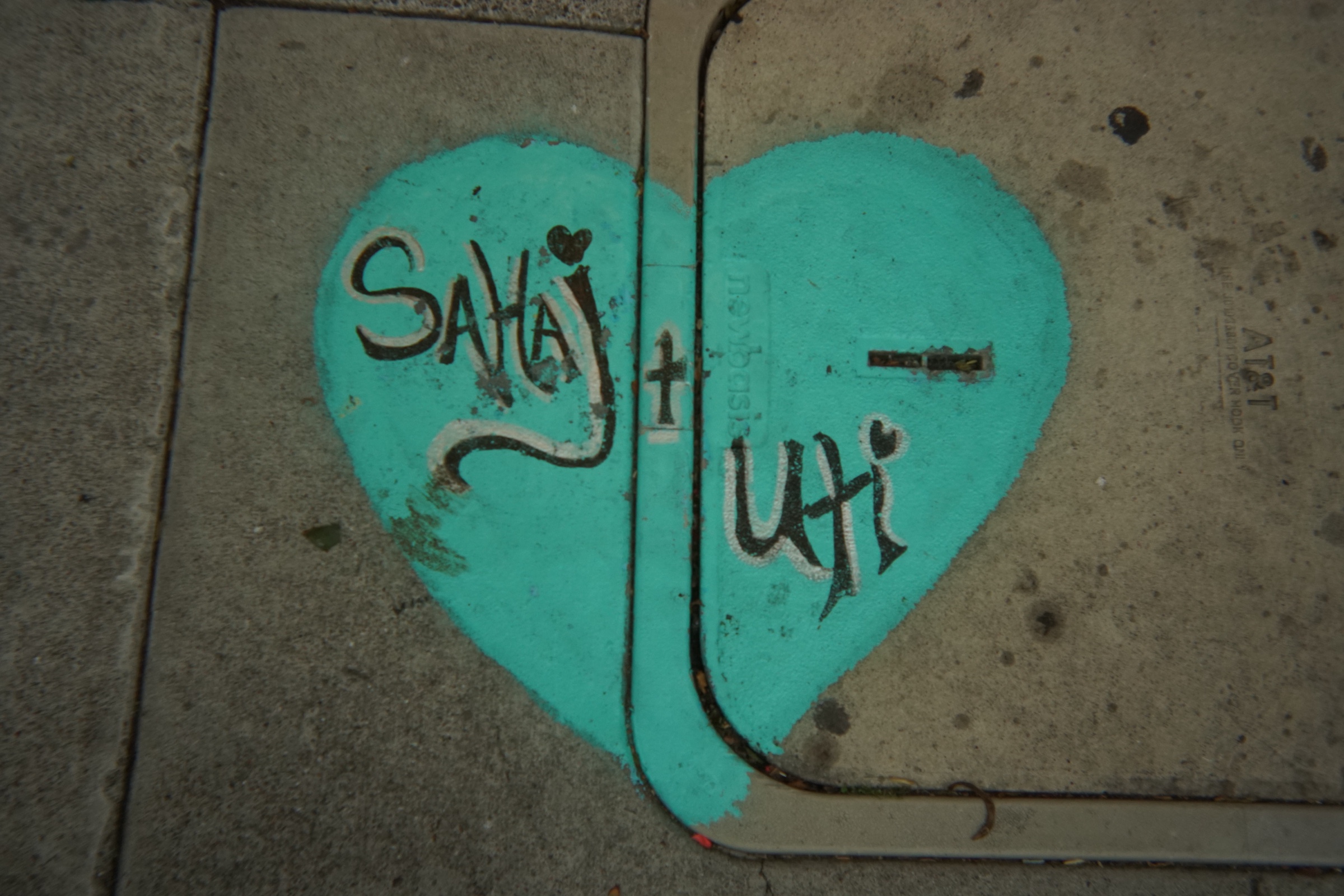
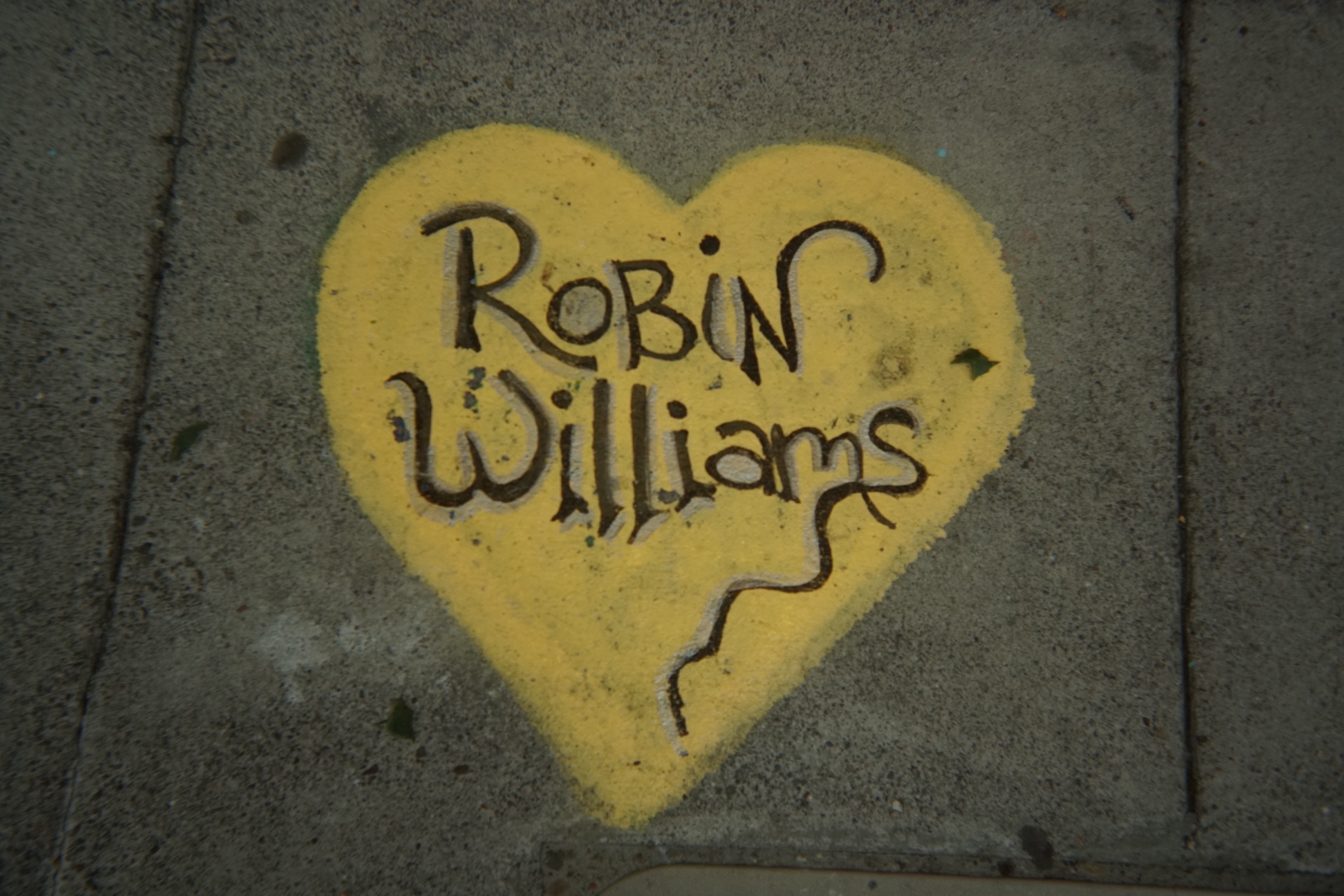
A total of 36 hearts signed with names and messages lay just outside the store's perimeter
My personal favorites are "Make Love Not War," "Democracy Will Endure 2028," and "Robin Williams." What other names
do you recognize? Scroll through to see.
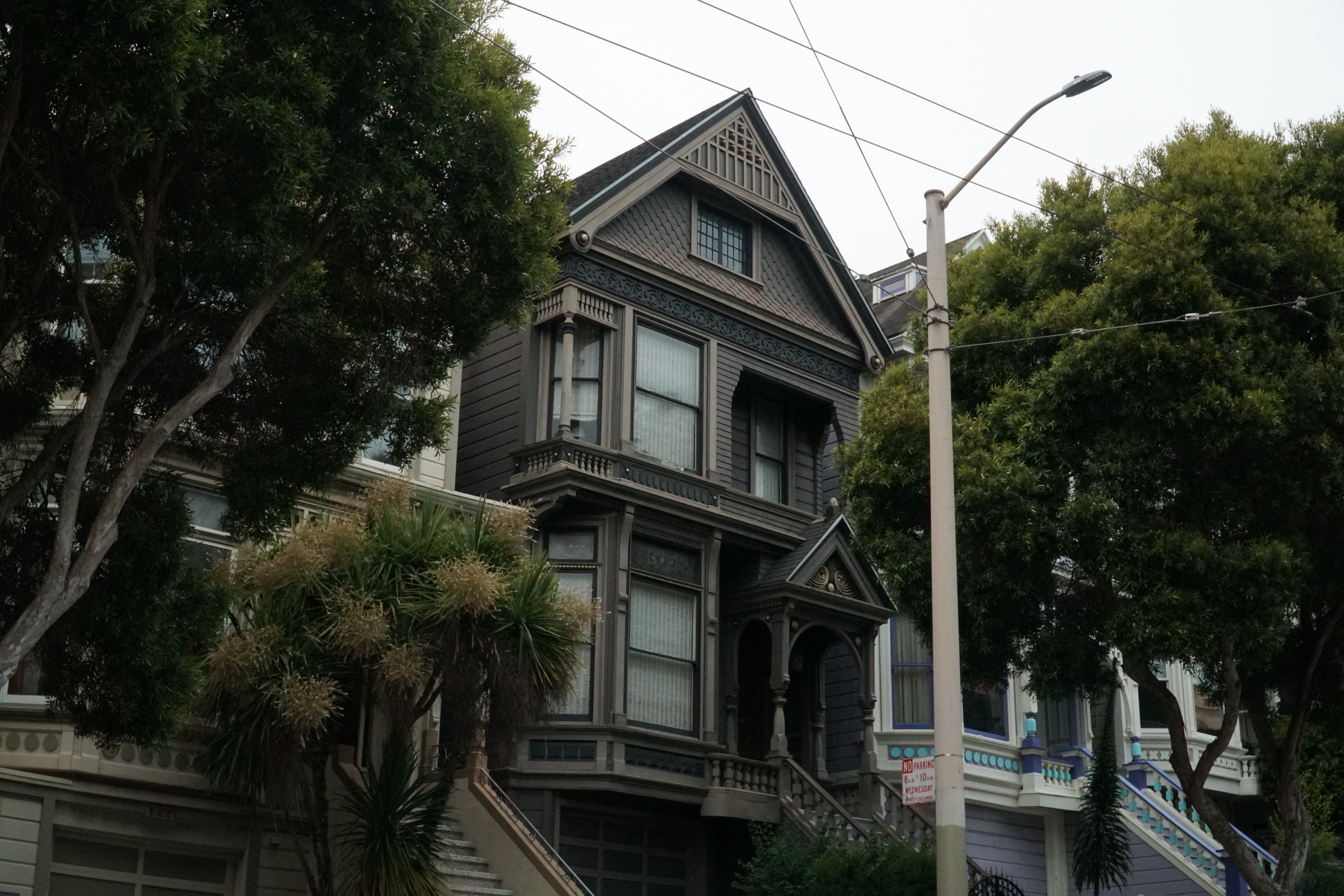
710 Ashbury Street
This lovely and bright Victorian behemoth was once home to the members of the Grateful Dead, a band name
often synonymous with the Haight-Ashbury neighborhood and Summer of Love.
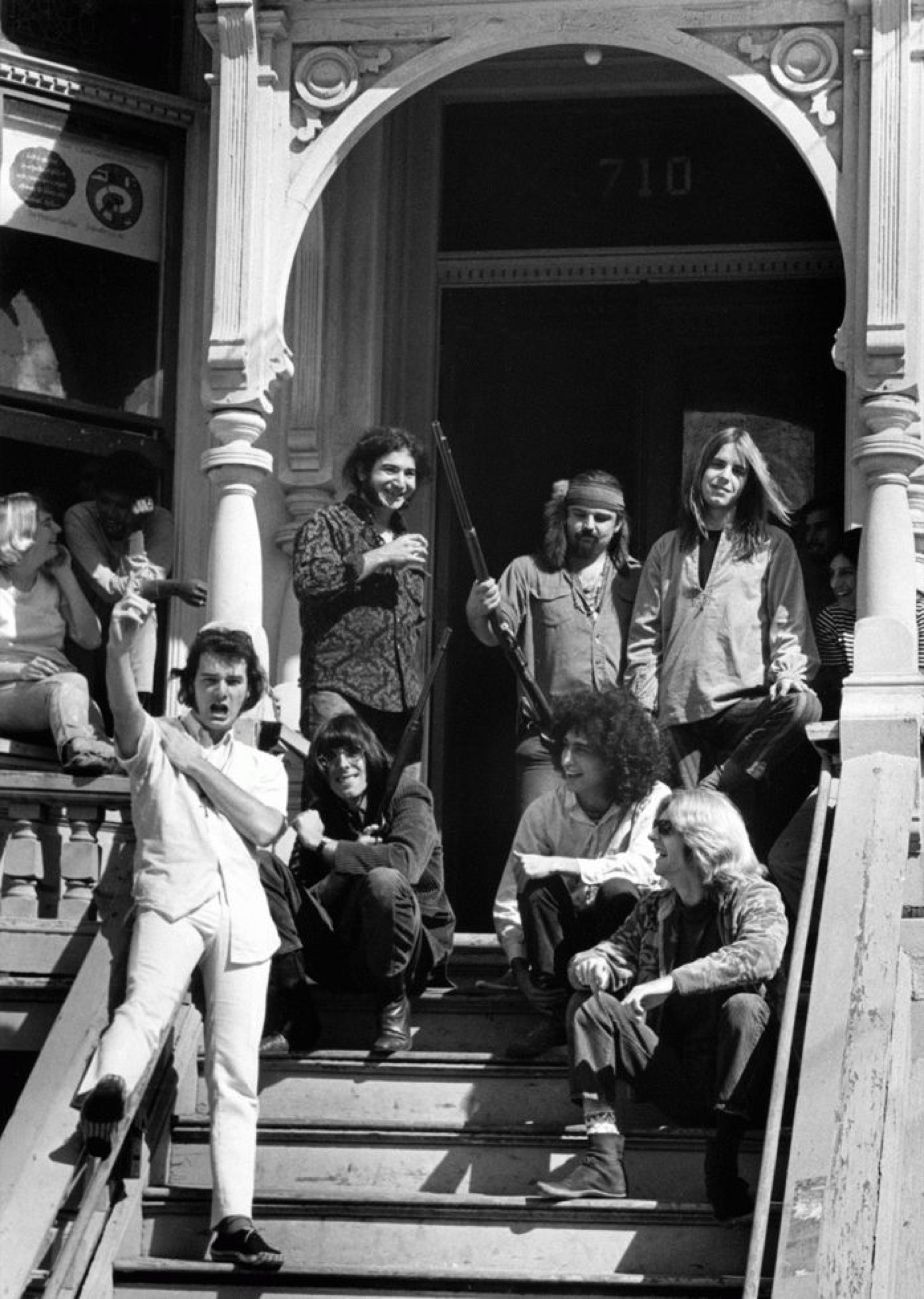
After being busted on marijuana charges, the band is seen posted up on the steps of their home shot for Rolling Stone magazine circa 1967
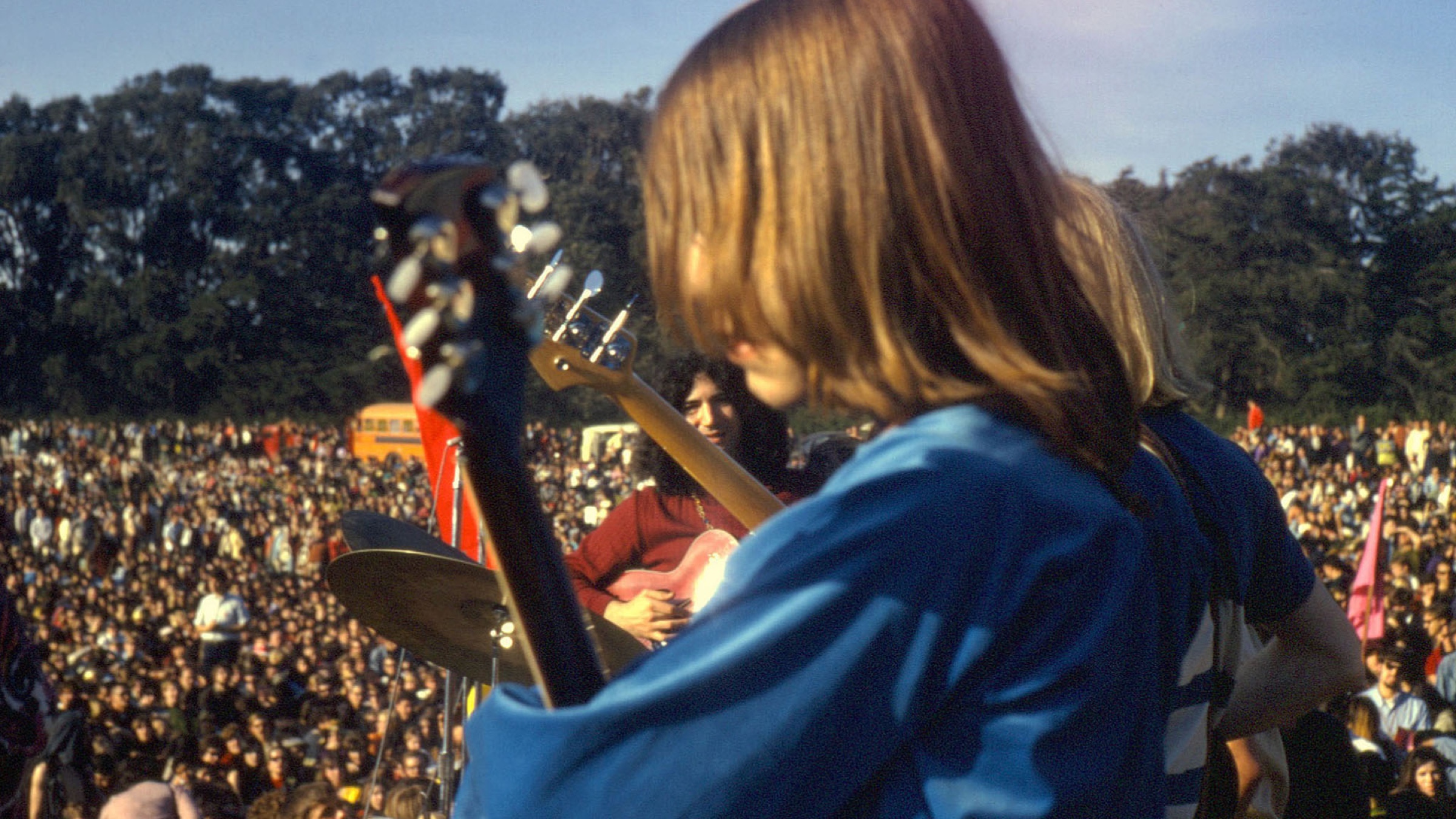
Jerry Garcia and Bob Weir playing nearby at Golden Gate Park just months before the Summer of Love
The Dead's short stint at 710 Ashbury Street, often cited as lasting from October 1966 to March 1968 represents
the fleeting nature of the Summer of Love. Its allure turned the neighborhood semi-chaotic and the rock stars, oddly enough, had to escape. They soon moved to rural Marin.
Panhandle
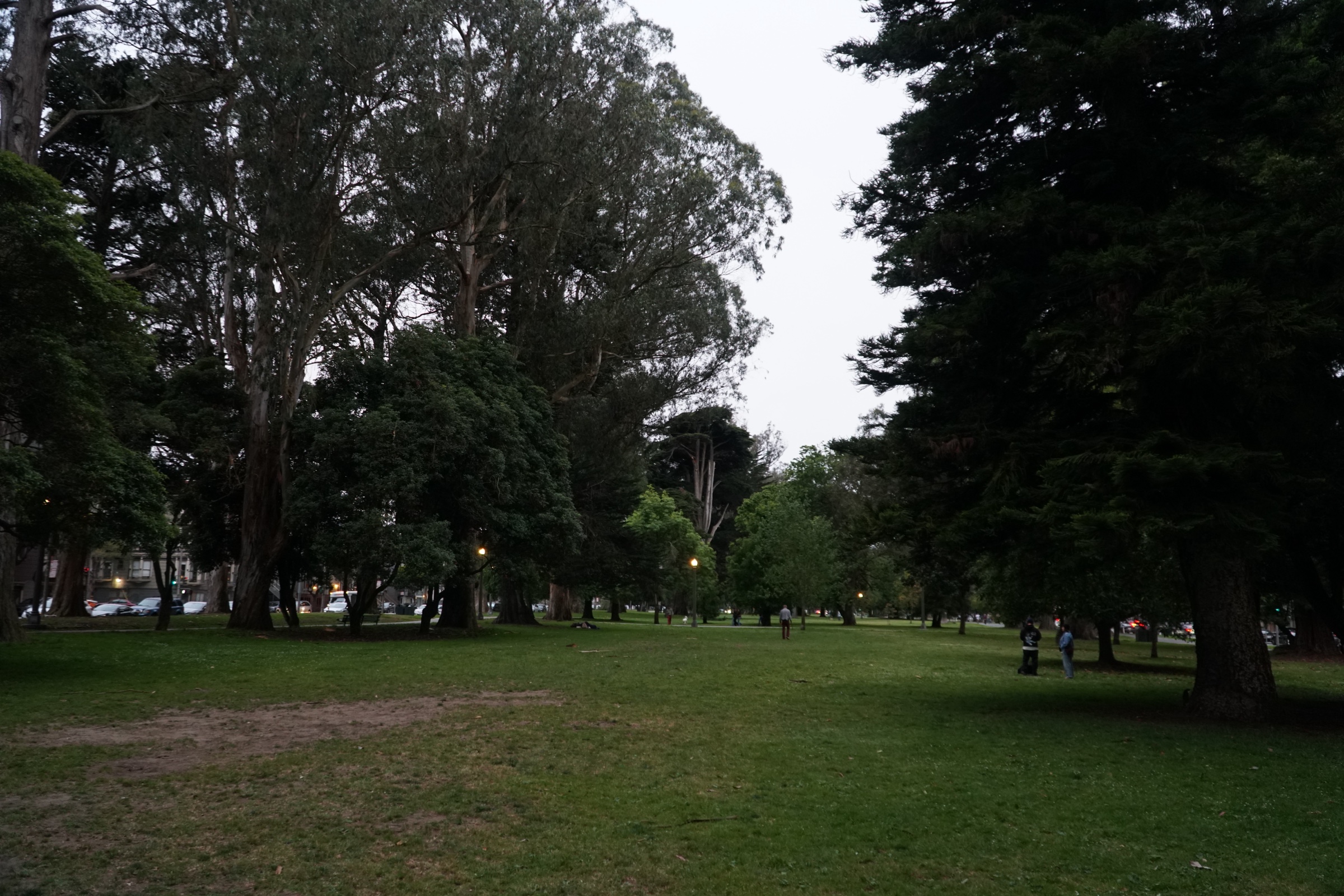
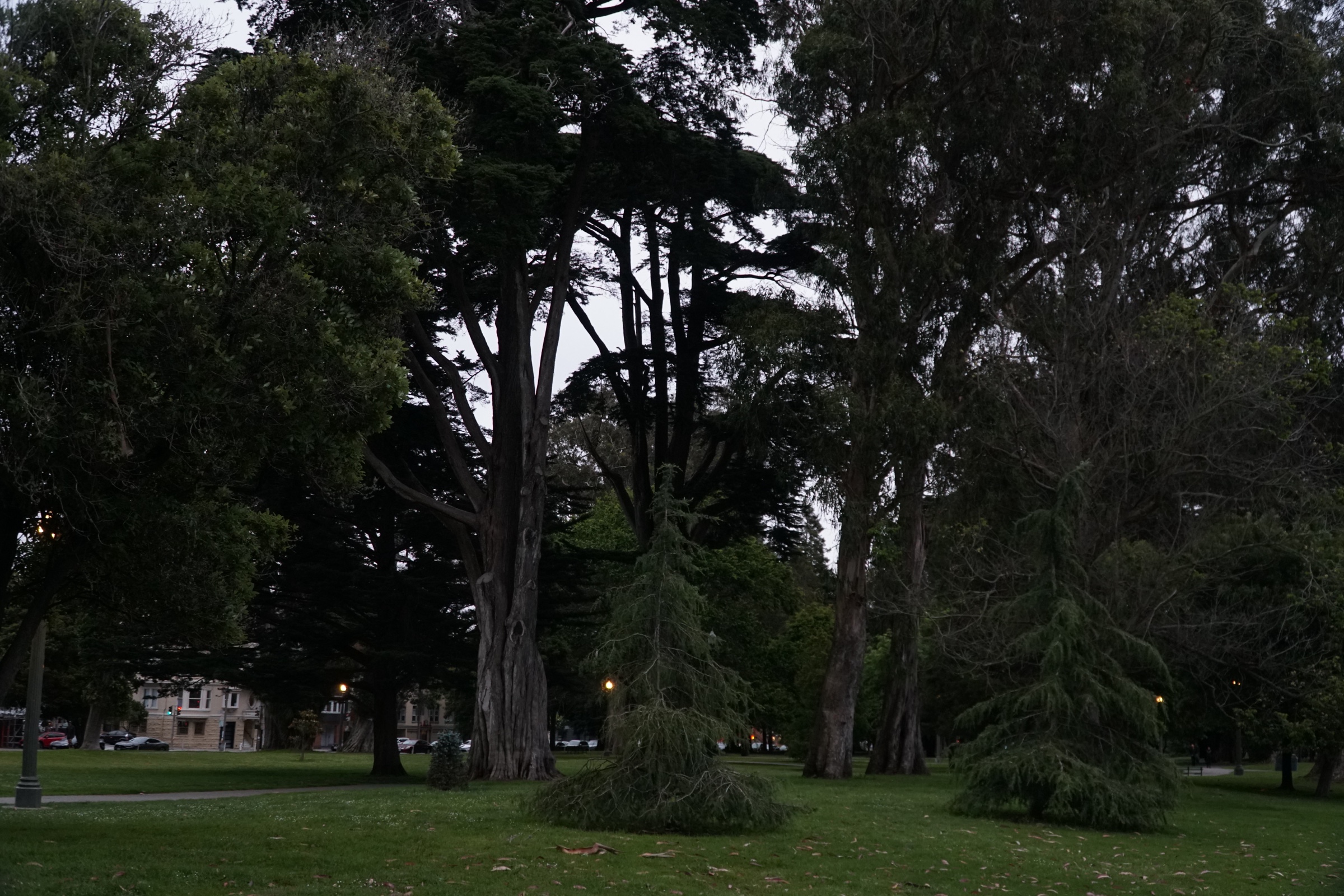
My meandering through Haight-Ashbury ended with a sunset at the Panhandle, a narrow, eight-block, eastward
expansion of Golden Gate Park. Surrounding eucalyptus and cypress trees insulate the park. Today, the panhandle's tranquil demeanor promises
walkers, readers, and other parkgoers an opportunity to relax, despite being surrounded by two moat-like roads on either side.
At one point, the Panhandle served as the backdrop for events like the Love Pageant Rally in 1966 where the criminalization of LSD was protested
as well as legendary free, impromptu concerts from major artists like the Grateful Dead and Jimi Hendrix in 1967.
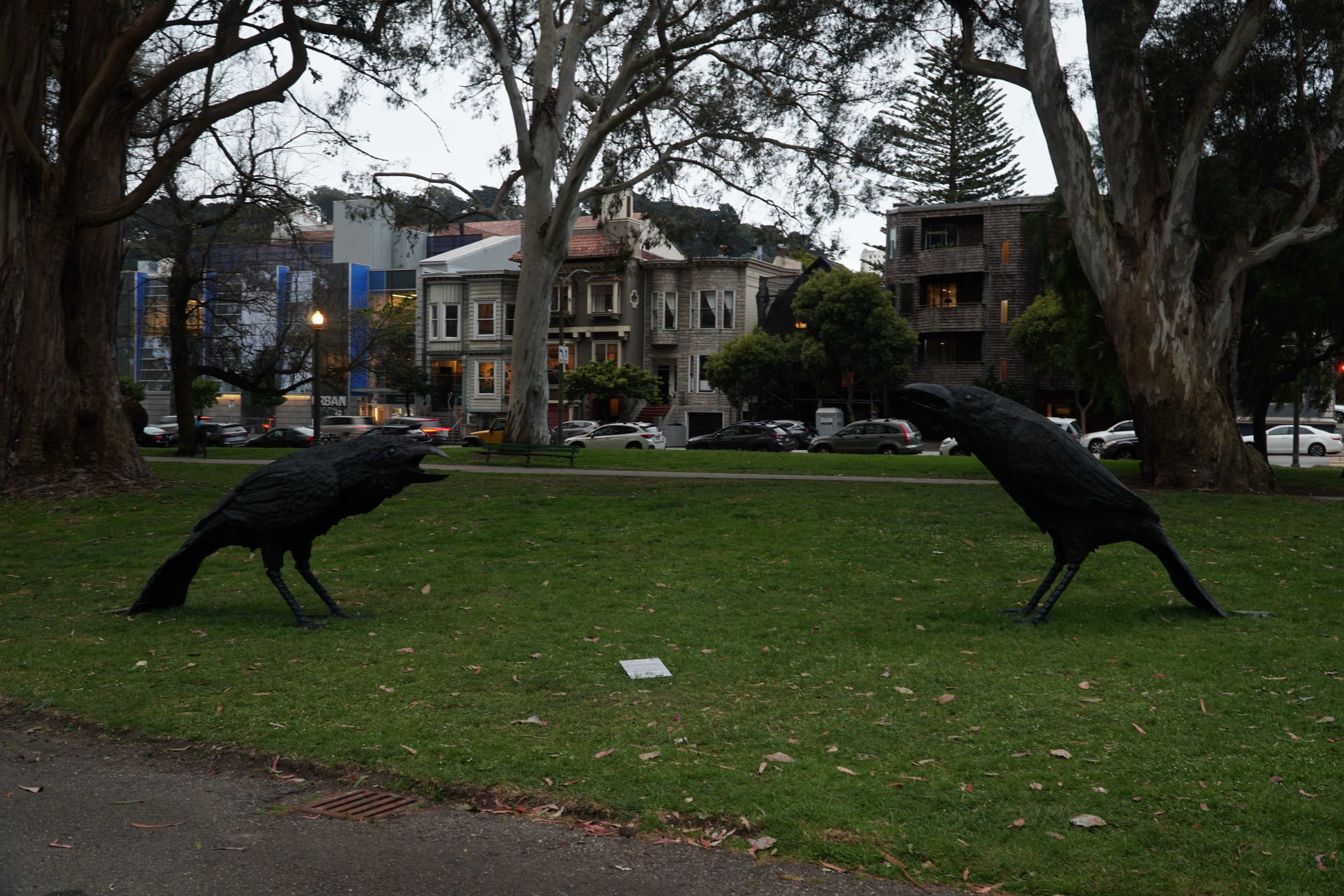
Crow statues duke it out - Careful, do not climb!
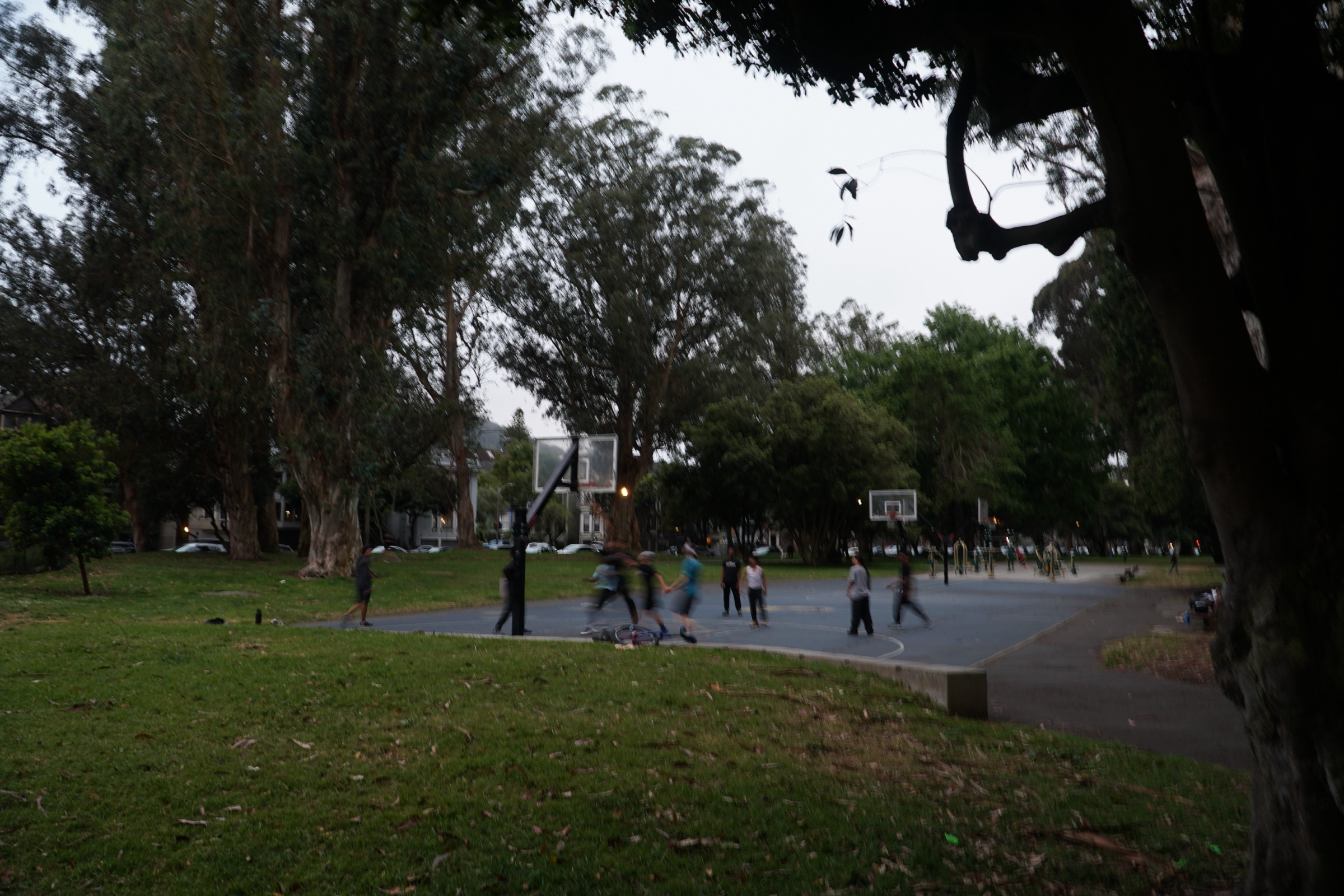
A pickup basketball game intensifies as light fades and the bathrooms are locked up
My day lugging myself, and camera equipment, around Haight-Ashbury was coming to a close. As I waited for my mom
to pick me up, I felt the air cool and watched the sunlight fade. My day was ending at a point of genesis for San
Francisco psychedelia. This narrow field, littered with trees in the middle of San Francisco, was a point of political agency
and hallucinogenic discovery. Daisies were picked from the very ground I was standing on and deftly placed into the hair of past generations.
I felt that context as I removed my sandals and walked on the grass.
Random Sights
I was and I wasn't lost while I was wandering Haight-Ashbury.
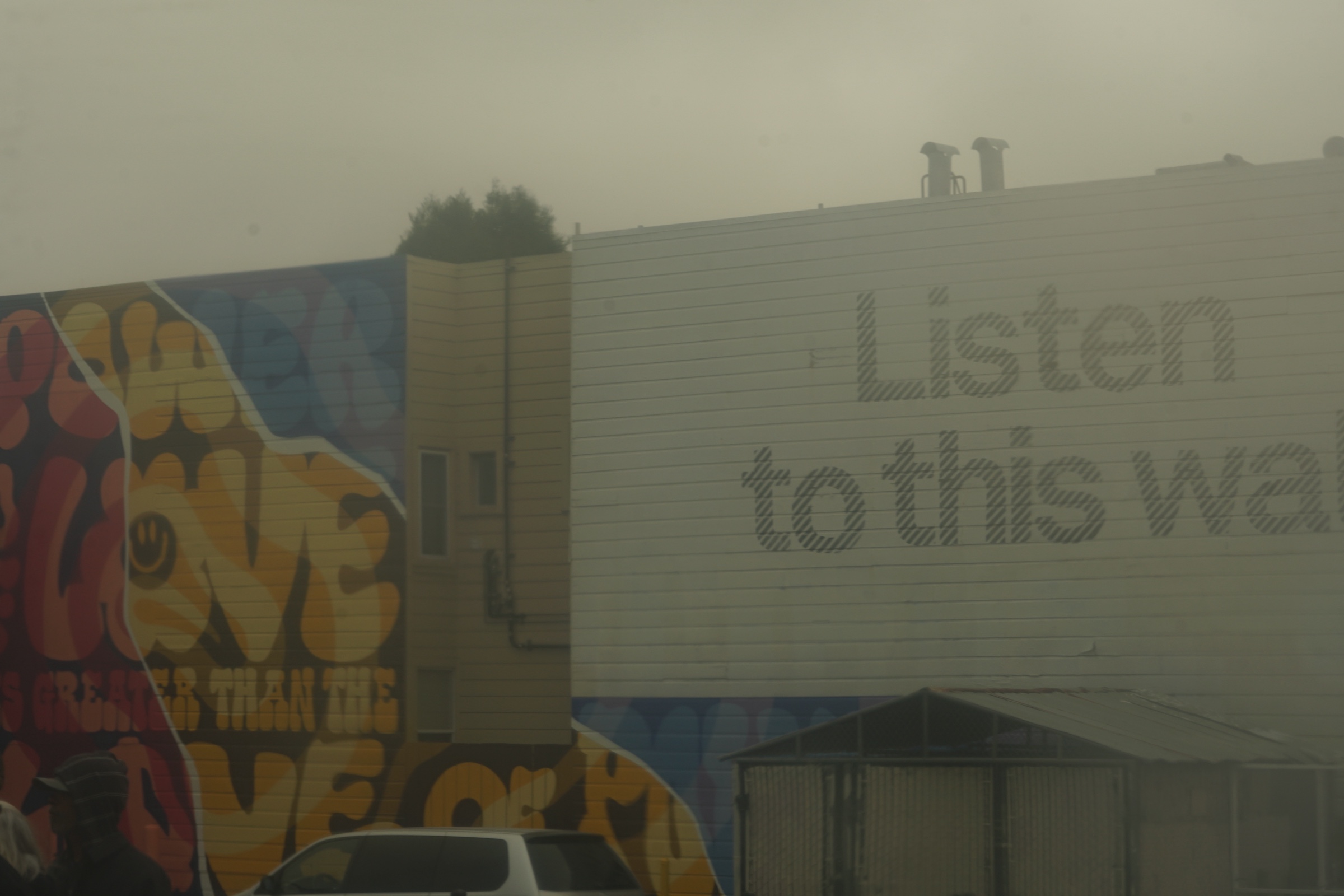
"Power of Love is Greater than Love of Power" - "Listen to this wall" - Cloudy Cellophane
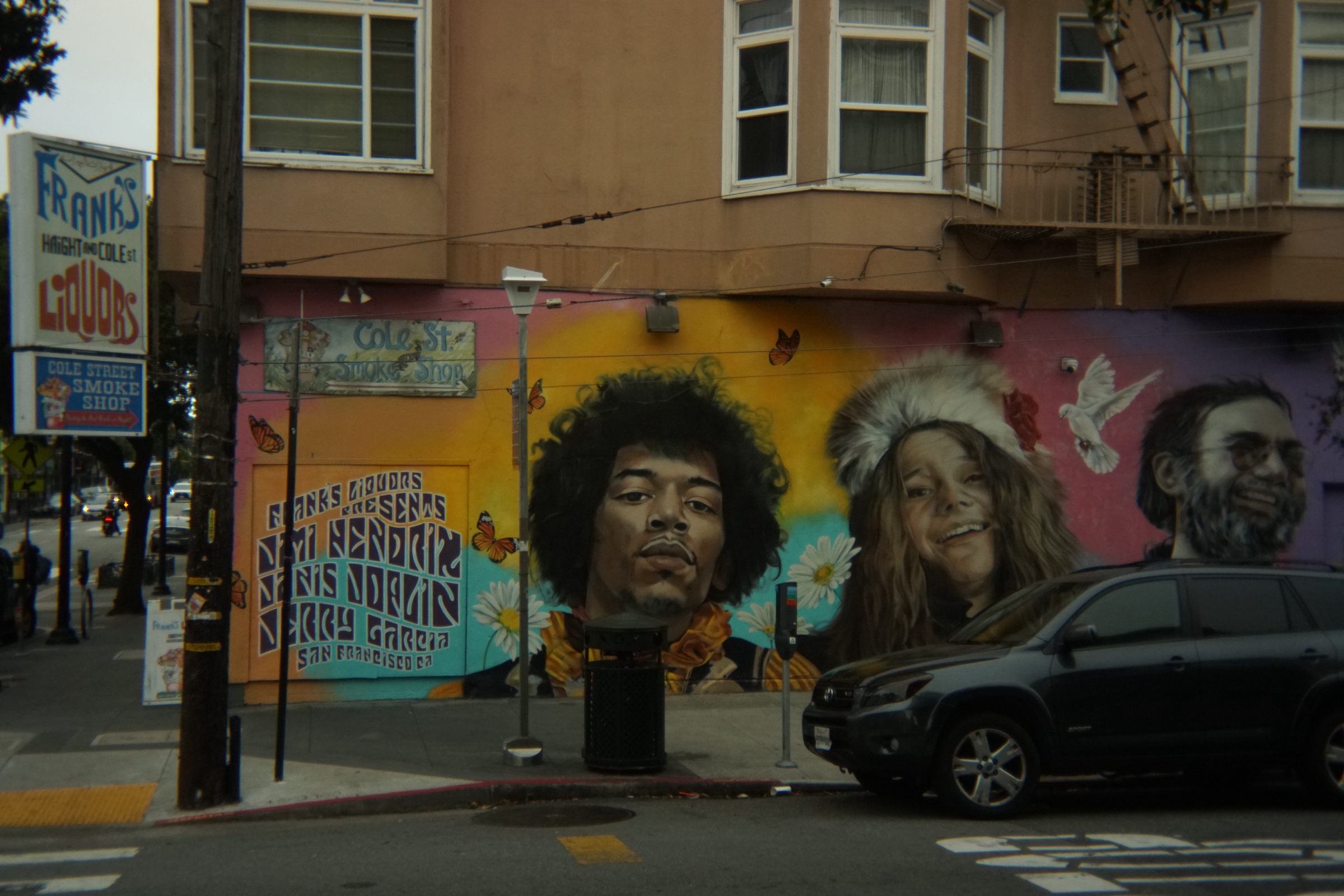
Mural on corner of Haight and Cole - Jimi, Janis, and Jerry
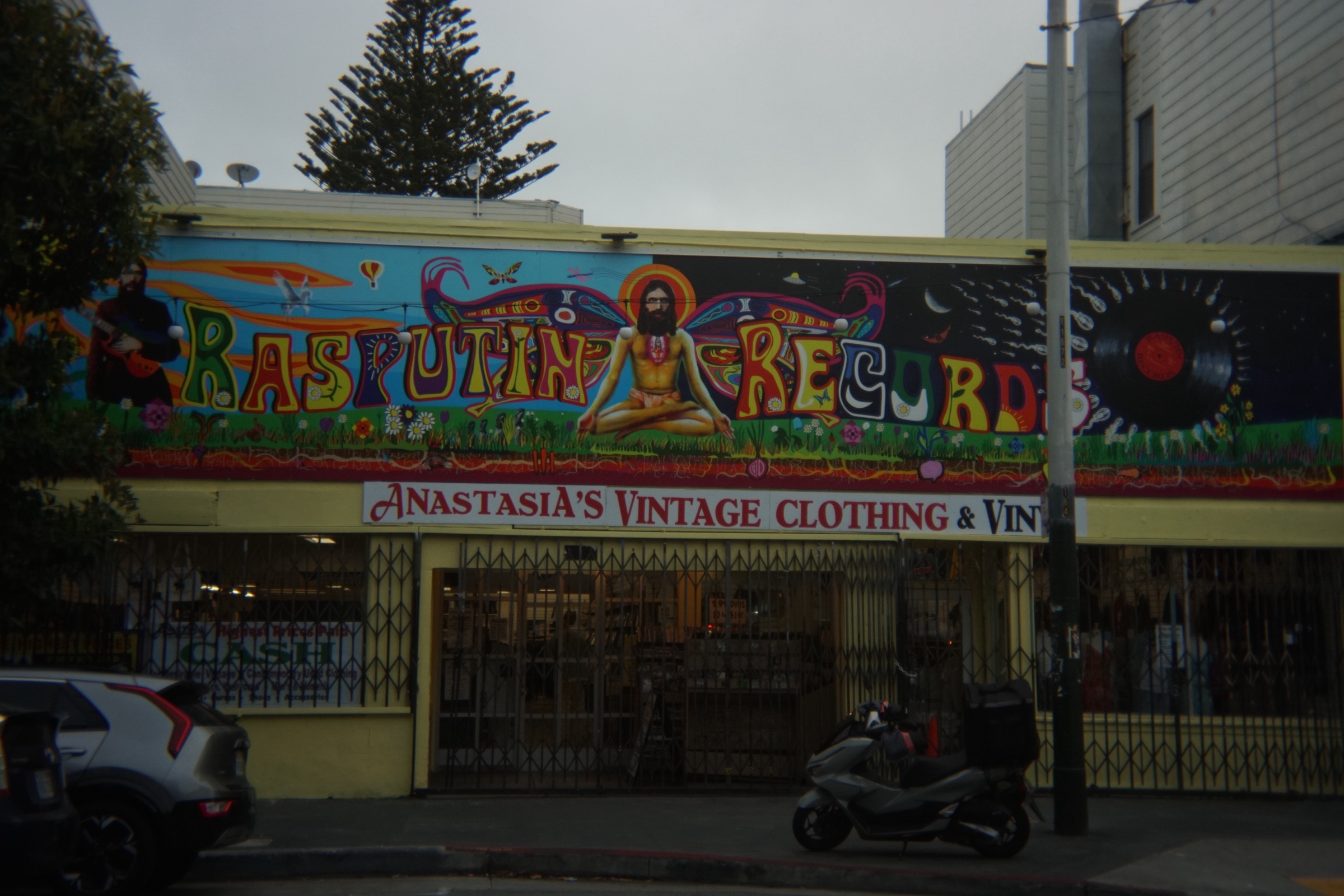
Rasputin Records and Anastasia's Vintage Clothing - Rasputin, Pegasus, Butterfly, and Inseminated Vinyl Decorations
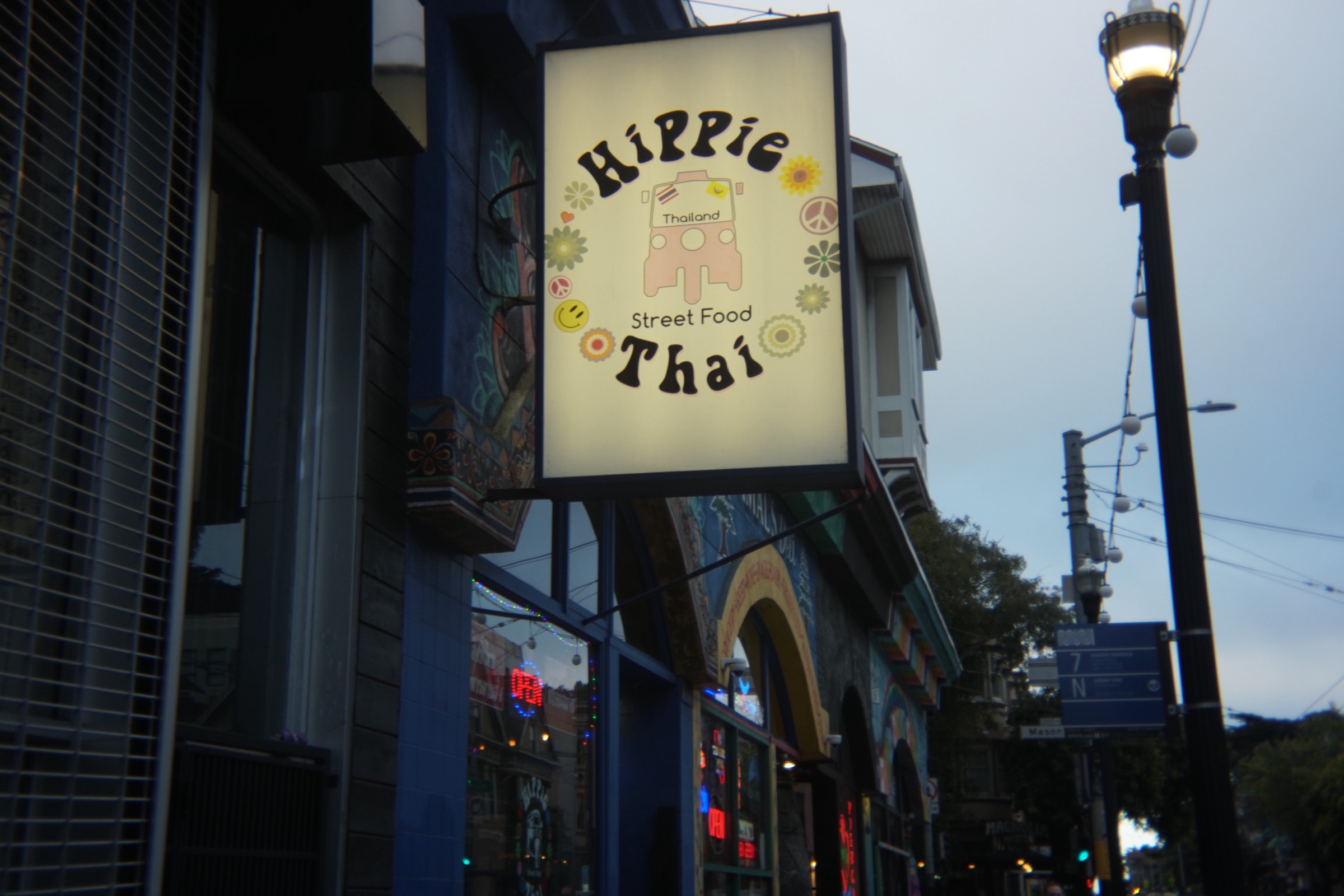
Thai street food restaurant with hippie influences
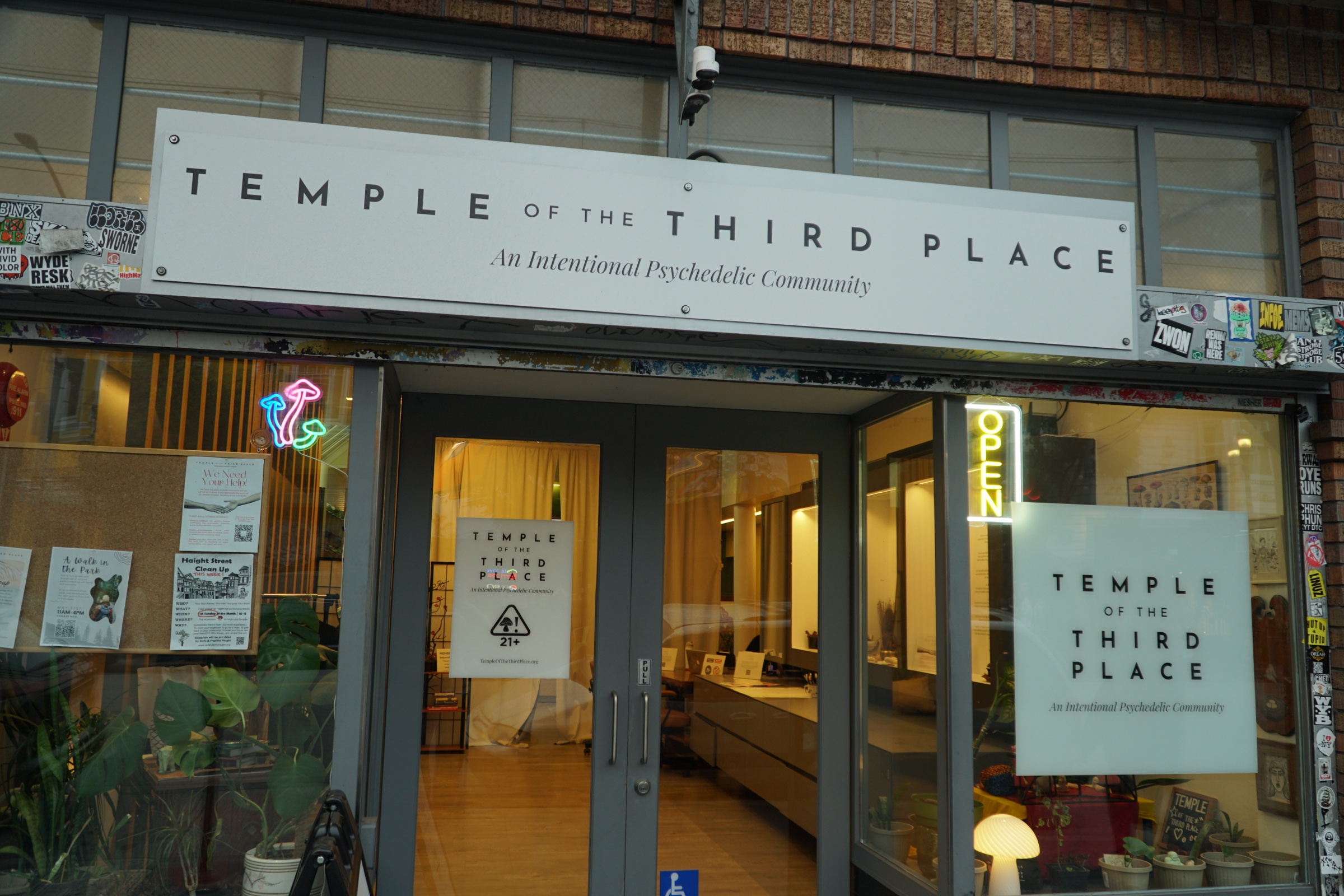
Modern psychedelic temple, beware 21 and up
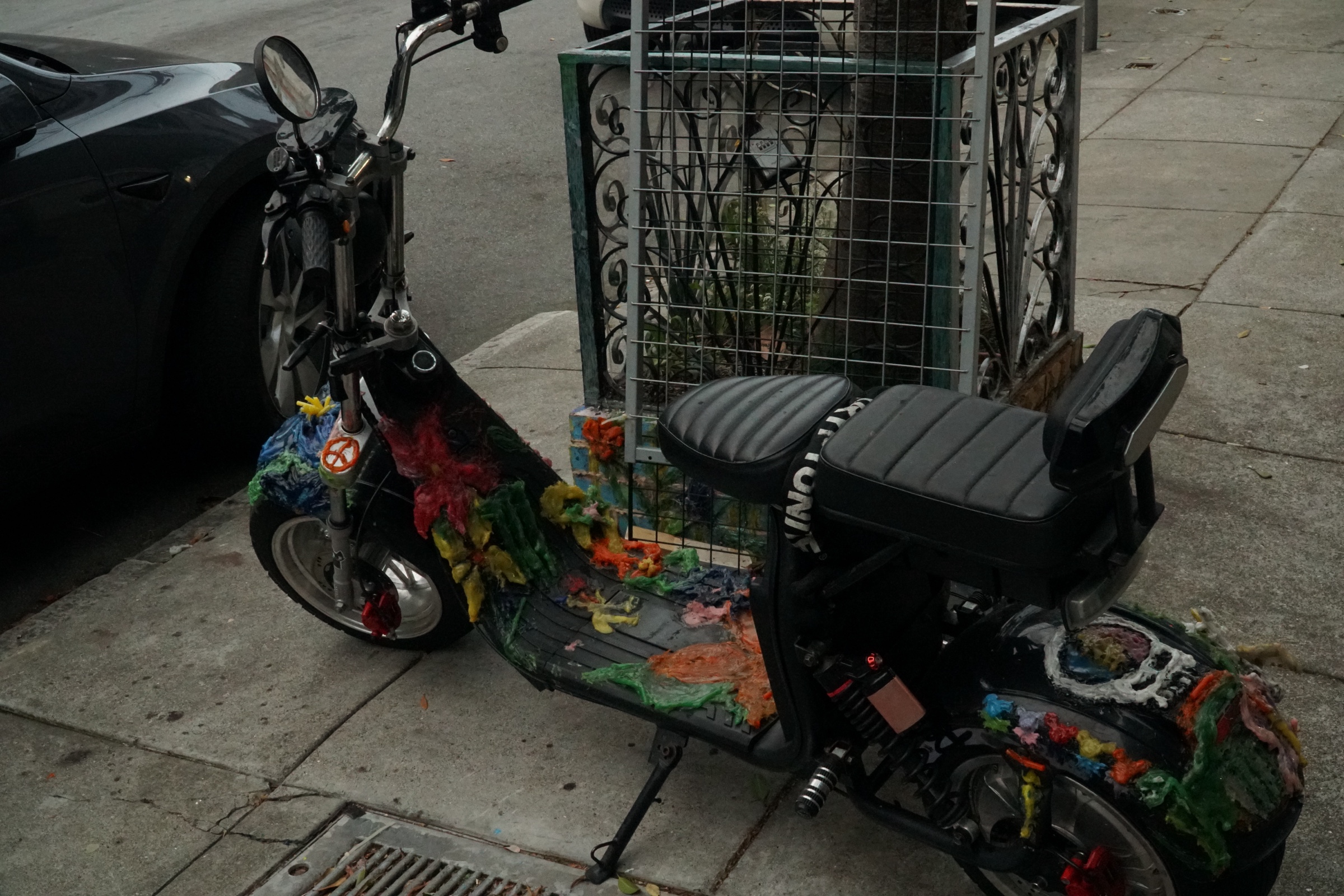
Motorbike with melted on wax flower and peace sign motifs
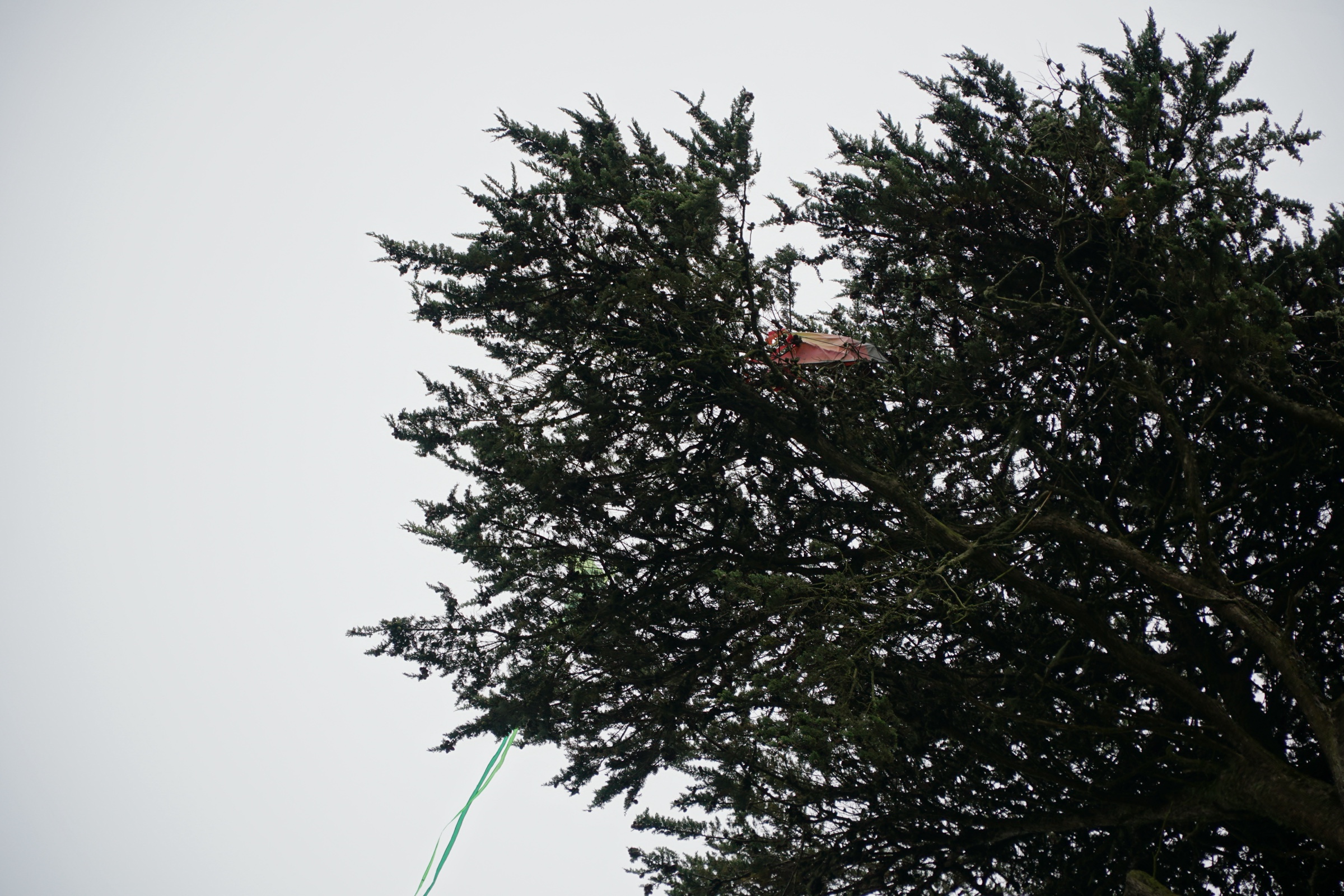
Kites caught in tree over Hippie Hill
Process and Reflection
I became interested in photography during my first Winter break back from college. I scoured Facebook
Marketplace until I stumbled upon what seemed like a good deal on a Canon PowerShot ELPH 350 HS.
After doing some more research, I realized it really was a good deal and I took the leap of faith.
This was my first camera that wasn’t attached to the metallic bricks that are our cell phones. My mom
teased my generation for our infatuation with digital cameras, but I was undeterred. That camera served
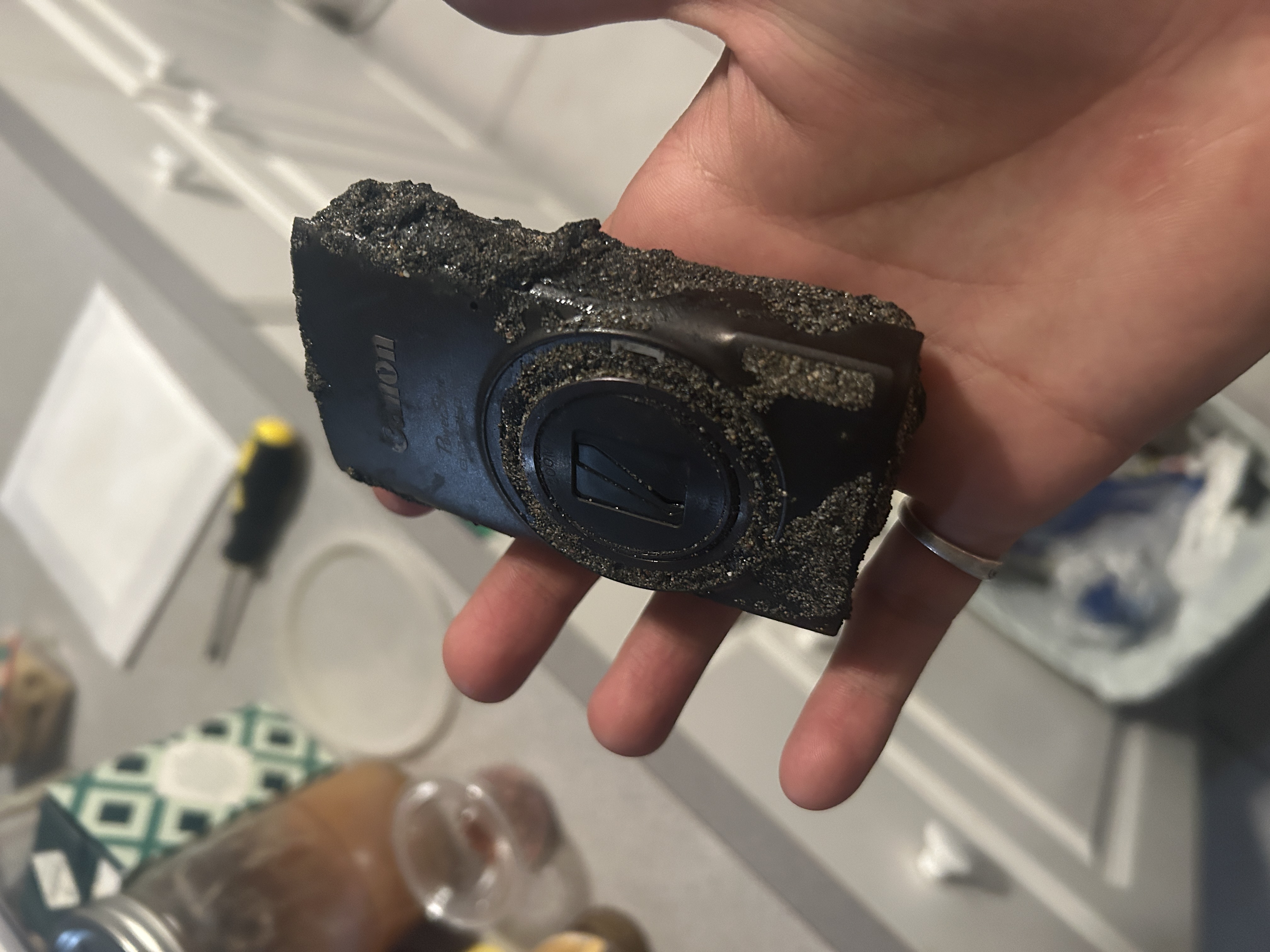
me well until that following summer when I accidentally flung the camera into the pit of a fire that my
friends and I were roasting marshmallows over at the beach. Only the SD card was salvageable. Yet, I
continued to experiment with photography, searching for shots that I like, originally boiling my process
down to what simply felt right. I inherited a couple of cameras from my grandpa and upgraded to my current
rig, thank you Facebook Marketplace, one summer ago while trying to learn more about composition along the way.
Melted Canon PowerShot ELPH 350 HS
When this project came up and I realized I would have the chance to stray away from a fully written project,
I immediately gravitated towards photography. I was also growing increasingly homesick as the semester came
to an end, so I thought what better way is there to enjoy my time back home, productively, than to go to my
favorite spots in the city, while meticulously searching for cohesive shots that would help articulate my
goals in this project. Ultimately, I set out to do just that. I researched certain techniques I wanted to
try out, notably long exposure shots and homemade lens filter options, as well as certain locations that I
knew I would need to include to imbue my project with psychedelic credibility. I polished my lenses,
fastened cellophane to a lens hood with rubber bands and set out for San Francisco. For years, my favorite
neighborhood in San Francisco has been Haight-Ashbury. I always enjoyed digging through racks of clothes
in the dozens of thrift stores in the area or grabbing a pesto slice from Escape from New York pizza.
Stopping into Amoeba was always a vibrant conversation piece with friends, and the skatepark's mellow
flatground vibe is perfect for my style of skating. Yet, in all of the years I had been going, I had
never once gone for the sole purpose of photography. In fact, I had never gone anywhere with the sole
purpose of photography. This project presented me with a unique and irresistible opportunity to do just that.
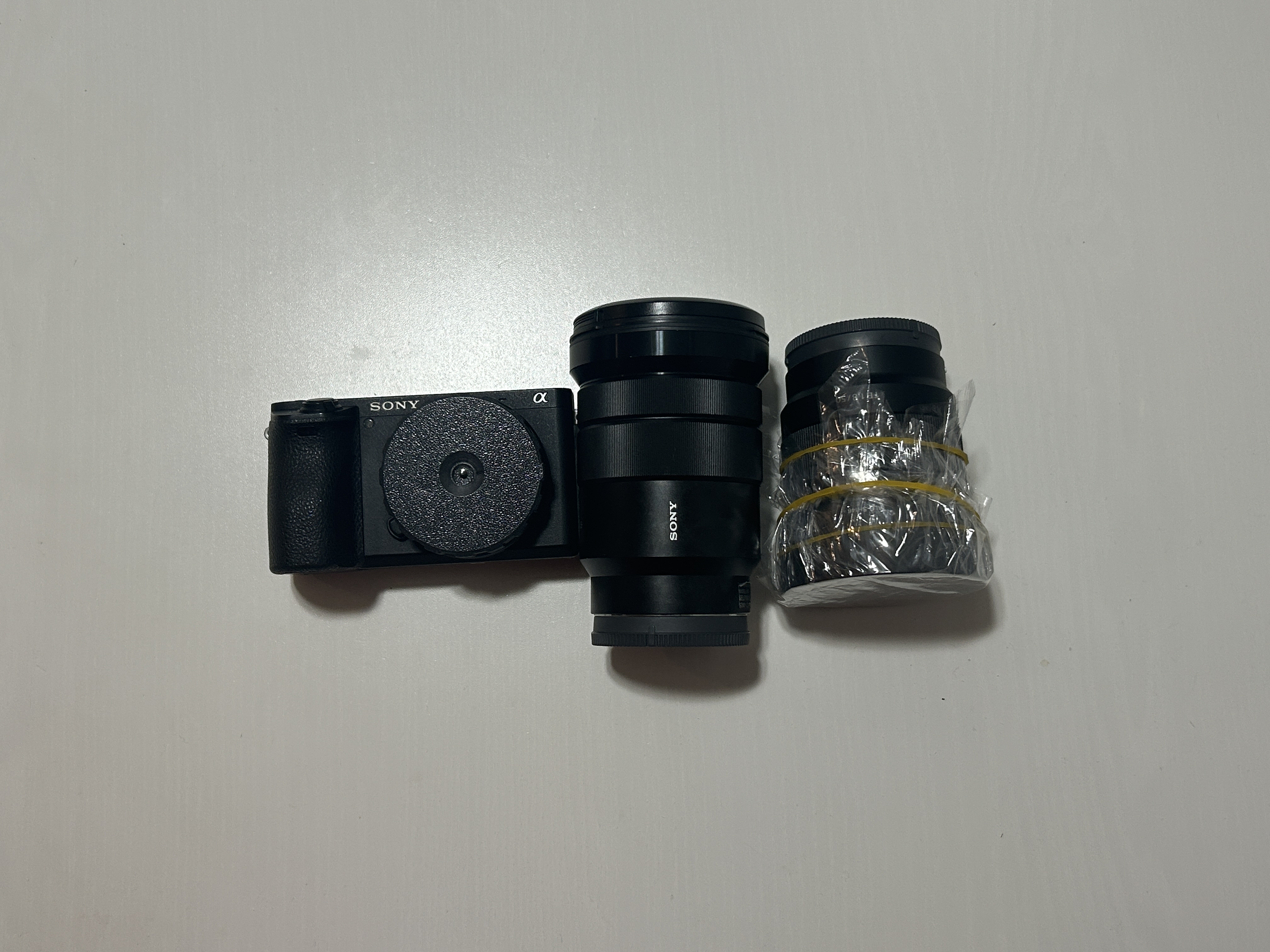
Gear I used to capture my shots! Body: Sony Alpha A6500, Lenses: 18-105mm, 50mm prime, disposable camera lens in 3D-printed e-mount casing.
Hoping to achieve a cloudy texture for some shots, I wrapped the lens hood on my 50mm prime lens with layered cellophane secured with rubber bands.
Photography, as a medium, is notoriously separate from psychedelia. If the pinnacle of photographic technology is to capture and preserve and the epitome
of psychedelia is to distort and transform, the two fields become disjointed. It is a contradiction to attempt a psychedelic photography project. I thought
back to Huxley’s infamous The Doors of Perception, a piece that we, in class, have discussed over again and his concept of the reducing valve. (Huxley) The
camera in a sense is a reducing valve as it puts a limit upon what can be captured. There is a limit to the colors or pixels that can be registered and
transported as a digital file to our phones or laptops, and with every transportation, quality is only reduced. To counteract this preservation and reducing valve,
I was curious to explore possibilities using lens filters. However, I do not own a single lens filter and I was unsure if I would be able to find something that
may create my desired dreamy effect. I thought of layering a translucent layer on top directly distorting the image that my camera’s sensor would take in.
In my effort to manipulate the reducing valve that was my camera, I arrived at wrapping both new and scratched cellophane over my lens, fastening my rig with a
bundle of rubber bands. The resulting picture is cloudy with light leaking in from unexpected angles; dust particles trapped in between the layered cellophane
also distorted my camera’s autofocus causing the fuzziness present in the photos I shot while using this lens.
While I was ideating and finding shots for the project, I was not solely thinking about the engineering of the photos using my camera, glued to its mini screen and
viewfinder. I was looking around me trying to see what psychedelia means in what was once the psychedelic hotspot of the world and the heart of the hippie movement.
I was trying to observe how it changed and stayed the same. At times, I was pessimistic, looking at the tacky commodification of the flower power motif or rainbow
tie-dye colors. The Hendrix house, where Jimi never lived, capitalized upon by misleading tour guides, the clock frozen on 4:20 on the corner of Haight and Ashbury
right outside a gift shop called Haight & Ashbury, the Grateful Dead house that was evacuated by the band after less than two years as the neighborhood became
overrun, and the hippie store brandishing flower and rainbow motifs are all relics of an authentic past turned commercial. These landmarks are businesses or sights
to see instead of open houses that nurture the Haight’s once thriving, communal neighborhood culture. Atop Hippie Hill, towering cranes and Sutro tower are seen
dwarfing onlookers below, undeniable stamps of urban development and the gentrification that is slowly rinsing out San Francisco as average home purchase and apartment
rental prices surpass $1.5M and $3K respectively. Now, the same people that are disrupting the deep-rooted San Francisco community are invading its native psychedelic
culture as ‘tech bros’ grow increasingly infatuated with spiritual tourism, hallucinogens and nootropics. (Lovato) Revisiting Ido Hartogsohn’s piece American Trip, set
and setting is reestablished as a foundation of psychedelic discourse. Applying this concept to the Haight-Ashbury neighborhood and broader city of San Francisco spanning
across a multi-decade trip that is the transformation of the city from the Summer of Love to present day, the setting may remain the same geographically, but the collective
set and setting is entirely different. Hartogsohn goes on to emphasize how “all of the most important variables of set and setting are determined by collective factors.” (Hartogsohn)
As a collective, the Haight-Ashbury and San Francisco that I traversed is completely different from the communal utopia that it seemed to be prior to 1970. It seems to be a shell of what it once was.
However, in my cynical daze, peaks of hope shone through, providing indisputable evidence of the living, breathing vitality of San Francisco psychedelia. The outspoken signs in the windows at Hendrix
house promoting notions of interconnectedness and a universal ‘one’ that we all embody; the anti-hate and pro-democracy messaging in those same signs and the hearts outside the hippie shop that curses
out government corruption; the joyous murals building off of each other one emphasizing love’s power over love for power and the other urging the viewer to listen; and the impromptu concert that I and many
onlookers alike strolled across all suggest the city’s rebelliousness, passion, and community are here to stay. Revisiting my original question: What is Psychedelic San Francisco? Maybe it is the hearts
outside a hippie shop carrying names of psychedelic figures Timothy Leary and Terence McKenna or cries for peace and democracy, or maybe it is the ensemble of friends laying down rhythmic beats and
dancing with torn bedsheets in the fields of Hippie Hill just outside Golden Gate Park. Maybe it is the dead letters in the neon sign marking a storefront’s everlasting pride: “Amoeba Music.” Maybe it
is something yet to come or far gone. Maybe it’s none of these at all or all at the same time. After my single day excursion, all I know is that its spirit is alive and well.
Post Production
This final project is the culmination of many pleasant surprises that came during this semester. For starters,
I never thought that I would take a university course on psychedelics, or even see one be offered in the first place.
Moreover, I never thought that I would put this much deliberate effort into a photography project, not to mention coding an
entire website for it. After hours of wandering the streets of San Francisco, taking hundreds of photos, and more hours
at home trying to piece this website together, I have a newfound appreciation for engaging in the production of creative processes.
Not only do I have an appreciation for creating, I have a newfound itch to create. I plan to further my exploration of photography, and
I hope to soon start learning about videography and other means of content creation. I am beyond grateful for this course and project, and
I am excited to find the next chance to apply what they have taught me.
Works Cited
Gentile, Dan. “A Walking Billboard: The History of San Francisco’s Most Recognizable Bag.”
SFGATE, 24 Mar. 2025,
https://www.sfgate.com/sf-culture/article/history-san-franciscos-most-recognizable-bag-20228921.php
.
Hartogsohn, Ido. American Trip: Set, Setting, and the Psychedelic Experience in the Twentieth Century.
MIT Press, 2020,
https://mitpress.mit.edu/9780262539142/american-trip/
.
Horne, Madison. “A Photographic Trip Through the Summer of Love, 50 Years Later.”
HISTORY, 21 Aug. 2017,
https://www.history.com/photos-of-the-summer-of-love
.
Huxley, Aldous. The Doors of Perception. Chatto & Windus, 1954.
Lovato, Roberto. “The Gentrification of Consciousness.”
Alta Journal,
https://www.altaonline.com/dispatches/a38326035/psychedelic-drugs-gentrification-roberto-lovato/
.